
Key Points
Dow futures jumped about 500 points after the US-Iran peace agreement announcement.
Brent and WTI crude oil prices fell nearly 5% as supply concerns eased.
European and Asian stock markets rallied on improving global risk sentiment.
Technology, travel, and consumer stocks emerged as key beneficiaries of the market surge.
Wall Street got a major boost on June 15, 2026, after reports of a preliminary peace agreement between the United States and Iran. The news sparked a strong rally in global markets, with Dow, S&P 500, and Nasdaq futures climbing sharply before the opening bell. Investors also welcomed falling oil prices as concerns over disruptions in the Strait of Hormuz eased. The market reaction highlights how quickly geopolitical developments can reshape investor sentiment and global economic expectations.
Why Dow, S&P 500, and Nasdaq Futures Jumped After the Peace Deal?
Details of the Proposed US-Iran Agreement
Global markets reacted strongly on June 15, 2026, after the United States and Iran announced a preliminary peace agreement aimed at ending more than three months of conflict. The framework includes a 60-day ceasefire and plans to reopen the Strait of Hormuz, one of the world’s most important energy shipping routes.
Reports indicate the agreement is expected to be formally signed in Switzerland later this week, with Pakistan helping facilitate negotiations. The announcement reduced fears of further military escalation and immediately improved investor confidence.
Investor Reaction Across Wall Street
Wall Street futures surged as traders welcomed the possibility of lower geopolitical risk. Dow futures pointed to gains of about 500 points, while S&P 500 and Nasdaq futures climbed more than 1%.
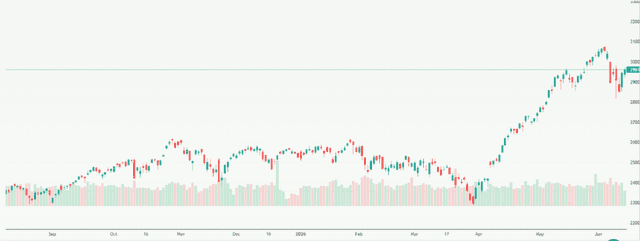
Technology stocks led the rally because lower oil prices can ease inflation pressure and support future economic growth. Investors viewed the agreement as a positive signal for global trade and supply chains. Market volatility also declined as risk appetite returned across major asset classes.
Oil Prices Tumble as Strait of Hormuz Reopening Nears
Brent and WTI Crude See Sharp Declines
Oil prices fell sharply after news of the agreement. Brent crude dropped nearly 5%, while West Texas Intermediate (WTI) crude declined more than 5% to its lowest level since March 2026. The market quickly removed much of the geopolitical premium that had pushed energy prices higher during the conflict.
Since roughly one-fifth of global oil shipments pass through the Strait of Hormuz, any progress toward reopening the route has a major impact on energy markets.
Why Lower Oil Prices Matter for Stocks?
Cheaper oil often benefits stock markets because it lowers transportation and production costs. It can also help reduce inflation, giving central banks more flexibility on interest rates. Several sectors responded positively, including:
- Airlines
- Travel companies
- Cruise operators
- Consumer-focused businesses
- Technology firms
Lower energy costs may also improve corporate profit margins in the coming quarters. This explains why investors quickly shifted toward growth-oriented stocks after the announcement.
Global Markets Join the Rally Beyond Wall Street
European Stocks Reach Record Levels
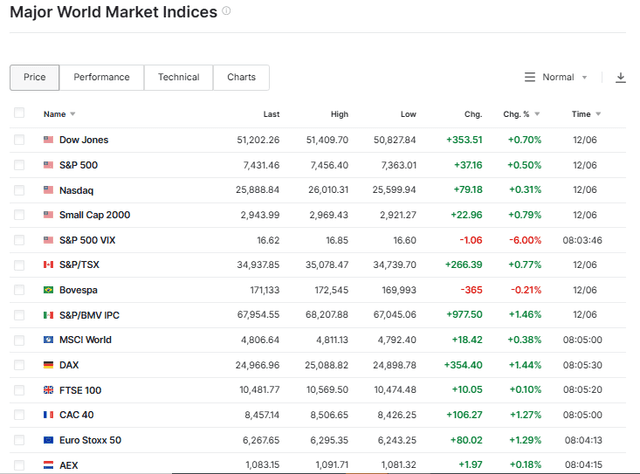
The rally was not limited to the United States. Europe’s STOXX 600 index reached a record high on June 15. Germany’s DAX gained around 1.6%, while France’s CAC 40 rose about 1.2%. Banking, travel, luxury goods, and automotive stocks were among the strongest performers. Investors viewed the peace framework as a major step toward restoring stability in global markets and reducing economic uncertainty.
Asia and Emerging Markets Rally
Asian markets also moved higher. Japan’s Nikkei surged more than 5%, while South Korea’s Kospi recorded gains above 5% during early trading. Emerging-market equities benefited from improved risk sentiment and expectations of lower energy costs.
Investors who had remained cautious during the conflict returned to equities as concerns about supply disruptions eased. The broad-based rally highlighted how closely global markets are connected to geopolitical developments in the Middle East.
Winners and Risks Investors Should Watch Next
Sectors Positioned to Benefit
Several industries could continue benefiting if the agreement holds. Technology companies remain attractive because lower inflation can support future growth. Travel and airline stocks gained as fuel costs fell.
Consumer discretionary companies may also benefit from stronger spending power. Investors increasingly use AI stock analysis tools to track sector rotation and identify companies that may gain from changing macroeconomic conditions.
Risks That Could Reverse the Rally
Despite the optimism, risks remain. The agreement is still preliminary and requires formal approval. Key issues, including Iran’s nuclear program and broader regional tensions, remain unresolved. Any setback in negotiations could quickly increase volatility.
Investors will also watch upcoming Federal Reserve decisions, inflation reports, and economic data. If inflation remains stubbornly high, markets could face renewed pressure even if geopolitical tensions continue to ease.
Conclusion
The surge in Dow, S&P 500, and Nasdaq futures shows how quickly investor sentiment can change when geopolitical risks decline. The proposed US-Iran peace agreement has boosted confidence, lowered oil prices, and triggered a global stock market rally.
While the early reaction has been overwhelmingly positive, investors should remain focused on the formal signing process and upcoming economic data. The sustainability of this rally will depend on both diplomatic progress and broader market fundamentals.
Disclaimer:
The content shared by Meyka AI PTY LTD is solely for research and informational purposes. Meyka is not a financial advisory service, and the information provided should not be considered investment or trading advice.
What brings you to Meyka?
Pick what interests you most and we will get you started.
I'm here to read news
Find more articles like this one
I'm here to research stocks
Ask Meyka Analyst about any stock
I'm here to track my Portfolio
Get daily updates and alerts (coming March 2026)