



Asian Stocks Rise as China Leads Gains, Dollar Nears Two-Month Low as Fed Rate-Hike Odds Drop to 30%

Key Points
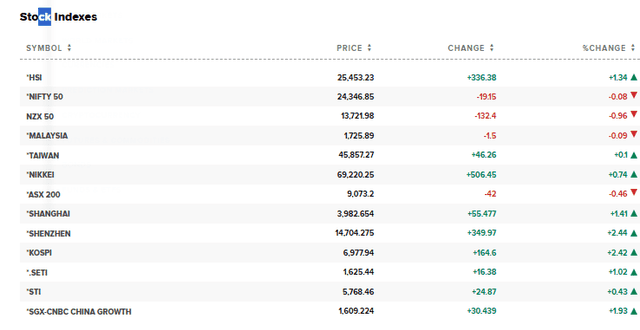
China leads Asian stocks higher, with Hang Seng up 1.6%.
Fed rate-hike odds fall to around 30.8% for September.
US dollar drops to its lowest level since early June.
Weak China data and oil prices remain key market risks.
Asian stocks moved higher on Monday, August 17, 2026, with Chinese equities leading the gains as investors adjusted their expectations for global interest rates. Chinese blue-chip stocks rose 0.8%, while Hong Kong’s Hang Seng gained 1.6%. At the same time, the US dollar moved towards a two-month low after weaker US data pushed expectations for a September Federal Reserve rate hike down to around 30%, compared with 50% a week earlier. The shift in Fed expectations kept Asian markets in focus.
Asian Stocks Today: China Leads Regional Gains
Chinese Stocks and Hong Kong Rally
Asian markets opened higher on Monday, August 17, 2026. Chinese blue chips rose 0.8%, while Hong Kong’s Hang Seng climbed 1.6%. Investors cut their bets on another US Federal Reserve rate hike while also weighing China’s latest economic figures. A weaker dollar added support to Asian assets. Reuters reported that the dollar fell to its lowest level since early June as traders reassessed the outlook for US monetary policy.
Japan and Other Asian Markets
Japan’s Nikkei added 0.3%, while the country’s economy grew at an annualised 1.1% in the April-June quarter. That was below the 2% growth forecast in a Reuters poll. South Korea’s market remained closed for a holiday. Australia’s ASX 200 moved in the opposite direction, falling 0.5%. The mixed performance showed that gains were not spread evenly across the region.
Why Fed Rate-Hike Odds Fell to 30%?
Weak US Retail Sales Change the Rate Outlook
US retail sales fell 0.6% in July, marking the first decline in nine months. Core retail sales also slipped 0.4%. The figures raised concerns about the strength of consumer demand and reduced expectations for tighter monetary policy.
Traders now see a 30.8% chance of a September Fed rate hike, down from 52.2% a week earlier. That sharp change has also put pressure on the US dollar and supported demand for riskier assets.
Fed Minutes and Jackson Hole in Focus
Markets are waiting for the Federal Reserve’s July meeting minutes, due on Wednesday, August 19. Investors will then turn to the Jackson Hole symposium, beginning August 27, for further clues about the Fed’s policy plans.
If the Fed signals that it prefers to keep rates unchanged, equities could find further support while the dollar may face more selling pressure.
Dollar Nears Two-Month Low as Asian Currencies Strengthen
The US dollar fell to its lowest level since early June on August 17. The euro rose to a two-month high of $1.1614, while the yen gained 0.2% to 159.04 per dollar.
A weaker dollar can support Asian markets by easing pressure on local currencies. It can also reduce the burden of dollar-linked debt for companies and economies across the region.
The weaker dollar also helped dollar-priced commodities. Gold gained 0.6% to $4,402.49 an ounce, according to Reuters. The currency market remains sensitive to US economic data and signals from central banks. Investors are also watching the yen as markets weigh the possibility of a Bank of Japan rate increase.
What Investors Should Watch Next?
China Data and Regional Growth
China’s latest figures have added some caution to the stock market rally. July industrial output grew 4.5% year on year, down from 5.3% in June and below the 4.8% forecast.
Retail sales rose only 0.6%, missing the 1.5% estimate. Fixed-asset investment fell 6.7% during the first seven months of the year. The weaker figures suggest that China’s domestic demand remains under pressure even as its stock markets move higher.
US Data, Fed Minutes and Global Markets
Investors will watch the Fed minutes, upcoming US economic data and corporate earnings for fresh signals. Oil prices are another concern. Brent crude traded near $88.79 a barrel on Monday after gaining more than 5% last week.
Middle East tensions and slower shipping through the Strait of Hormuz could keep energy prices elevated. That would add pressure to the inflation outlook and could affect expectations for future Fed policy.
An AI stock analysis tool can help investors compare market signals, earnings trends and technical levels, but macroeconomic and geopolitical risks still need to be considered before making investment decisions.
Conclusion
Asian stocks gained on August 17 as China led regional markets and lower Fed rate-hike expectations pushed the dollar down. The rally still faces several tests. Weak Chinese consumption, slower Japanese growth, high oil prices, and the upcoming Fed minutes could influence the next market move. Investors will be watching whether easier US policy can support Asian equities despite regional economic and geopolitical risks.
Disclaimer:
The content shared by Meyka AI PTY LTD is for research and informational purposes only. Meyka is not a financial advisory service, and the information provided should not be treated as investment or trading advice.
What brings you to Meyka?
Pick what interests you most and we will get you started.
I'm here to read news
Find more articles like this one
I'm here to research stocks
Ask Meyka Analyst about any stock
I'm here to track my Portfolio
Get daily updates and alerts (coming March 2026)