Asia Stocks Trade Mixed on Iran Tension Fears; Nikkei & KOSPI Pull Back From Record Highs

Key Points
Nikkei and KOSPI slipped after reaching record highs.
Iran tensions increased oil price and inflation fears.
AI and semiconductor stocks still support long-term optimism.
Investors now watch Fed signals and Middle East developments.
Asia stocks market turned cautious on June 2, 2026, as rising tensions involving Iran pushed investors toward safer assets. Japan’s Nikkei 225 and South Korea’s KOSPI slipped after recently hitting record highs driven by the global AI boom.
At the same time, oil prices moved higher, increasing fears about inflation and supply disruptions across Asia. Traders are now closely watching Middle East developments, central bank signals, and tech sector momentum as market volatility returns to the spotlight.
Why Asian Markets Turned Mixed Despite Recent Record Highs?
Iran Tensions Trigger Risk-Off Mood
Asian stock markets traded mixed on June 2, 2026, as growing Iran-related tensions weakened investor confidence. Investors became cautious after reports showed Tehran had paused indirect talks with the United States. At the same time, fears about the Strait of Hormuz increased concerns about global oil supply disruptions.
Brent crude stayed near $95 per barrel, keeping inflation worries alive across Asia and Europe. Higher oil prices usually pressure import-heavy economies like Japan and South Korea. Reuters reported that the MSCI Asia-Pacific index fell 0.6%, while investors moved toward safer assets such as the U.S. dollar and government bonds.
AI Optimism Still Supports Tech Stocks
Despite geopolitical fears, artificial intelligence remained a major growth driver for Asian equities. Semiconductor and AI-linked companies continued attracting strong investor interest after months of powerful rallies.
Stocks connected to Nvidia’s AI ecosystem stayed active across the region. South Korea’s SK Hynix and Samsung Electronics benefited from rising demand for advanced memory chips used in AI servers. Japan’s SoftBank also remained in focus after announcing a $52 billion AI data center investment plan in France.
Still, analysts said many traders started booking profits after record highs in recent weeks. This caused volatility in chip-heavy indexes across Asia. Investors are now balancing AI optimism with global macro risks.
Nikkei 225 Pulls Back After Historic Rally
Why Did the Nikkei Fall After Record Highs?
Japan’s Nikkei 225 recently touched a record high near 66,934 points before pulling back sharply on June 2. The index dropped around 1.9% as rising oil prices and Middle East uncertainty triggered profit-taking in technology shares.
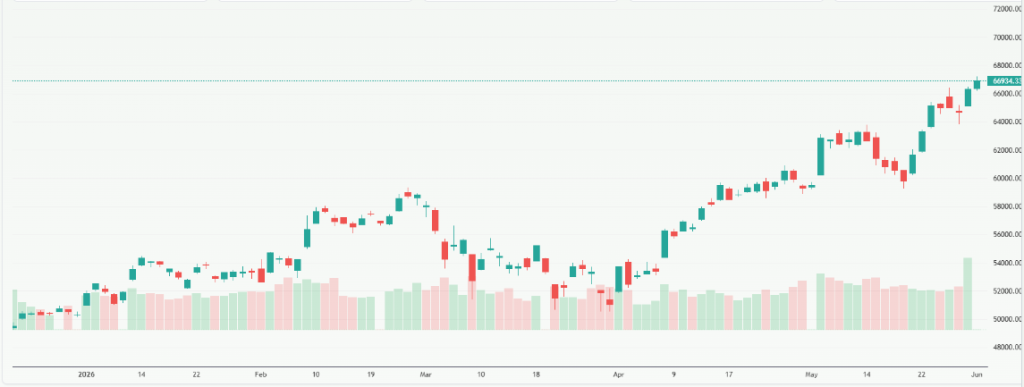
Automakers and exporters also faced pressure because a stronger dollar and expensive energy imports can hurt company earnings. Market volatility increased after investors questioned whether the recent AI-driven rally had moved too fast.
Technical Analysis Summary and Market Outlook
Technical indicators still show long-term strength in the Nikkei trend. However, analysts expect short-term corrections after the index gained strongly during May. Support levels remain near the 64,500 zone, while resistance stays close to recent record highs.
Meyka’s AI stock analysis tool suggests that AI-related momentum still supports Japanese tech shares, but geopolitical headlines could create near-term swings. Several global analysts also believe Japan’s semiconductor sector may continue outperforming if AI spending remains strong through 2026.
KOSPI Retreats From Record High as Investors Book Profits
What Is Driving Volatility in South Korean Stocks?
South Korea’s KOSPI index also pulled back after reaching fresh record highs in recent sessions. Reuters reported that the index briefly fell more than 3% during Tuesday trading as investors locked in profits from semiconductor stocks.
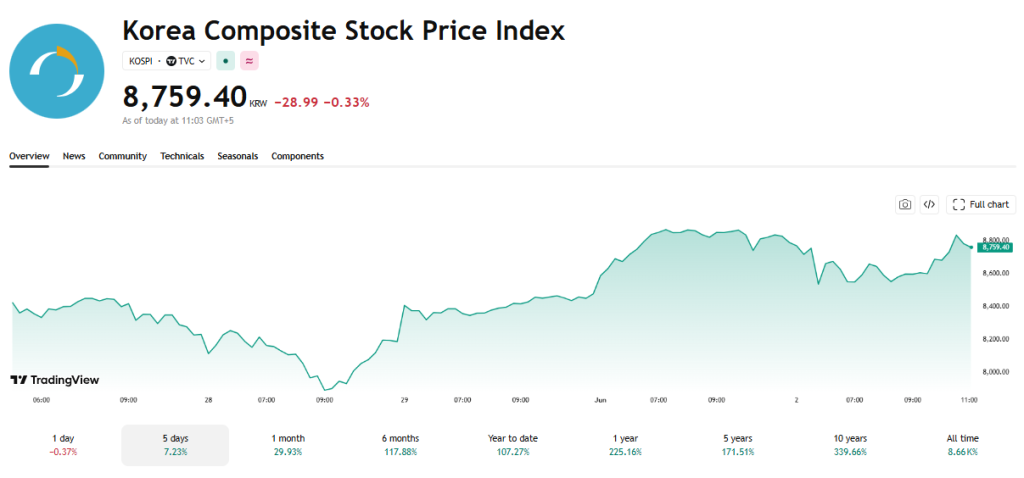
Inflation concerns added pressure after South Korea’s May consumer price data increased expectations of another central bank rate hike. Rising borrowing costs could affect future corporate earnings and consumer spending.
Meyka Forecast and Analyst Insights
The long-term outlook for South Korean technology stocks still remains positive because global AI infrastructure demand continues growing. Samsung Electronics and SK Hynix remain key winners in the global AI memory chip race.
Meyka says the KOSPI may remain volatile in the short term, but AI-driven semiconductor demand still supports bullish momentum. Analysts from Investing.com and Reuters also believe foreign institutional investors continue seeing Korea as a major AI market beneficiary in Asia.
Closing
Asian markets remain under pressure as Iran tensions increase fears around oil prices and global inflation. While the Nikkei and KOSPI pulled back from record highs, strong AI and semiconductor demand still supports long-term market optimism. Investors will closely watch Middle East developments, central bank signals, and upcoming economic data for the next market direction.
Disclaimer:
The content shared by Meyka AI PTY LTD is solely for research and informational purposes. Meyka is not a financial advisory service, and the information provided should not be considered investment or trading advice.
What brings you to Meyka?
Pick what interests you most and we will get you started.
I'm here to read news
Find more articles like this one
I'm here to research stocks
Ask Meyka Analyst about any stock
I'm here to track my Portfolio
Get daily updates and alerts (coming March 2026)