











Qantas Airways shares tumbled more than 10% in early trade on March 2, 2026, sending a strong warning signal to global investors. The sharp fall followed rising fears around Middle East tensions, oil price spikes, and flight disruption risks. As energy costs surged and travel uncertainty grew, airline stocks faced heavy selling pressure. Qantas, Australia’s largest carrier, was among the hardest hit in the early session.
The sudden drop surprised many, as the airline had shown stable recovery in recent quarters. Still, fast-changing global events quickly shifted market sentiment. Traders moved to cut risk, pushing prices lower within minutes of market open. This steep decline has raised fresh concerns about airline earnings, fuel costs, and short-term travel demand, making Qantas a key stock to watch in the days ahead.
What Happened to Qantas Shares Today?
Early Market Performance Snapshot
Qantas Airways shares plunged more than 10% in early trade on March 2, 2026, on the Australian Securities Exchange (ASX). The stock later recovered slightly but remained down over 7% by midday, marking its steepest intraday fall since March 2020.
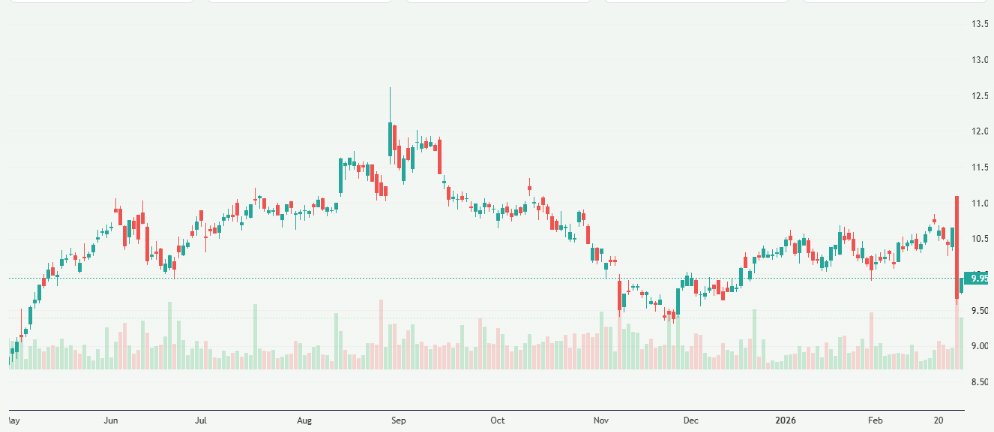
The sharp decline followed heavy selling across the airline sector. Major Asian carriers, including Cathay Pacific, Singapore Airlines, and Japan Airlines, also dropped between 4% and 8% in early sessions. Investors quickly reacted to global risk signals, especially rising oil prices and travel disruption fears.
This sell-off wiped billions from airline market values in just hours. Traders moved fast to reduce exposure to aviation stocks, which are highly sensitive to geopolitical risk and energy price volatility.
Why Did the Stock Fall So Sharply?
The sell-off was driven by external global shocks, not company-specific news. Key triggers included:
- Rising Middle East conflict risk
- Sharp spike in crude oil prices
- Widespread flight disruptions and route closures
Oil prices surged over 7% in a single day, raising serious concerns about jet fuel costs, a major expense for airlines. Even though Qantas confirmed that its own flights were not directly disrupted, investor confidence weakened rapidly due to rising operational risks.
Middle East Conflict: Why Is It Hitting Airline Stocks So Hard?
What Is Happening in the Region?
Tensions escalated sharply after military clashes involving the US, Israel, and Iran, leading to temporary closures of major aviation hubs, including Dubai and Doha. These closures stranded thousands of passengers and forced airlines to:
- Cancel flights
- Reroute aircraft
- Delay schedules
The Middle East is a critical transit region for long-haul routes between Asia, Europe, and Australia. Any disruption in this corridor immediately impacts airline operations and travel demand worldwide.
Why are Airlines Extremely Sensitive to War Risk?
Airlines operate on tight margins and depend on predictable schedules. Conflict zones introduce uncertainty in:
- Fuel supply
- Airspace safety
- Passenger confidence
Even airlines not flying directly through conflict zones suffer. Investors increase the risk premium, which pushes stock prices lower. This explains why Qantas shares dropped sharply despite limited direct route exposure.
Rising Oil Prices: The Biggest Financial Threat
How Did Oil Markets React?
Crude oil prices jumped more than 7% overnight, after reports of damaged oil tankers and potential supply disruptions. This surge triggered panic selling in airline stocks.
Jet fuel accounts for one of the largest operating expenses for airlines. Even small price increases can sharply impact earnings forecasts.
How Does Higher Fuel Cost Impact Qantas?
In fiscal year 2024, Qantas spent A$5.32 billion on fuel, a 17% increase year-over-year. Every $1 rise in oil prices significantly increases quarterly operating costs.
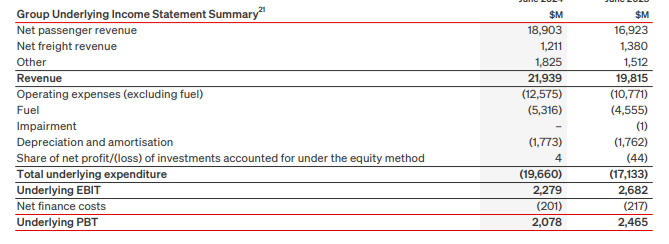
Higher fuel expenses directly:
- Reduce profit margins
- Lower earnings guidance
- Increase ticket pricing pressure
This explains the market’s immediate negative reaction.
How Is Qantas Managing the Crisis?
What Steps Has the Airline Taken?
Qantas confirmed that its own flights remain operational, but its codeshare partner, Emirates, was heavily impacted by Dubai airport closures.
In response, Qantas announced:
- Flexible rebooking options
- Penalty-free flight changes
- Customer support enhancements
These steps aim to protect customer confidence and forward bookings.
How Is Qantas Reducing Risk Exposure?
The airline continues to adjust capacity toward Asia-Pacific markets, where demand remains more stable. It also relies on fuel hedging strategies to manage oil price swings and reduce financial shocks.
Broader Impact on Global Airline Stocks
Which Airlines Were Hit the Hardest?
The global sell-off affected nearly every major Asian airline:
- Cathay Pacific: -8%
- Singapore Airlines: -6%
- Japan Airlines: -5%
- ANA and Air China: -4%
This highlights how systemic risk, not company-specific performance, drove the decline.
Why Do Airline Stocks React So Strongly to Global Shocks?
Airlines face:
- High fixed costs
- Thin profit margins
- Demand-sensitive revenues
This makes them high-beta stocks. Any global uncertainty leads to outsized price movements, often amplified by algorithmic and momentum trading.
Qantas Stock Details, Forecast & Technical Outlook – Meyka.com
Short Stock Overview
- Ticker: QAN.AX
- Exchange: ASX
- Sector: Airlines / Transportation
- Market Cap: Approx. A$14 billion
Technical Analysis Summary via Meyka.com
According to Meyka’s AI stock analysis tool, Qantas currently shows short-term bearish momentum:
- Trend: Bearish
- RSI: Near oversold zone
- Key Support: A$9.60
- Resistance: A$10.80
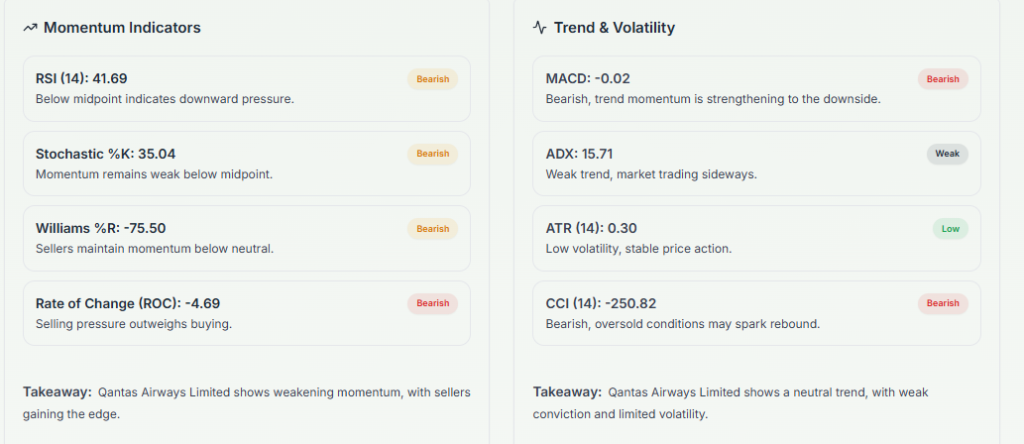
The technical outlook suggests high volatility, with potential sideways movement until geopolitical risks stabilize.
What Meyka Says About Qantas?
Meyka highlights strong long-term fundamentals, backed by:
- Stable domestic market share
- Strong loyalty program revenues
- Fleet modernization investments
However, short-term risks from oil price volatility and global uncertainty remain elevated.
What Other Analysts are Saying?
Reuters analysts note that Qantas recently reported A$1.46 billion in first-half profit, up 5%, but warned that international earnings are weakening due to rising costs and slower U.S. travel demand.
CEO Vanessa Hudson stated on February 26, 2026, that weakness in U.S. travel demand is temporary, with recovery expected in the second half of FY26.
Qantas Airways: What Should Investors Watch Next?
Key Risk Factors Ahead
- Oil price movement
- Middle East airspace stability
- Passenger booking trends
- Currency fluctuations
- Upcoming earnings guidance
What Could Trigger a Stock Recovery?
- Diplomatic de-escalation
- Stabilization in energy markets
- international travel demand
- Strong quarterly earnings updates
Final Words
Qantas’ sharp stock drop reflects rising global uncertainty rather than company weakness. Oil price shocks and geopolitical risks have reshaped short-term sentiment. While long-term fundamentals remain solid, volatility may persist. Investors should closely track energy markets, travel demand, and global stability, as these forces will define Qantas’ near-term performance.
Frequently Asked Questions (FAQs)
Qantas shares fell over 10% on March 2, 2026, due to rising oil prices, Middle East tensions, and fears of travel disruptions. Investors reacted quickly to higher costs and market uncertainty.
After the March 2 drop, Qantas shows strong long-term fundamentals, but short-term risks remain. Rising fuel costs and global uncertainty make cautious investors consider timing carefully before buying.
Higher oil prices raise jet fuel costs, which can reduce Qantas’ profits. Rising energy expenses may affect earnings forecasts and ticket pricing throughout 2026 if prices stay high.
Disclaimer:
The content shared by Meyka AI PTY LTD is solely for research and informational purposes. Meyka is not a financial advisory service, and the information provided should not be considered investment or trading advice.
What brings you to Meyka?
Pick what interests you most and we will get you started.
I'm here to read news
Find more articles like this one
I'm here to research stocks
Ask our AI about any stock
I'm here to track my Portfolio
Get daily updates and alerts (coming March 2026)