Shares of Ola Electric Mobility Ltd. plunged to fresh record lows in February 2026, slipping near the ₹27‑₹28 mark on Indian stock exchanges after weak quarterly results and reports of major structural changes. Investors were rattled as the electric two‑wheeler maker revealed plans to sharply cut its physical store network to roughly 550 outlets by March 2026, a stark reversal from earlier expansion efforts.
The stock’s slide hasn’t just erased earlier gains; it has raised new questions about Ola Electric’s growth path, market position, and ability to regain investor confidence amid falling sales and stiff competition. Let’s explore what’s driving the downturn and what it could mean for the EV maker’s future.
Advertisement
Stock Details & Forecast for Ola Electric Mobility (OLAELEC.NS)
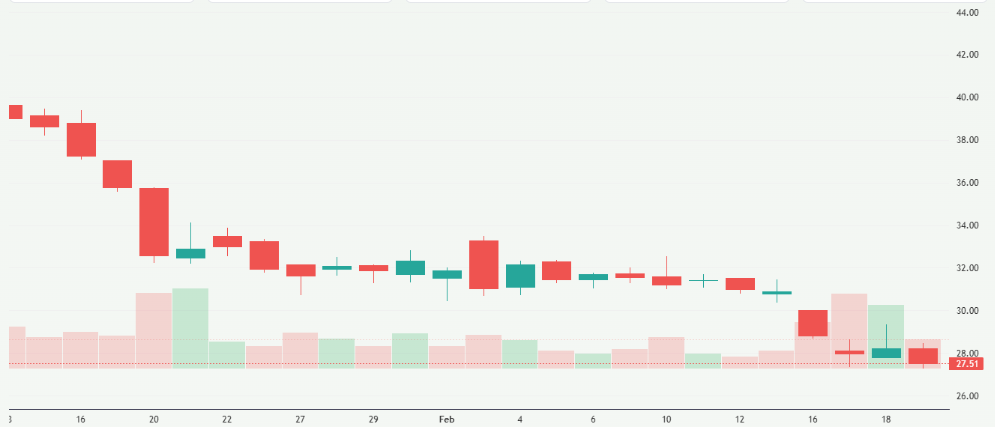
Ola Electric Mobility Ltd. shares have suffered a sharp downturn in early 2026. The stock has been trading near all‑time lows around ₹26-₹28 on the NSE and BSE as investor confidence weakens. Recent market statistics show the stock’s 52‑week range at ₹26.83-₹71.25, with prices sliding sharply from late 2025 to early 2026.
Analyst Price Targets & Forecasts:
- According to consensus data compiled by Investing.com, the average 12‑month price target is ~₹34, with a possible high estimate of ₹52 and a low estimate of ₹20.
- Most analysts currently rate the stock as “Sell” or “Hold”, with fewer buy recommendations.
Key Fundamentals:
- The trailing P/E ratio is negative, reflecting sustained losses.
- Market cap continues to shrink as revenue declines persist.
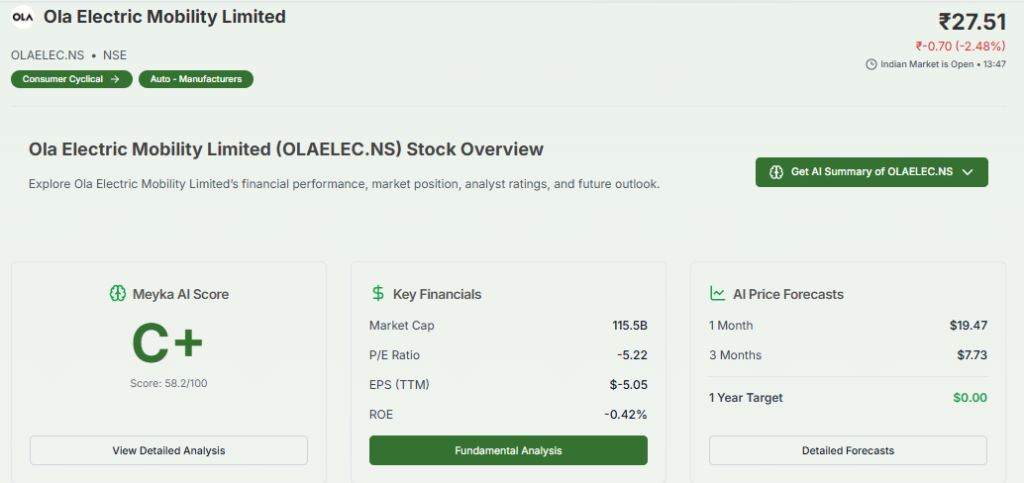
These forecasts suggest mixed sentiment: long‑term volatility remains high, and price targets vary widely, showing fundamental uncertainty in the stock.
Why Shares are Falling: Revenue Drop & Analyst Downgrades?
Q3 FY26 Earnings Miss Expectations
In the quarter ending Dec 31, 2025, Ola Electric reported major revenue contraction and continued net losses:
- Revenue fell 55% year‑on‑year to ₹470 crore.
- Net loss was ₹487 crore, slightly narrower than the ₹564 crore loss in the prior year.
Revenue compression was driven by a steep drop in scooter deliveries and slowing EV adoption. These weak numbers weighed heavily on investor sentiment and were followed by broad market selling pressure.
Brokerage Downgrades & Price Target Cuts
Investor confidence was further hit by major brokerage downgrades:
- Citi downgraded Ola Electric to “Sell”, cutting its target price by 51% to ₹27 from ₹55.
- Emkay Global Financial Services also cut the target to ₹20 from ₹50.
These bearish calls reflect analysts’ concerns that the turnaround could be prolonged due to weak volume growth and competitive pressures.
How the Business Is Changing: Store Closures & Restructuring?
One of the most impactful developments is Ola Electric’s decision to sharply reduce its retail footprint.
Why are Ola Cutting Stores?
Reports on February 20, 2026, indicate that the company plans to cut its physical store network to around 550 outlets by the end of March 2026. This is a reversal from its earlier strategy of expanding to thousands of locations.
This contraction is part of a broader restructuring aimed at reducing costs and aligning with slowing demand. Many stores are already reported to have been shut, and employees have been laid off in affected regions.
Impact on Sales & Market Share
The sales slump has been dramatic:
- Deliveries dropped by 61% YoY in Q3 FY26 to 32,680 electric two‑wheelers.
- Market share in the EV two‑wheeler segment shrank from over 26% to near 4% by early February 2026.
These shifts show that the business model is under stress and strategic repositioning is underway.
Technical Analysis Summary & Trading Conditions
Meyka AI & Technical Insights:
Reports from Meyka indicate mixed short‑term technical signals:
- Technical momentum indicators like RSI and MACD show neutral readings, leaving directional conviction unclear.
- The stock remains below its key moving averages (50‑day and 200‑day), signalling persistent bearish pressure.
- Meyka AI’s internal grading system gives the stock a C+ grade (suggestion: HOLD), reflecting uncertainty rather than strong buy signals.
Meyka’s model forecast also projects downside price targets for certain timeframes, highlighting continued risk without clear positive catalysts.
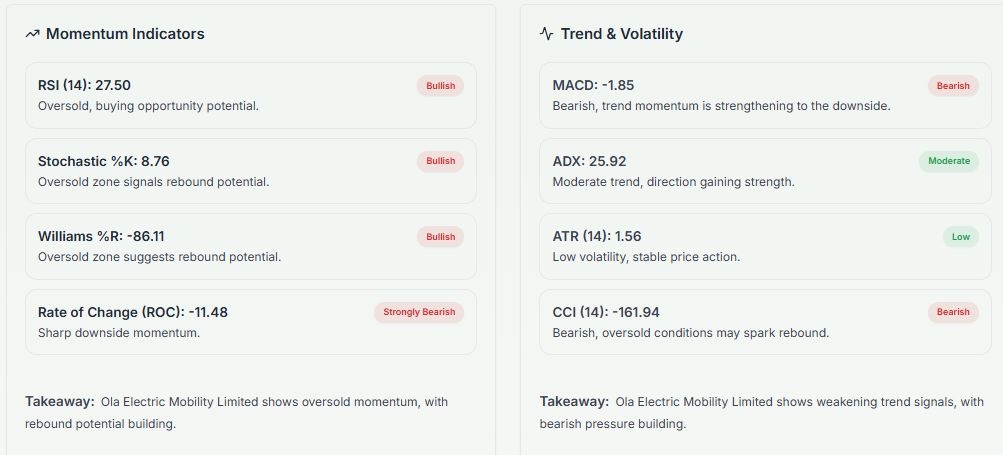
Traders should watch key support and resistance levels around recent lows and moving averages for short‑term direction changes.
Broader Market Pressures & Competitive Landscape
Ola Electric’s challenges are not unique but are sharper due to industry headwinds:
- EV adoption in India has slowed slightly, partly due to GST changes and shifting consumer preferences.
- Established manufacturers such as Bajaj Auto, TVS Motor, and Ather Energy continue to expand their EV share, putting pressure on Ola’s market position.
- High fixed costs and service quality issues have exposed vulnerabilities in Ola’s direct retail strategy.
Operationally, the company is cutting costs and automating functions, but these mid‑tier adjustments may not immediately reverse market losses.
Is There a Path to Recovery? What Analysts Say
Analysts and company management acknowledge deep issues but note some potential stabilizers:
- Ola Electric is targeting a 50% reduction in operating costs through automation and vertical integration.
- Gross margins showed some sequential improvement, hinting that unit economics may stabilise over time.
However, achieving consistent volume growth and narrowing losses will be critical. Many analysts caution that a turnaround may take several quarters, and investors should remain cautious.
Final Words
Ola Electric’s shares have hit record lows due to falling sales, shrinking market share, and major store closures. Analysts warn that a turnaround may take time. Investors should watch revenue trends, operational changes, and market competition closely before making decisions, as short-term volatility is likely to continue.
Advertisement
Frequently Asked Questions (FAQs)
Ola Electric shares fell to record lows in February 2026. Weak Q3 revenue, losses, and broker downgrades made investors nervous. Store closures and lower sales added more pressure.
By March 2026, Ola Electric will cut stores to about 550. This may reduce costs but could limit sales. Investors see it as a sign of restructuring, not immediate growth.
After Q3 2025-26, analysts mostly rated Ola Electric as “Sell” or “Hold.” Falling revenue and shrinking market share create risk, so cautious investors should watch carefully before buying.
Disclaimer:
The content shared by Meyka AI PTY LTD is solely for research and informational purposes. Meyka is not a financial advisory service, and the information provided should not be considered investment or trading advice.
Advertisement
What brings you to Meyka?
Pick what interests you most and we will get you started.
I'm here to read news
Find more articles like this one
I'm here to research stocks
Ask our AI about any stock
I'm here to track my Portfolio
Get daily updates and alerts (coming March 2026)