Oil prices in markets are acting up again. On Feb. 24-25, 2026, global crude prices climbed about 1% and stayed near their highest levels in roughly seven months. Traders are now focused on rising U.S.-Iran tensions that could threaten supply, even as data shows U.S. oil stocks growing sharply, a normally bearish sign for crude.
The risk of a wider conflict has lifted both Brent and WTI crude prices as investors put a “geopolitical premium” on energy markets. Yet behind the eye‑catching numbers lies a deeper tug‑of‑war between fundamental supply signals and fear of disruption in a key oil region.
Advertisement
Let’s unpack what’s really driving these moves, and what it means for energy markets and consumers alike.
Oil Prices Rise on US‑Iran Tensions, Overshadowing Large Inventory Build
What’s Driving Current Oil Price Moves?
Oil prices have been strong in recent weeks, even reaching near seven‑month highs around late February 2026. This rise is mainly due to growing geopolitical risk between the United States and Iran. Traders are pricing in the possibility that conflict could disrupt crude supply from the Middle East, a key region for global oil exports.
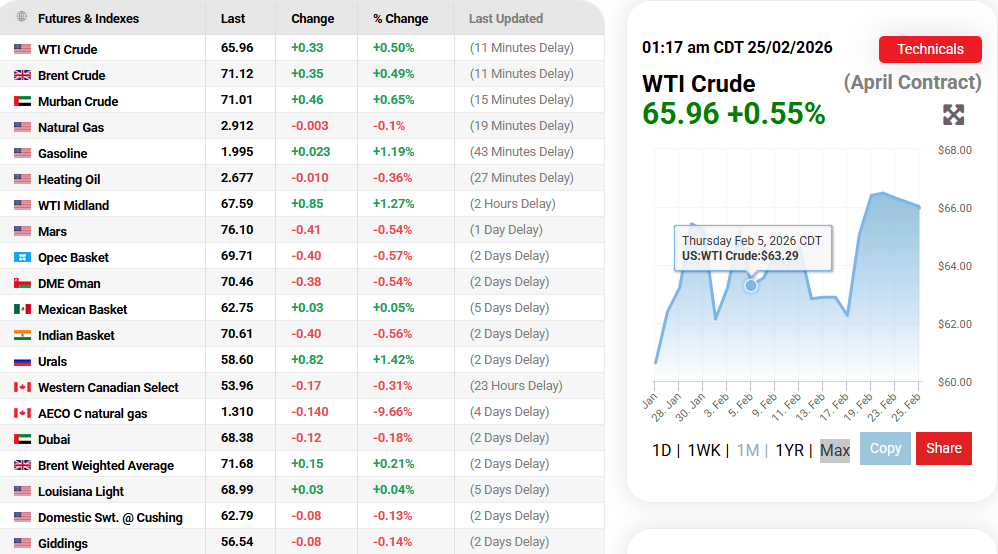
At the same time, U.S. crude inventories have grown sharply, which usually weakens prices. However, the fear of disruption has outweighed this bearish signal, keeping Brent crude near about $71-$72 per barrel and WTI around $66-$67 in late February 2026.
This dynamic shows how geopolitical risk premiums now outweigh traditional supply signals such as stock builds.
Why Geopolitical Tensions are So Influential?
What Role Do US‑Iran Relations Play in Oil Markets?
The ongoing tensions stem from nuclear negotiations and military posturing. Talks between U.S. and Iranian diplomats are scheduled, but progress has been limited. Markets see the risk that negotiations could fail, raising the chances of conflict.
Even the possibility of a clash can push prices up. That’s because Iran lies close to the Strait of Hormuz, through which a large share of global oil passes. A real disruption there could significantly reduce supply.
Analysts widely note that current price strength reflects risk anticipation, not actual loss of output. That means traders are paying up now to hedge against future supply shocks.
Supply vs. Inventory: What’s the Real Story?
How Do Rising U.S. Inventories Fit In?
Normally, when U.S. crude inventories rise sharply, oil prices fall. Recently, the American Petroleum Institute (API) reported a large inventory build, much greater than expected. This would usually push prices down.
However, investors remain focused on geopolitical risk, so the bearish inventory signal has not fully translated into lower prices. In fact, gasoline and distillate stocks, refiners’ key products, have actually tightened.
This shows that fundamental supply data can be temporarily overridden by geopolitical fear in the oil market.
Oil Price: Market Reaction & Broader Trends
Are Other Factors Supporting Oil Price Strength?
Yes, several related trends are reinforcing the price environment:
- Oil shipping costs have jumped to six‑year highs as tanker demand rises amid strong exports from the Middle East. This makes moving crude more expensive, adding to market tightness.
- Major producers like Saudi Arabia and the UAE are exporting record volumes, keeping flows steady.
- The U.S. Strategic Petroleum Reserve remains a key buffer to manage major shocks, while China holds large opaque reserves that also affect supply perceptions.
These trends help explain why traders remain engaged and why prices have been resilient, even in the face of mixed fundamental signals.
What Could Change the Outlook?
Bullish Scenarios
Prices could move higher if:
- Geopolitical tensions escalate into conflict.
- Talks fail, and the risk of a closed Strait of Hormuz rises.
- Major producers cut output further.
Many analysts say that in a worst‑case scenario, crude could face double‑digit percentage price spikes if supply routes are disrupted.
Bearish Scenarios
Prices could weaken if:
- Diplomatic progress reduces the risk premium.
- U.S. and global inventories continue to grow.
- Demand data weakens in key markets like China and the U.S.
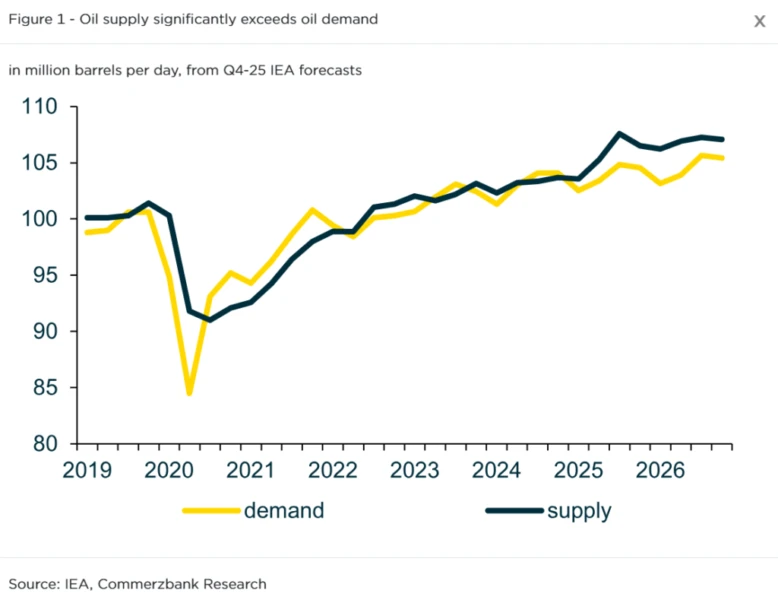
An AI stock analysis tool recently noted that energy market volatility is high, but structural supply (production capacity and inventories) still limits how much prices can rise before a correction occurs.
Oil Price Forecast Themes
Most forecasts suggest that crude prices may stay elevated in the near term, with Brent holding above $70 and WTI near $66 as long as tensions persist. However, long‑term direction will depend on:
- Progress in U.S.-Iran diplomatic talks.
- Inventory trends from the EIA official release.
- Broader economic conditions affecting oil demand.
Energy strategists generally expect continued volatility, with prices likely to trade in a wider range than earlier periods of relative calm.
Final Words
Oil markets are now driven more by geopolitical risk than by traditional supply and inventory data. The current US‑Iran tensions have kept prices near multi‑month highs, despite a large inventory build. Traders are pricing in potential disruption, which highlights how geopolitics can dominate energy markets. Investors and consumers should watch diplomatic developments closely, as any shift could rapidly change the oil price outlook.
Advertisement
Frequently Asked Questions (FAQs)
Oil prices are rising because traders fear conflict in the Middle East could disrupt supply. Even though US stocks grew, investors pay for risk protection. This keeps crude prices high in February 2026.
US‑Iran tensions raise the risk of supply disruption. Oil from the Middle East goes through key routes like the Strait of Hormuz, so fear of conflict pushes prices up.
Yes. If conflict blocks major shipping routes or disrupts output, prices could jump sharply. Analysts warn ethat ven short blockages can lift oil costs significantly.
Disclaimer:
The content shared by Meyka AI PTY LTD is solely for research and informational purposes. Meyka is not a financial advisory service, and the information provided should not be considered investment or trading advice.
Advertisement
What brings you to Meyka?
Pick what interests you most and we will get you started.
I'm here to read news
Find more articles like this one
I'm here to research stocks
Ask our AI about any stock
I'm here to track my Portfolio
Get daily updates and alerts (coming March 2026)