Oil prices stayed under pressure on February 13, 2026, as traders weighed fresh warnings of a global supply glut and waited for key US inflation data. Brent crude hovered near $67 a barrel, while WTI held around $63, after sharp losses earlier in the week. New forecasts from energy agencies suggest that oil supply could outpace demand in 2026, raising fears of rising inventories and weaker prices.
At the same time, markets are closely watching the upcoming US Consumer Price Index (CPI) report, which could shape interest rate expectations and economic growth outlook. This mix of oversupply risks and macro uncertainty has kept investors cautious, leaving oil markets stuck in a fragile and uncertain phase.
Advertisement
Oil Prices Today: Latest Market Snapshot
What are the current oil price levels?
Oil prices stayed under pressure on February 13, 2026, after a sharp sell-off in the previous session.
- Brent crude: $67.52 per barrel, down 2.7%
- WTI crude: $62.84 per barrel, down 2.8%
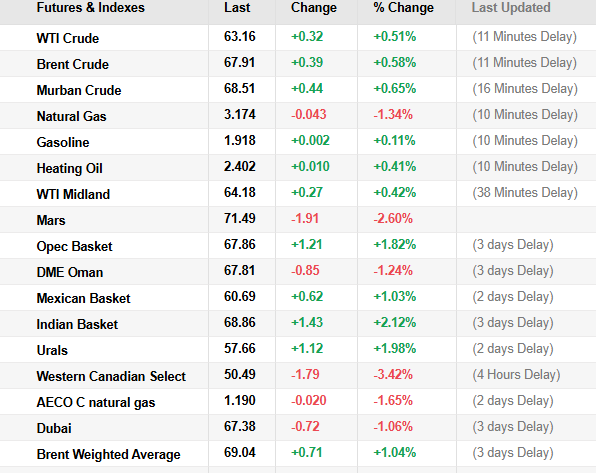
The drop followed a bearish report from the International Energy Agency (IEA), which warned of a record global oil surplus in 2026.
Traders also reacted to rising US crude inventories, which jumped by 8.5 million barrels, far above market expectations. Market activity stayed muted in Asian trading hours. Investors preferred to stay cautious ahead of the US Consumer Price Index (CPI) report.
Why are oil prices struggling to recover?
Several factors are keeping oil under pressure:
- Rising global crude supply
- Slower demand growth forecasts
- High US stockpiles
- Weak economic signals from China and Europe
According to the IEA, global oil supply is now growing much faster than consumption, creating persistent downward pressure on prices.
Supply Glut Fears Dominate Oil Market Sentiment
What does the IEA say about the 2026 oil surplus?
The International Energy Agency warned on February 12, 2026, that global oil markets could face a record surplus of 3.7 million barrels per day (bpd) in 2026.
This surplus equals nearly 4% of global oil demand, one of the largest in modern energy market history. Key reasons behind the surplus:
- Rapid supply growth
- Weak demand recovery
- Rising inventories
Global oil stocks are now rising at the fastest pace since the pandemic, increasing pressure on prices.
Which countries are driving oil supply growth?
Non-OPEC producers are leading the supply surge. Key contributors include:
- United States
- Brazil
- Guyana
- Canada
The IEA reports that non-OPEC countries account for nearly 60% of new supply growth in 2026. Meanwhile, Venezuela could lift production from 880,000 bpd to nearly 1.2 million bpd if sanctions continue to ease.
What is OPEC+ planning next?
OPEC+ paused output hikes in Q1 2026 due to falling prices. However, pressure is building to increase production. OPEC forecasts a small surplus in Q2 2026, assuming output levels remain unchanged. The March 1, 2026, OPEC+ meeting is now seen as a major turning point for oil prices.
Slowing Global Demand Growth Adds Pressure
Why is oil demand growth slowing?
The IEA cut its 2026 global oil demand growth forecast to 850,000 bpd, down from earlier estimates. Main reasons:
- Weak manufacturing activity
- High borrowing costs
- Slower Chinese economic growth
- Rapid EV adoption
Which regions show weak demand?
- China: Demand growth slowed due to economic restructuring.
- Europe: Industrial slowdown reduced diesel use.
- United States: Gasoline demand remains stable but lacks strong momentum.
Air travel recovery helps, but it is not enough to offset broader weakness.
US CPI Data – Why It Matters for Oil Markets?
How does inflation affect oil prices?
The US CPI report, due later on February 13, 2026, is expected to guide Federal Reserve interest rate policy. If inflation stays high:
- Rate cuts may be delayed
- The US dollar could strengthen
- Oil demand may weaken
A stronger dollar makes oil more expensive for global buyers, hurting consumption.
How could CPI data move oil prices?
- Higher inflation → lower oil prices
- Lower inflation → possible price rebound
Markets expect short-term volatility once CPI numbers are released. Many traders now use AI stock analysis tools to model CPI-driven market moves, improving timing and trade accuracy in volatile energy markets.
Geopolitical Risks vs. Oversupply Reality
Geopolitical tensions have eased.
Key developments:
- US-Iran talks reduced immediate supply disruption risks
- The Russia-Ukraine conflict has limited oil market impact
- Venezuela sanctions relief added supply
This shift caused traders to remove geopolitical risk premiums from oil prices. Now, oversupply dominates price action.
Oil Price Forecast for 2026 – What Analysts Expect?
What are major banks forecasting?
- JPMorgan: Brent at $58 per barrel
- Goldman Sachs: WTI at $52–55 range
- EIA: WTI averaging $51 in 2026
Technical market outlook
- Brent resistance: $70
- WTI resistance: $65
- Key support zone: $55-57
If prices break below support, analysts warn of accelerated downside risk.
Conclusion – Fragile Oil Market Awaits Inflation Signal
Oil prices remain under pressure as supply glut fears overpower geopolitical support. The IEA’s 3.7 million bpd surplus forecast for 2026 has reshaped investor expectations.
Weak demand, rising inventories, and policy uncertainty continue to limit price recovery. The US CPI report on February 13, 2026, could act as the next major catalyst.
Unless OPEC+ curbs production or demand rebounds sharply, oil prices are likely to stay range-bound with a bearish tilt through early 2026.
Advertisement
Frequently Asked Questions (FAQs)
Why are oil prices falling today?
Oil prices fell on February 13, 2026, due to rising global supply and slow demand. Traders are cautious ahead of US inflation data, keeping oil markets under pressure.
Will oil prices rise or fall in 2026?
Experts expect oil prices to stay low in 2026. Oversupply and weak demand keep Brent near $58 and WTI around $52–55. Prices may rise only if demand improves.
How does US CPI data affect oil prices?
The US CPI report on February 13, 2026, affects interest rates and the dollar. Higher inflation can lower oil demand, while lower inflation may help prices recover slightly.
Disclaimer: The content shared by Meyka AI PTY LTD is solely for research and informational purposes. Meyka is not a financial advisory service, and the information provided should not be considered investment or trading advice.
Advertisement
What brings you to Meyka?
Pick what interests you most and we will get you started.
I'm here to read news
Find more articles like this one
I'm here to research stocks
Ask our AI about any stock
I'm here to track my Portfolio
Get daily updates and alerts (coming March 2026)