The Indian Sensex faced significant selling pressure today as technology and metal stocks came under heavy decline, pushing major market benchmarks lower throughout the session. Domestic equity markets opened weak and remained under pressure as investors reacted to sector-specific weaknesses and global cues that dampened risk appetite. The sell-off was broad based, affecting large-cap, mid-cap and even small-cap segments, and erasing gains made in recent weeks.
Benchmark indices ended lower, with corporate earnings concerns, foreign institutional investor (FII) outflows, and fears about artificial intelligence disrupting traditional IT revenue models contributing to volatility. Market participants noted that this session marked a continuation of weakness seen in recent days, as the Sensex, Nifty 50 and key sectoral indices struggled to find buying support.
Advertisement
Sensex Performance and Index Movement
Today’s trading session was dominated by bearish sentiment as the Sensex experienced a sharp fall of 559 points, closing around 83,675 at the end of trading, primarily driven by heavy selling in key stocks. IT giants such as Infosys and Tata Consultancy Services (TCS) were among the biggest contributors to this decline, collectively accounting for nearly 400 points of the total slide.
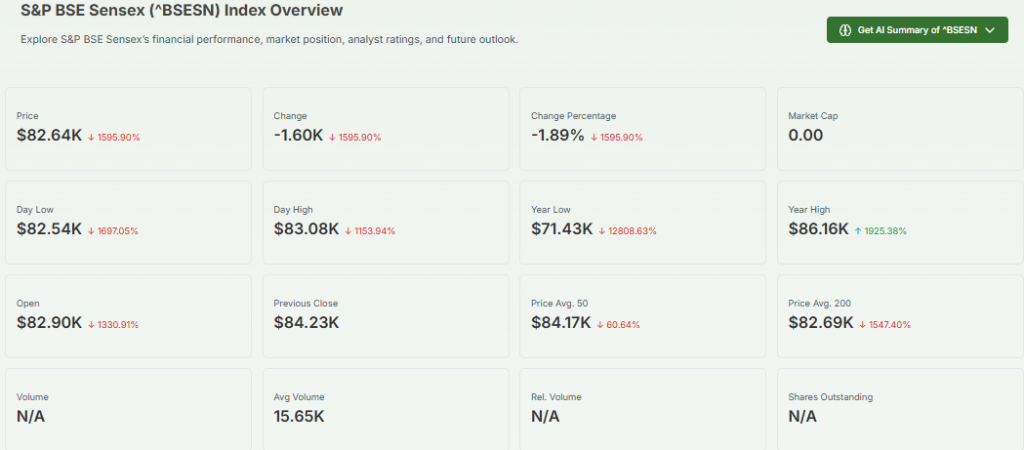
Meanwhile, the Nifty 50 also gave up ground, sliding by more than 1% and ending around 25,545.9 points. This decline reflected increased pressure from global markets, particularly technology sector sell-offs in the United States and Asia, which had a ripple effect on Indian equities.
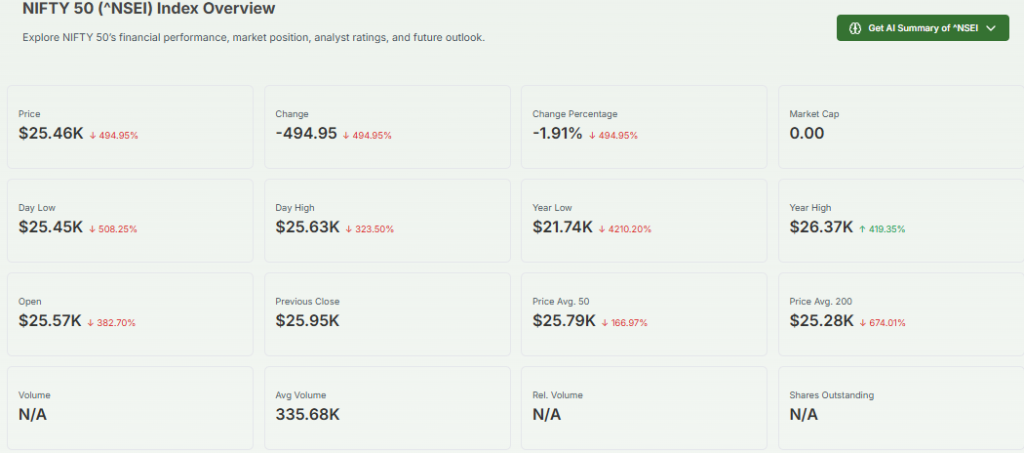
These declines came after a period of mixed performance in recent weeks, with benchmarks struggling to sustain prolonged upside momentum amid profit-booking and global economic uncertainties.
IT Stocks Deep Sell-Off Hits Market Sentiment
One of the most significant drags on the market today was the sell-off in the Information Technology sector, which deepened for the third consecutive session. The Nifty IT index declined sharply, falling as much as 5.24% intraday, with all 10 stocks in the index trading lower. Major names including Infosys, TCS, HCL Technologies, Wipro and Tech Mahindra were among heavy losers, falling in the range of 3.5% to 6%.
Analysts pointed to growing concerns about the impact of artificial intelligence on traditional IT business models, leading to increased uncertainty about future revenue growth for service providers. As companies across the globe invest in AI automation, there are fears that outsourcing demand could weaken, affecting earnings for Indian IT stocks.
This sustained weakness in IT stocks also impacted investor confidence more broadly, as the sector carries significant weight in benchmark performance and often sets the tone for market direction.
Metal Stocks Slide Adds Pressure
The metal sector also contributed to the downward pressure on the stock market today. Metal stocks, including heavyweights like Hindalco, were among the top losers on the Nifty 50 index, with some names falling over 5% after reporting lower quarterly profits.
Commodities faced headwinds as investors weighed growth concerns and weaker demand outlooks from key global markets. Lower metal prices tend to reduce profit expectations for companies in this space, which in turn exerts additional drag on benchmark indices like the Sensex and Nifty 50.
In this environment, investors often rotate out of cyclicals such as metals and into defensive or perceived safe sectors, contributing to broader market declines and increased volatility.
Global Cues and Market Drivers
Domestic markets did not operate in isolation today, as international factors added to selling pressure. Global technology stocks, particularly in the United States, were sold off, with indices such as the Nasdaq Composite declining sharply. This global sell-off in tech names contributed to the negative sentiment seen in Indian benchmarks.
Another key influence was the weekly performance of the Sensex and Nifty 50, with both benchmarks sliding around 0.5% for the week, reversing recent gains that had been supported by optimism over trade ties between India and the United States.
Foreign institutional investors have also continued net selling in Indian equities, leading to outflows that further pressured the market. Combined with currency fluctuations and global economic uncertainties, this dynamic has made investors more risk-averse.
Broad Market Impact and Sector Spread
The broader market underperformed alongside benchmark indices. Mid-cap and small-cap segments recorded steeper losses of around 2% and 1.8% respectively, indicating that risk sentiment was weak across the board.
Sector participation was muted, with nearly all major industry groups trading lower over the session. Auto, consumer durables, realty, banking and financial services indices also saw declines, underscoring the broad nature of the sell-off beyond just the IT and metal sectors.
Only a few sectors, such as media, exhibited mild resilience, reflecting selective interest from investors in less-volatile areas amid the downturn.
Investor Reaction and Stock Research Perspective
From an investor’s point of view, the recent drop in the Sensex and Nifty 50 highlights the importance of conducting thorough stock research and understanding sectoral risks before making investment decisions. The broader correction has caused significant wealth erosion, with estimates suggesting that markets have wiped out wealth worth several lakh crore rupees as valuations declined.
Investors are increasingly watching macroeconomic indicators, corporate earnings, and global technology trends to gauge future directions. Some are shifting focus toward defensive stocks or sectors with consistent cash flows, while others look for potential entry points in beaten-down quality names. Trends toward high-growth themes such as AI stocks also influence allocation decisions as traders balance risk and reward in this environment.
Despite the current weakness, long-term investors often view temporary declines as possible entry opportunities, especially when fundamental company performance remains intact. Still, cautious positioning and risk control have become priorities amid ongoing volatility.
Outlook and What Comes Next
Looking ahead, markets could remain volatile as investors await key economic data, quarterly earnings results, and global cues such as US inflation reports or central bank policy updates. Any positive development, such as stronger corporate earnings growth or easing global tech pressures, could help stabilize markets and provide fresh buying interest.
However, if selling pressure persists and global uncertainty continues, the Sensex and Nifty 50 could test key support levels, leading to further declines. Trading volumes and investor sentiment indicators will be crucial in assessing potential rebound or continued weakness.
Advertisement
Frequently Asked Questions
The Sensex fell due to heavy selling in IT and metal stocks, weak global technology cues, and broad-based risk-off sentiment among investors.
The Information Technology and metals sectors were among the largest drags on the market, with major stocks in these industries experiencing significant declines.
Short-term volatility is common in equity markets. Long-term investors often focus on fundamental growth stories and may view temporary declines as potential buying opportunities if company fundamentals remain strong.
Disclaimer:
The content shared by Meyka AI PTY LTD is solely for research and informational purposes. Meyka is not a financial advisory service, and the information provided should not be considered investment or trading advice.
Advertisement
What brings you to Meyka?
Pick what interests you most and we will get you started.
I'm here to read news
Find more articles like this one
I'm here to research stocks
Ask our AI about any stock
I'm here to track my Portfolio
Get daily updates and alerts (coming March 2026)