Japan’s inflation slowed sharply in January 2026, giving policymakers and households a rare moment of relief. Official data showed core consumer prices rising 2.0% year-on-year, the weakest pace in two years and close to the Bank of Japan’s target. Headline inflation also eased to 1.5%, helped by falling energy costs and government fuel subsidies. This cooling trend comes at a crucial time for Prime Minister Sanae Takaichi, who took office on February 8, 2026, with bold plans to revive growth and ease living costs.
For families, it means lighter pressure on daily spending. For markets, it reshapes interest rate expectations. And for Japan’s economy, it signals a possible turning point after years of price uncertainty.
Advertisement
Japan Inflation Data: The Key Numbers Investors Are Watching
January 2026 CPI Snapshot
Japan’s inflation cooled sharply in January 2026, offering relief to consumers and policymakers. Government data released on February 20, 2026, confirmed that price pressures eased across major categories.
- Core CPI (excluding fresh food): 2.0% YoY, down from 2.4% in December 2025
- Core-core CPI (excluding food and energy): 2.6%, down from 2.9%
- Headline inflation: 1.5%, the lowest since March 2022
- Petrol prices: -14.6% YoY, due to subsidies
- Food inflation (excluding fresh produce): 6.2%
- Rice prices: +27.9% YoY, still a major burden
This marks the slowest inflation pace in two years. It also ends a 45-month streak above the BOJ’s 2% target.
What Triggered the Inflation Cooldown?
Several short-term and policy-driven factors helped reduce inflation in early 2026.
- Government fuel and electricity subsidies
- Reduced gasoline taxes
- Cooling import costs
- Base effects from last year’s price spikes
- Slower logistics and shipping inflation
Economists say these temporary measures lowered household bills. However, they also masked underlying price strength, especially in food and services.
How Lower Inflation Strengthens PM Takaichi’s Economic Strategy?
Japan’s inflation slowdown arrives just days after Prime Minister Sanae Takaichi’s landslide election win on February 8, 2026. Her government sees easing prices as political and economic support. Takaichi’s key priorities include:
- Cost-of-living relief
- Wage-driven growth
- Fiscal support for households
- Stable long-term inflation
She has pledged to:
- Suspend the 8% food consumption tax for two years
- Reduce gasoline taxes
- Expand utility subsidies
Her message is clear. Inflation must stay near 2%, but growth must come from rising wages, not higher import prices. This balanced approach strengthens her economic credibility after years of voter frustration over rising costs.
Bank of Japan Policy Impact: Rate Hike Timing in Question
Will BOJ Delay Interest Rate Hikes?
The inflation slowdown complicates the Bank of Japan’s policy path. In December 2025, the BOJ raised rates to 0.75%, the highest level in 30 years.
Now, economists expect caution.
- March hike: Unlikely
- April hike: Low probability
- June hike: Most likely timing
The BOJ wants proof of sustainable inflation backed by wage growth, not subsidy-driven declines.
Market Expectations & Forecasts
A Reuters poll (Feb 10-18, 2026) shows:
- 58% of economists expect a hike by June 2026
- 36% forecast June as the most likely month
- 20% expect April
- Markets price 70% odds of tightening by April
Currency traders and bond investors now closely track wage talks and CPI releases. Many fund managers also rely on AI analysis tools to track BOJ signals and inflation-linked assets with higher accuracy.
Household Impact: Cost of Living Relief vs Rising Food Prices
Lower energy costs eased pressure on family budgets. But food inflation remains painful.
Key impacts include:
- Cheaper transport and logistics
- Lower electricity bills
- Reduced gasoline prices
However:
- Rice prices rose 27.9% YoY
- Food costs still increased 6.2%
- Real wages remain under pressure
The government plans direct cash support and tax relief to stabilize household spending. Consumer confidence remains cautious, as families still face tight grocery budgets.
Fiscal Pressure & Debt Risks: Japan’s Long-Term Challenge
Japan’s debt burden remains a serious risk despite easing inflation.
Key concerns:
- Public debt: Over 260% of GDP
- Rising bond issuance
- Growing debt-servicing costs
- Pressure from tax cuts and subsidies
Debt payments may exceed 40 trillion yen annually by FY2029, absorbing nearly 30% of total government spending. Fiscal discipline remains critical. Investors worry that aggressive stimulus could weaken the yen and raise borrowing costs.
Currency Market Reaction: Yen Outlook After Inflation Cooling
Japan’s yen remains volatile near ¥155 per US dollar. Key forces driving the currency:
- Slower inflation reduces rate hike urgency
- Lower interest rate outlook weakens yen demand
- Exporters benefit from a softer currency
- Import costs remain sensitive
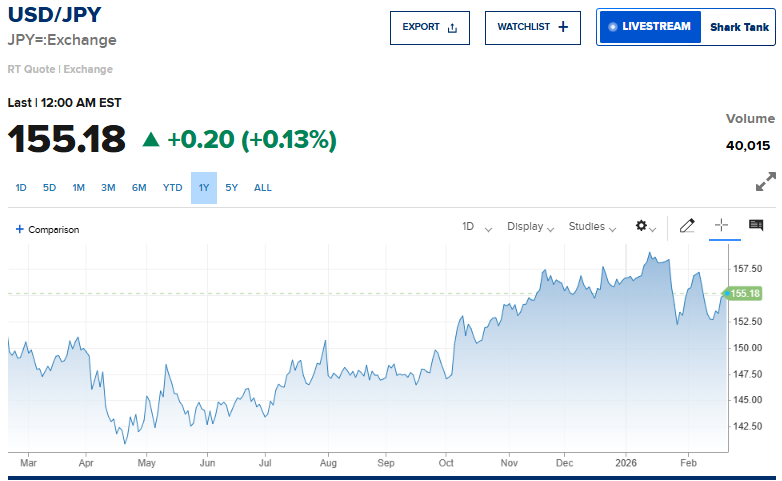
PM Takaichi views a moderately weaker yen as supportive for exporters, but officials remain alert for excessive moves. Analysts expect government FX intervention if the yen weakens beyond ¥160.
Conclusion: What Japan’s Inflation Easing Means for 2026
Japan’s inflation slowdown provides short-term relief and political momentum. But deeper challenges remain.
Lower inflation:
- Supports household budgets
- Stabilizes market sentiment
- Reduces rate hike pressure
Yet risks persist:
- Heavy public debt
- Aging population
- Weak wage growth
- Currency volatility
The Bank of Japan must now balance economic growth and inflation stability. Meanwhile, PM Takaichi’s policies will shape Japan’s recovery path. Japan’s 2026 outlook depends on wage gains, fiscal discipline, and policy coordination.
Advertisement
Frequently Asked Questions (FAQs)
Japan’s inflation fell in January 2026 due to lower fuel prices, government energy subsidies, reduced import costs, and weaker logistics inflation, which together eased pressure on consumer prices nationwide.
As of February 2026, analysts expect the Bank of Japan may delay rate hikes until June, after reviewing inflation trends, wage growth, and economic stability before tightening monetary policy further.
Lower inflation reduces daily costs, improves household spending power, supports business confidence, and helps stabilize Japan’s economy by easing price pressure while maintaining steady demand and controlled financial conditions.
Disclaimer:
The content shared by Meyka AI PTY LTD is solely for research and informational purposes. Meyka is not a financial advisory service, and the information provided should not be considered investment or trading advice.
Advertisement
What brings you to Meyka?
Pick what interests you most and we will get you started.
I'm here to read news
Find more articles like this one
I'm here to research stocks
Ask our AI about any stock
I'm here to track my Portfolio
Get daily updates and alerts (coming March 2026)