FTSE 100 Live: Markets Mixed Ahead of Iran Talks; Barratt, Standard Life, Rank Lead Gains
On April 15, 2026, global markets are trading with caution as investors track fresh developments around Iran-related diplomatic talks. The FTSE 100 is showing mixed movement in early trading, reflecting uncertainty across global risk sentiment. Energy-linked stocks are helping to support the index, while some consumer and defensive shares remain under pressure.
Traders are reacting to shifting oil price signals and geopolitical headlines that could influence global supply routes, especially through key shipping lanes. The index continues to hover near recent levels after several volatile sessions. Investors are also watching corporate movers, with select UK companies showing strong gains despite broader hesitation.
FTSE 100 Performance Today: Mixed Trading Amid Geopolitical Uncertainty
The FTSE 100 is trading in a narrow and uneven range on April 15, 2026, as investors react to global risk signals. Market sentiment remains cautious due to uncertainty around Iran-related diplomatic talks and their possible impact on global energy supply chains.
The index is moving close to the 10,600 level (intraday estimate), showing small gains and losses through the session. This reflects a lack of strong directional momentum.
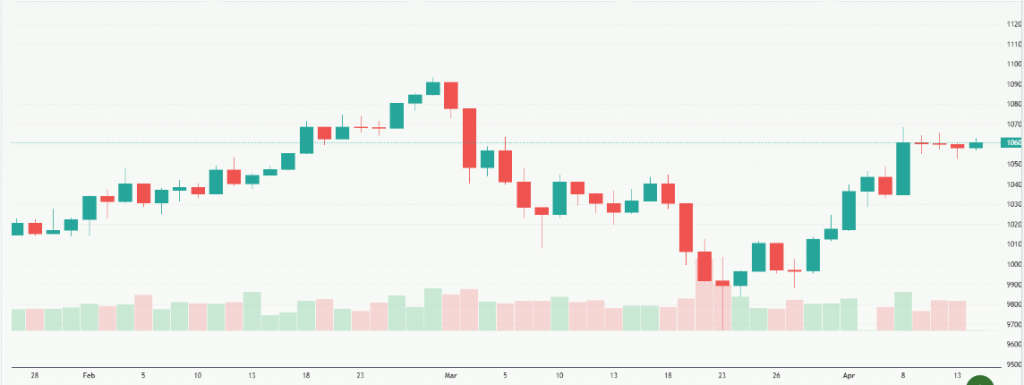
Energy stocks are providing some support, while parts of the consumer and healthcare sectors are under pressure. Trading activity suggests investors are waiting for clearer global cues before taking large positions.
European markets are also showing mixed performance today, with traders balancing earnings strength against geopolitical risks. According to market trackers like Reuters Markets Data and Investing.com indices, volatility remains moderate but sensitive to headlines.
Iran Talks and Geopolitical Risk Driving Market Sentiment
Markets are closely focused on renewed diplomatic discussions involving Iran. These talks are shaping expectations around global oil supply stability and shipping security in key trade routes.
Any progress in negotiations is generally seen as positive for global equities. However, delays or tensions tend to increase volatility in energy markets and push investors toward safer assets.
The Strait of Hormuz remains a key focus point. A large share of global crude oil flows through this route, making it highly sensitive to political developments. Even small disruptions can move oil prices quickly.
In this environment, FTSE 100 stocks often react sharply. Energy-heavy indices may benefit from higher oil prices, but broader sectors such as airlines and retail often come under pressure due to cost concerns.
Analysts from major financial desks note that geopolitical risk is currently one of the strongest short-term drivers of European equity sentiment.
Sector Highlights: Who Is Driving FTSE 100 Gains?
Barratt Redrow – Housing Stability Returns
Barratt Redrow continues to attract investor interest as UK housing data shows early signs of stabilization. Mortgage rates have eased slightly compared to earlier peaks, which is improving buyer confidence. Construction activity is also holding steady, supporting earnings visibility.
Standard Life – Strong Asset Flow Momentum
Standard Life is benefiting from consistent inflows into pension and long-term savings products. The company’s exposure to asset management makes it sensitive to market sentiment, but current trends remain supportive.
Rank Group – Consumer Spending Recovery
Rank Group is seeing positive momentum driven by stable consumer spending in gaming and leisure segments. Investors are watching discretionary spending trends closely as inflation pressures ease in parts of the UK economy.
Across the broader index, financials and energy stocks remain key stabilizers, while defensive sectors show mixed performance.
What Do Stock Movers Tell Us About Market Direction?
Market breadth remains uneven in today’s FTSE 100 session. Gains are concentrated in select cyclical and financial names rather than a broad rally.
Key positive movers include:
- Barratt Redrow
- Standard Life
- Rank Group
- Select banking stocks
Weaker sectors include consumer staples and some retail names, which are facing demand uncertainty.
This kind of narrow leadership usually signals a “wait-and-see” market. Investors are not fully risk-on, but they are also not aggressively defensive.
Trading volumes suggest rotation rather than new capital inflows, with attention shifting toward value and energy-linked equities.
Oil Prices and Their Impact on FTSE 100 Direction
Oil prices remain a key factor influencing FTSE 100 movement. Brent crude is holding in a volatile range near recent highs, reflecting supply uncertainty linked to geopolitical tensions.
Higher oil prices typically support UK energy giants like Shell and BP, which carry significant weight in the index. However, they also increase cost pressure on the transport and consumer sectors.
Lower oil prices, on the other hand, tend to support economic growth-sensitive sectors such as airlines and retail. At present, markets are reacting quickly to headlines around Iran talks, making oil one of the most important short-term drivers of index direction.
What Does Meyka AI Stock Analysis Tool Indicate for FTSE 100 Stocks?
AI-driven platforms such as Meyka.com are increasingly used by traders to track sentiment, technical signals, and risk patterns across equities. These tools combine market data, technical indicators, and news flow to generate real-time stock insights.
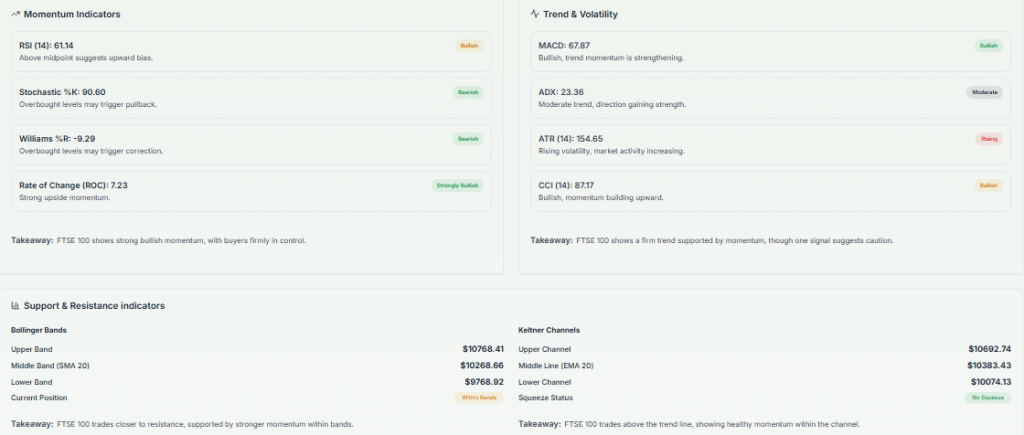
While exact live readings vary, AI analysis tools like Meyka typically highlight:
- Strong momentum in energy-linked FTSE stocks during geopolitical risk spikes
- Mixed technical signals in housing and consumer sectors
- Short-term volatility driven by oil and currency movements
Technical analysis summaries across such platforms often show the FTSE 100 in a range-bound trend, with resistance near recent highs and support around key moving averages.
For broader confirmation, analysts from sources like Bloomberg Intelligence and Reuters market commentary also point toward cautious consolidation rather than a strong breakout trend.
Outlook: What’s Next for FTSE 100 Investors?
The near-term outlook for the FTSE 100 depends heavily on geopolitical updates and oil price stability. If Iran talks show progress, risk sentiment could improve and support equity gains.
However, renewed tensions may increase volatility and push investors toward defensive positioning. Key upcoming drivers include UK economic data, global inflation updates, and corporate earnings reports from major FTSE companies.
Overall, analysts expect a sideways trading pattern with short bursts of volatility, rather than a clear long-term trend in the immediate future.
Wrap Up
The FTSE 100 is moving through a sensitive phase shaped by Iran talks, oil price swings, and selective stock strength. While Barratt, Standard Life, and Rank Group are leading gains, broader market sentiment remains cautious. Investors continue to balance risk and opportunity in a volatile environment. Short-term direction will depend on geopolitical clarity and energy market stability.
Disclaimer: The content shared by Meyka AI PTY LTD is solely for research and informational purposes. Meyka is not a financial advisory service, and the information provided should not be considered investment or trading advice.
What brings you to Meyka?
Pick what interests you most and we will get you started.
I'm here to read news
Find more articles like this one
I'm here to research stocks
Ask Meyka Analyst about any stock
I'm here to track my Portfolio
Get daily updates and alerts (coming March 2026)