Shares of Alibaba Group and Baidu Inc. slid sharply in late February 2026 after both names briefly appeared on a U.S. Pentagon blocklist tied to alleged military links, a move that was published and then withdrawn within minutes by authorities.
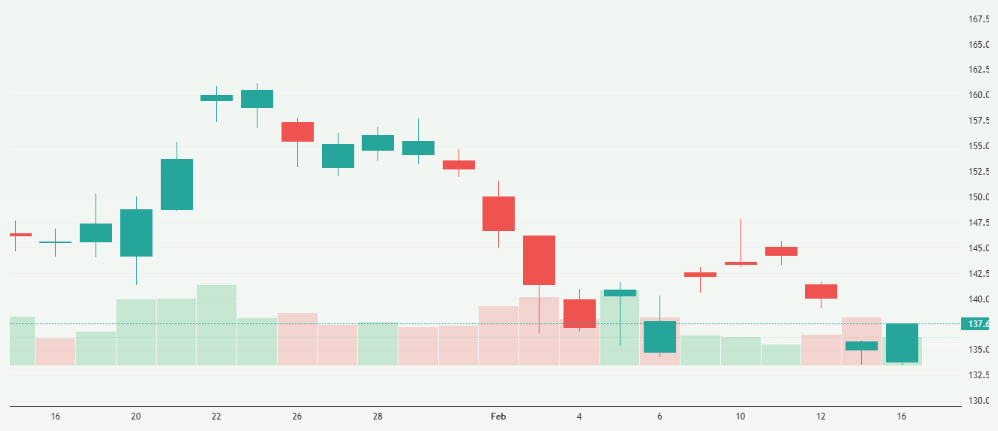
The sudden mention on the so‑called Section 1260H list spooked global markets, especially in Hong Kong, where Alibaba fell around 3.6,% and Baidu dropped about 5.5% by midday trading.
Advertisement
This unexpected policy signal hit investor confidence hard, highlighting how quickly geopolitical headlines can shake even the biggest tech stocks.
The Pentagon’s 1260H Blocklist and Tech Market Turmoil
On February 13, 2026, the U.S. The Pentagon briefly published an updated Section 1260H list, a roster of companies it claims have ties to the Chinese military and may be involved in “military‑civil fusion” strategies. This list included some of China’s biggest tech names, notably Alibaba Group Holding Ltd. and Baidu Inc., alongside other firms such as BYD Co. and Tencent Holdings Ltd. Within minutes, the Pentagon withdrew the list from the Federal Register without explanation, calling it “unpublished,” leaving markets confused and investors on edge.
The 1260H designation itself does not trigger immediate sanctions or bans. However, it signals political and national security concerns in Washington and functions as a warning flag for investors, potential U.S. government contracting restrictions, and heightened scrutiny of U.S.-China tech links.
How Did Alibaba and Baidu Shares React?
Market Response After the Faillist Drop
In the wake of the brief listing, major Chinese tech stocks tumbled in Hong Kong trading on February 20, 2026. Alibaba’s Hong Kong‑listed shares (HK:9988) fell about 3.6%, while Baidu (HK:9888) dropped approximately 5.5% by midday trading, causing broader weakness in the Hang Seng Index.
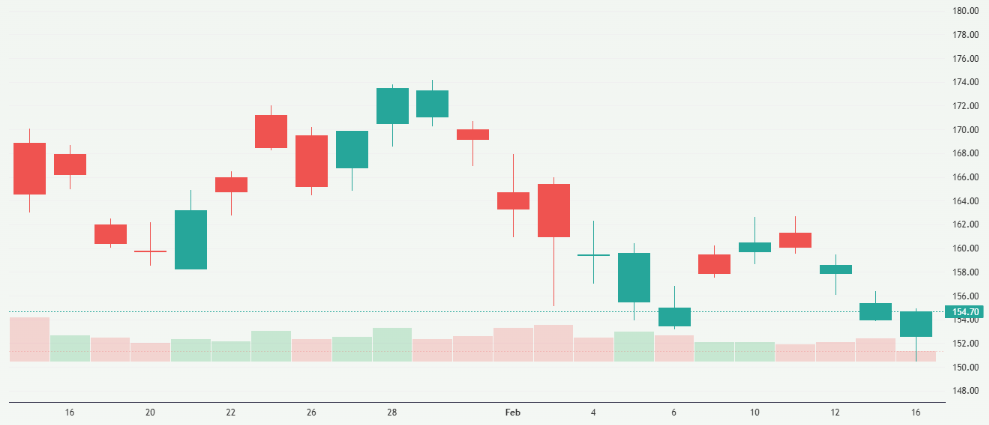
Other big tech names such as Tencent and EV maker BYD also saw declines, underscoring that the pullback was broader than just Alibaba and Baidu. Investors viewed the brief Pentagon announcement as a geopolitical risk catalyst, especially given existing tensions between the U.S. and China over technology leadership and national security.
Why Markets Reacted So Sharply?
Markets are highly sensitive to geopolitical signals. Even a temporary mention on a Pentagon military‑linked list can create fear among investors about:
- Loss of U.S. contracts or future restrictions
- Punitive measures beyond the list
- Escalating U.S.-China technology decoupling
- Hit to corporate reputations and global supply chain confidence
These factors exacerbated selling pressure at a time when global tech shares were already correcting.
Company Positions and Corporate Responses
How Alibaba Has Responded?
Alibaba has publicly denied that it has any meaningful military link or involvement in activities that would justify such a designation. After the brief list publication, the company directly rejected the characterization and signaled potential legal challenges against what it views as misrepresentation.
Meanwhile, Alibaba continues to push its technology strategy forward, including recent upgrades to its Qwen 3.5 AI model, which has drawn market attention even amid stock volatility. Analysts note that AI and cloud growth remain strategic priorities for Alibaba.
Baidu’s Response
Baidu also reacted strongly against its inclusion, calling the suggestion of military ties “entirely baseless” and without credible evidence. The company has reiterated its focus on civilian‑oriented technology such as AI products, cloud services, autonomous driving, and search platforms.
Baidu’s recent strategy also includes shareholder returns and buyback programs, efforts that can support long‑term investor confidence despite short‑term market swings.
Stock Forecast & Technical Analysis Snapshot
Alibaba (BABA) – Market Position and Trend
According to Meyka’s stock analysis and forecasting:
- Alibaba’s 12‑month price target sits around $188.13, with technical signals showing a mixed neutral trend.
- Technical indicators show neutral momentum with potential resistance near key bands, signaling possible sideways movement.
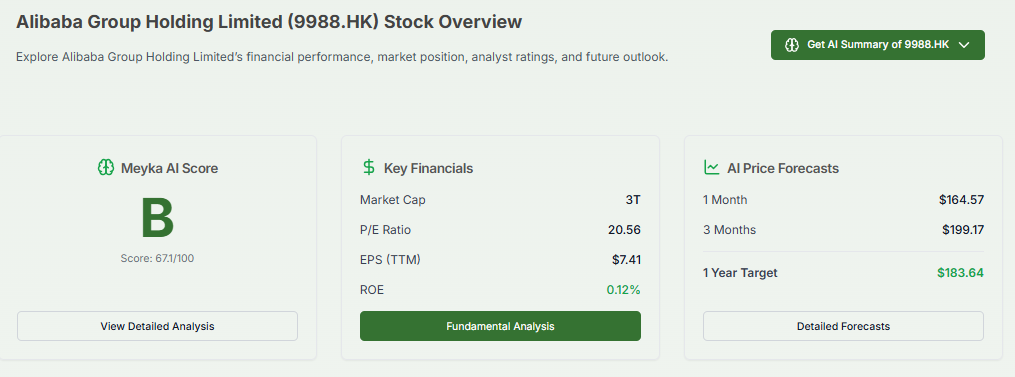
Short‑term sentiment remains cautious, while long‑term forecasts from AI‑informed tools suggest potential for growth, especially if AI and cloud businesses mature as expected.
Baidu (BIDU) – Analyst and Technical Outlook
For Baidu:
- Meyka’s technical model shows a neutral short‑term stance, with a 12‑month target around $110.48.
- Long‑term price forecasts suggest Baidu could reach $193.01 by 2027 and even higher by 2031, indicating potential resilience if broader risk factors abate.
- Fundamental metrics show mixed health, with strong cash positions but weak profitability trends, factors investors should consider alongside geopolitical news.
Overall analyst consensus on shares like Baidu remains mostly positive, with many firms recommending “Buy” and moderate upside targets over the next 12 months.
What Does This Mean for Investors?
Is This a Structural Risk or a Short‑Lived Headline?
Investors are asking whether this episode signals a deeper trend of decoupling or if it will fade once diplomatic noise calms down. The key considerations are:
- Geopolitical tensions between the U.S. and China remain elevated
- Pentagon lists like Section 1260H carry political weight even when retracted
- Future restrictions on U.S. contracting or funding can materially impact these firms
This makes risk management crucial for traders and long‑term holders alike.
Alibaba & Baidu Shares: Where to Watch Next?
Investors should monitor:
- Any reposting or clarification of the 1260H list
- Earnings releases and guidance from both companies
- AI and cloud revenue growth trends
- Broader U.S.-China diplomatic developments
These variables will likely shape sentiment more than one‑off headlines.
Final Words
The fleeting inclusion of Alibaba and Baidu on the Pentagon’s military‑linked company list has shown just how quickly geopolitical headlines can jolt modern markets. While the list was withdrawn and carried no immediate legal sanctions, the market reaction exposed persistent investor fears around national security risk and U.S.-China tech policy. Strong corporate pushback and solid long‑term forecasts from platforms like Meyka AI suggest that the fundamentals of both companies remain intact.
However, this event underscores that geopolitical risk is now an integral factor in evaluating Chinese tech stocks. In such an environment, staying informed and watching policy developments is as critical as tracking company earnings and AI innovation trends.
Advertisement
Frequently Asked Questions (FAQs)
On February 13-20, 2026, Alibaba and Baidu shares fell after the U.S. Pentagon briefly listed them on a military-linked faillist. The sudden news spooked investors and caused a market sell-off.
The Section 1260H list does not automatically impose sanctions. It signals possible U.S. scrutiny or restrictions, but no immediate legal or financial penalties apply as of February 2026.
Alibaba and Baidu may recover if geopolitical tensions ease. Strong cash reserves, ongoing AI and tech growth, and investor confidence could support stocks in the coming months of 2026.
Disclaimer:
The content shared by Meyka AI PTY LTD is solely for research and informational purposes. Meyka is not a financial advisory service, and the information provided should not be considered investment or trading advice.
Advertisement
What brings you to Meyka?
Pick what interests you most and we will get you started.
I'm here to read news
Find more articles like this one
I'm here to research stocks
Ask our AI about any stock
I'm here to track my Portfolio
Get daily updates and alerts (coming March 2026)