US Stock Market Update: Dow, S&P 500, Nasdaq Futures Pause Rally on Iran Ceasefire Tensions
Major U.S. stock indexes in stock market saw dramatic swings this week as traders grappled with fresh geopolitical news. On April 8, 2026, the Dow Jones Industrial Average jumped more than 1,300 points on reports of a tentative two‑week ceasefire between the U.S. and Iran. The S&P 500 and Nasdaq also surged, lifted by hopes of eased Middle East tensions and falling oil prices.
But as markets opened on April 9, that rally hit a pause. Futures for the Dow, S&P 500, and Nasdaq turned flat or slightly lower after Tehran claimed parts of the ceasefire were violated.
Advertisement
Investors are now watching every headline closely. Will the relief rally resume, or is volatility back in play?
Stock Market Recap: Why Futures Paused
Wall Street Rally Recap
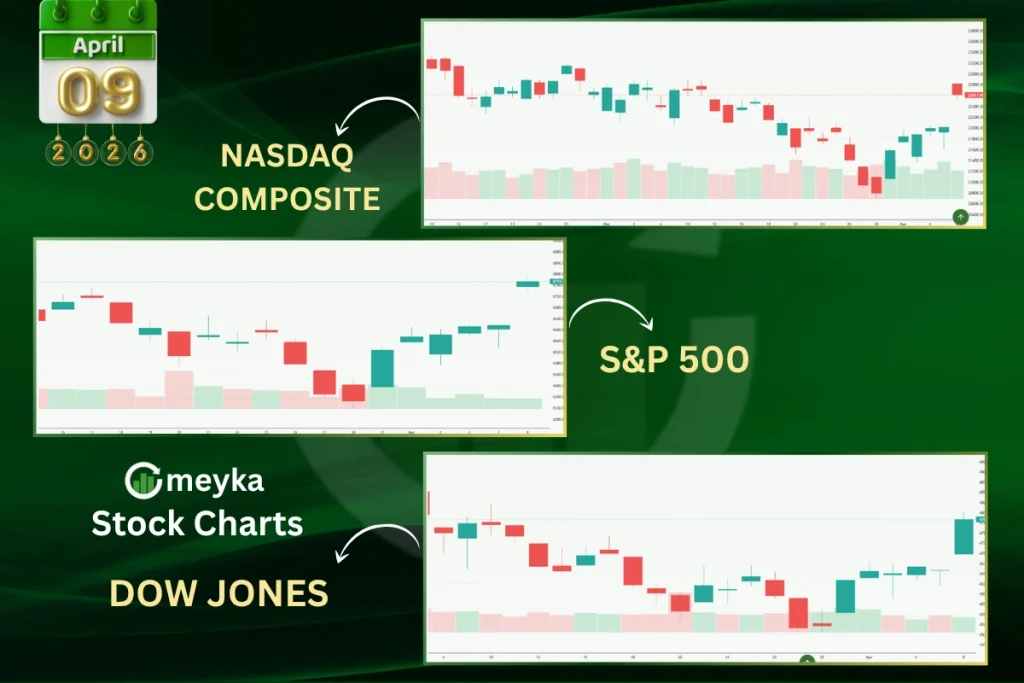
On April 8-9, 2026, U.S. stock markets faced sharp swings as traders reacted to mixed news about a two‑week ceasefire between the United States and Iran. On April 8, the Dow Jones Industrial Average (DJIA) soared more than 1,300 points, or roughly 2.85%, while the S&P 500 rose about 2.5% and the Nasdaq Composite jumped nearly 2.8% after reports that hostilities would pause and fears of an extended Middle East conflict eased. This surge was driven by lower oil prices and growing hopes of reduced geopolitical risk.
Dip in Overnight Futures, Data & Drivers
However, by April 9, futures tied to the Dow, S&P 500, and Nasdaq lost momentum. Traders paused the rally amid reports that Iran accused the U.S. of violating parts of the ceasefire deal and renewed uncertainty over the Iran‑Saudi diplomatic framework. Futures were mixed, with S&P 500 contracts down about 0.1%, Nasdaq 100 futures slipping 0.15%, and Dow futures slightly lower.
This volatility shows that investors are still weighing geopolitical headlines. It also reflects caution as markets try to balance relief with fresh risk.
Geopolitical Tension & Oil Price Trends
How Did Oil Prices React to the Ceasefire?
The ceasefire news had a strong impact on global energy markets. After the announcement on April 8, crude oil prices plunged sharply, with West Texas Intermediate (WTI) crude falling toward $90-$95 per barrel, a significant drop after prior spikes due to conflict fears.
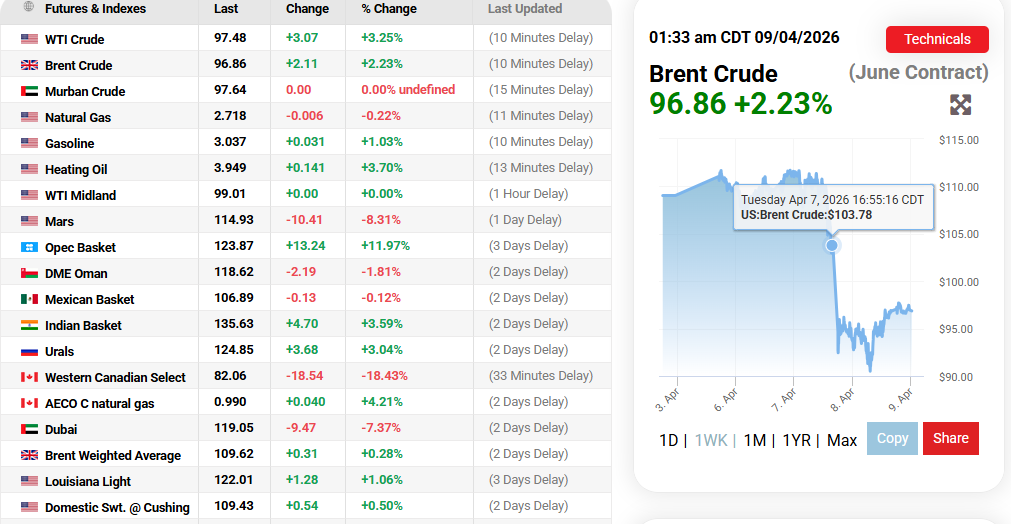
Lower oil prices eased inflation pressure. This helped stocks rally because traders saw reduced risk of higher energy costs feeding into broader price increases. For several weeks, higher crude prices had been a key source of inflation concerns and a reason some investors feared more Federal Reserve rate hikes.
Why Does Geopolitical Risk Still Matter?
Even with the headline ceasefire, many risk factors stayed in play on April 9. Latest reports show that Iran’s parliamentary leadership claimed violations of the ceasefire agreement. This news kept geopolitical risk alive, especially around the Strait of Hormuz, a vital oil shipping route.
Oil prices rebounded as the ceasefire’s durability was questioned. U.S. crude rose back above $97 per barrel, while Brent crude also climbed.
The tug‑of‑war between relief and renewed tension explains why futures paused after Wednesday’s rally: investors are not yet confident the ceasefire will hold.
U.S. Stock Indices: Sector Winners & Losers
Which Sectors Gained the Most?
Tech and growth sectors led gains during the relief rally. Stocks tied to digital infrastructure, cloud services, and chipmakers outperformed as traders rotated into growth names after oil prices fell and inflation concerns eased. Several large technology names saw notable jumps on April 8.
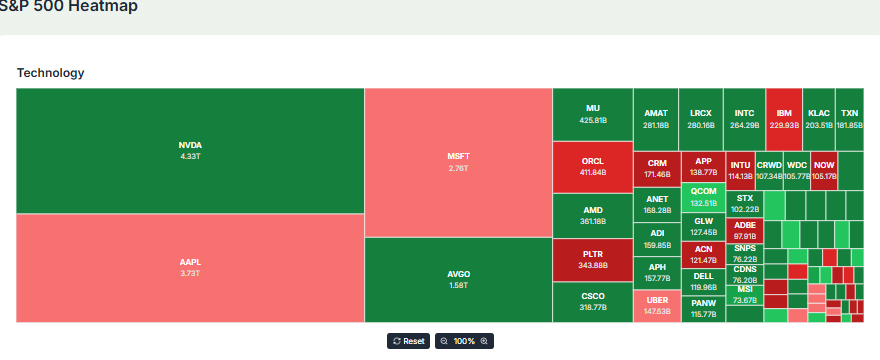
Travel and consumer discretionary names also did well. Lower energy costs improve profit margins for airlines, hotels, and travel‑related companies. Financial firms showed strength as volatility eased.
These moves reflect how broader risk appetite returned when geopolitical uncertainty softened, even temporarily.
Which Areas Lagged?
Energy stocks lagged sharply as oil prices dipped. The drop in crude removed near‑term inflation pressure but also cut into profits for energy producers. Utility and defensive stocks held up better, as traders sought stable returns amid lingering uncertainty.
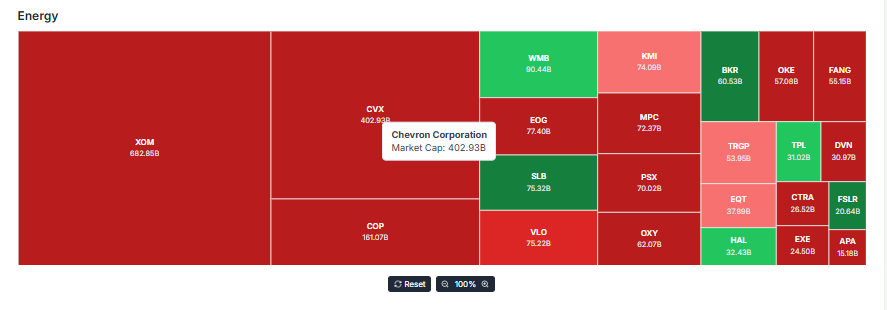
This sector rotation illustrates a classic market pattern: when growth sentiment reappears, tech and cyclical sectors rally while defensive and commodity‑linked names underperform.
What Analysts are Watching Next for the U.S. Stock Market?
Analysts are focused on several key market drivers:
- Durability of the ceasefire: Investors want clarity on whether the U.S.-Iran truce can hold beyond the initial two‑week period.
- Oil price direction: A rebound in crude could reignite inflation fears and pressure equities.
- Federal Reserve signals: With oil and inflation front‑of‑mind, traders watch Fed minutes and rate guidance closely.
- Economic data: Upcoming jobs, inflation (CPI), and consumer metrics will influence market direction.
AI stock analysis tools show mixed signals for the near term, with volatility expected to remain elevated. Traders are cautious about interpreting headline news as long‑term trend confirmation. Overall, markets remain sensitive to both macro data and geopolitical developments.
Wrap Up
The US stock market rally this week was a clear example of how quickly sentiment can shift on global headlines. While the tentative Iran ceasefire pushed Dow, S&P 500, and Nasdaq futures higher, renewed tension and oil price rebound paused the advance.
Investors now balance optimism with caution, watching geopolitical developments, energy prices, and inflation data to judge whether this relief rally can evolve into a sustained market trend.
Advertisement
Frequently Asked Questions (FAQs)
On April 9, 2026, Dow, S&P 500, and Nasdaq futures eased after big gains on news of a tentative Iran ceasefire.
The Iran ceasefire pushed oil prices down below $100 on April 8, 2026, but they stayed volatile as tensions linger.
The recent rally feels like a short relief bounce for markets, as geopolitical risk and oil supply limits are still
Disclaimer:
The content shared by Meyka AI PTY LTD is solely for research and informational purposes. Meyka is not a financial advisory service, and the information provided should not be considered investment or trading advice.
Advertisement
What brings you to Meyka?
Pick what interests you most and we will get you started.
I'm here to read news
Find more articles like this one
I'm here to research stocks
Ask Meyka Analyst about any stock
I'm here to track my Portfolio
Get daily updates and alerts (coming March 2026)