











On Friday, February 6, 2026, the US stock market slipped sharply as weak earnings from Amazon triggered a broad sell-off in technology shares. The S&P 500 and Nasdaq both opened lower, reflecting growing investor caution. Amazon’s disappointing outlook and heavy spending plans raised fresh concerns about profit growth in a high-interest-rate environment. As a result, major tech stocks faced intense pressure, dragging overall market sentiment down. Traders also reacted to soft labor data and ongoing fears around rising costs tied to artificial intelligence investments.
Together, these factors pushed Wall Street into risk-off mode. With volatility rising and confidence fading, investors are now closely watching upcoming earnings and economic signals for clarity. The day’s sharp moves highlight how fragile market sentiment remains.
U.S. Market Snapshot: How Did US Indexes Perform Today?
On Thursday, February 5 and Friday, February 6, 2026, U.S. stock market faced a broad sell-off, especially in technology. The S&P 500 dropped about 1.2%, the Nasdaq Composite slid roughly 1.6%, and the Dow Jones Industrial Average fell more than 500 points during key sessions. These declines marked one of the more volatile stretches for major indexes in early 2026.
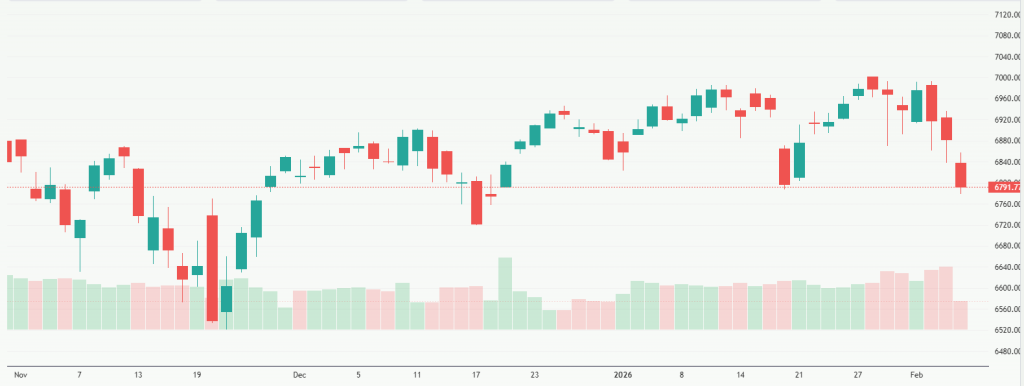
A tech‑led slump, driven by weak earnings cues and heavy capital expenditure plans from major players, pushed investors toward safer assets and raised market uncertainty. Over the week, both the S&P 500 and Nasdaq showed negative performance, with risk appetite easing.
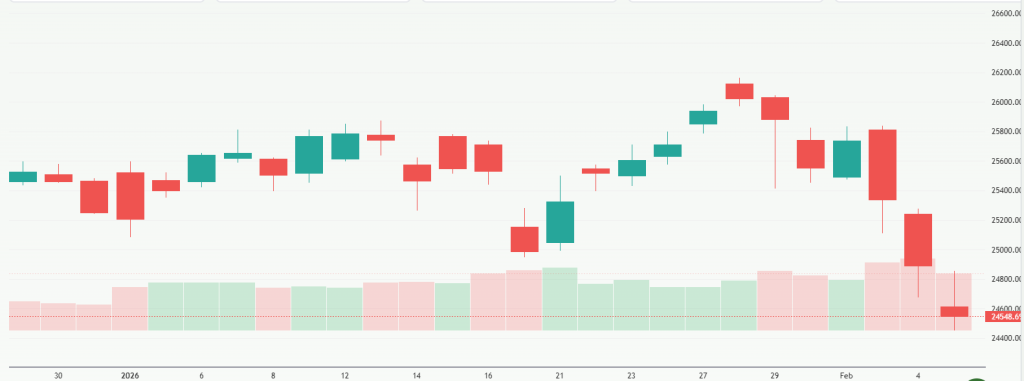
Sector performance was uneven. Technology and growth stocks led losses, while defensive areas like utilities and staples held up better. The broader trend captured investor caution amid rising capital expenditure forecasts in tech and soft labor market signals.
Amazon Earnings Impact: What Happened and Why It Mattered
Amazon’s recent earnings update on February 5, 2026 became a key catalyst for the market downturn. The company posted fourth‑quarter revenue of roughly $213.4 billion, up year‑over‑year, and earnings per share of $1.95, slightly worse than analyst expectations. Despite AWS growing about 24%, investors focused on Amazon’s rapidly increasing cost base and aggressive capital expenditure guidance for 2026.
Why Did Amazon Shares Slide?
Amazon signaled plans to spend about $200 billion in capital expenditures in 2026, primarily to expand infrastructure for cloud and AI deployments. The magnitude of this spending far exceeds analysts’ expectations and suggested near‑term margin pressure and delayed profit realization, causing shares to fall as much as 10-11% in extended trading.
The earnings figure itself slightly missed estimates, but the larger surprise was the scale of heavy investment and cautious profit outlook for early 2026, which rattled tech investors. This selling in Amazon shares helped drag the broader Nasdaq and S&P 500 lower.
Amazon (AMZN) Stock Details & Forecast
Short Stock Details from Meyka AI Analysis
According to Meyka’s most recent analysis, Amazon (AMZN) carries a strong profitability profile but trades at a relatively high valuation. Trailing metrics like P/E ratio near the mid‑30s and strong return on equity highlight the firm’s scale, though valuation suggests investors need robust future growth to justify prices. Meyka’s AI‑powered analytical tools rate the stock positively with a B+ buy grade, reflecting favourable growth fundamentals but some near‑term risk.
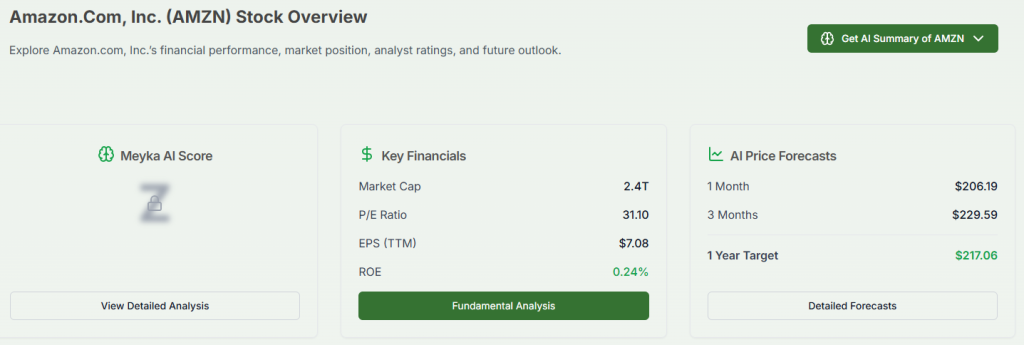
Forecast and Technical Summary
- Meyka AI forecast suggests a modest near‑term upside, but potential downside over the next 12 months, with a forecast price below the current level if heavy spending erodes margins. Longer‑term (3-7 years), projections suggest possible recovery and moderate gains if growth drivers materialize.
- Technical indicators show momentum without a strong trend, with RSI around mid‑range and MACD slightly positive, indicating volatility around earnings reactions with no clear directional bias.
Analysts generally see Amazon as a long‑term growth play, but the near‑term outlook depends heavily on AWS monetization, free cash flow trends, and how quickly new spending converts into profits.
Why AI and Capex Worries Hit Tech Stocks Hard?
A broader theme in the recent sell‑off was investor anxiety around AI‑related capital spending from major tech companies. Amazon isn’t alone, competitors like Alphabet and Microsoft have also announced large AI‑focused investments, squeezing profits before future revenue gains are realized. This has pressured traditional software demand as well, undermining tech valuations.
Heavy AI investments signal future growth to some investors but raise short‑term risks. These spending plans are a primary factor behind the current market rotation, where cautious traders shift toward defensive assets and away from high‑growth tech positions.
Did Economic Data Add to the Downturn?
Yes. Aside from earnings, labor market signals and economic data contributed to risk aversion. Reports pointed to higher layoffs and weaker job openings, undercutting confidence in consumer spending and economic resilience. Together with slowing hiring plans, this supported demand for less risky assets and weighed on equities.
Broader Market Reaction and Global Spillovers
The sell‑off extended beyond U.S. stocks. Cryptocurrencies such as Bitcoin plunged sharply, while precious metals and other risk assets also faced downward pressure. International markets reflected similar vulnerabilities as investors reassess growth and tech exposure.
What Investors Should Watch Next?
Upcoming Earnings and Guidance
Key earnings in other major companies could set the tone for markets. Profit reports from large consumer and industrial names may help gauge broader growth narratives and risk sentiment.
Macro Signals and Fed Policy
Inflation data, labor reports, and central bank communications on interest rate paths remain critical. Markets will watch for signs of easing or tightening that could influence valuations and risk appetite.
Conclusion: Near‑Term Pain, Long‑Term Questions
The stock market sharp slide in the S&P 500 and Nasdaq underscores lingering investor concerns about high valuations, heavy capital expenditures in AI, and mixed economic data. Amazon’s disappointing earnings backdrop and massive $200 billion capex plan for 2026 amplified fears about profit timing and cash flow, dragging tech stocks lower.
Looking forward, markets may see volatility persist as earnings, economic signals, and policy outlooks evolve. Investors should balance long‑term fundamentals against near‑term risks and monitor key catalysts that could shift sentiment.
Frequently Asked Questions (FAQs)
On February 6, 2026, the S&P 500 and Nasdaq fell because tech stocks dropped. Weak Amazon earnings, high AI spending, and cautious investor sentiment caused a broad market decline.
Amazon reported weaker-than-expected profits on February 5, 2026. Its heavy 2026 spending plans worried investors. Tech stocks fell, and both Nasdaq and S&P 500 dropped after the news.
Investors should watch upcoming earnings, US jobs data, and Fed rate signals. Market reactions to tech spending and economic updates will guide stock trends in early 2026.
Disclaimer:
The content shared by Meyka AI PTY LTD is solely for research and informational purposes. Meyka is not a financial advisory service, and the information provided should not be considered investment or trading advice.
What brings you to Meyka?
Pick what interests you most and we will get you started.
I'm here to read news
Find more articles like this one
I'm here to research stocks
Ask our AI about any stock
I'm here to track my Portfolio
Get daily updates and alerts (coming March 2026)