











On February 3, 2026, U.S. stock market dipped across the board as traders grappled with rising risk and looming corporate earnings. The Dow Jones Industrial Average slid, the S&P 500 edged lower, and the Nasdaq Composite fell sharply, pressured by weakness in major technology and software stocks. Big names like Nvidia and Microsoft weighed on sentiment, while newer AI developments added to investor uncertainty.
This pullback comes at a crucial time, just before Google’s quarterly results, making Wall Street’s mood more cautious than in recent weeks. Short‑term traders and long‑term investors alike are watching closely for clues about tech valuations and broader market direction, setting the stage for a volatile earnings week.
Today’s U.S. Market Snapshot: Index Performance & Data
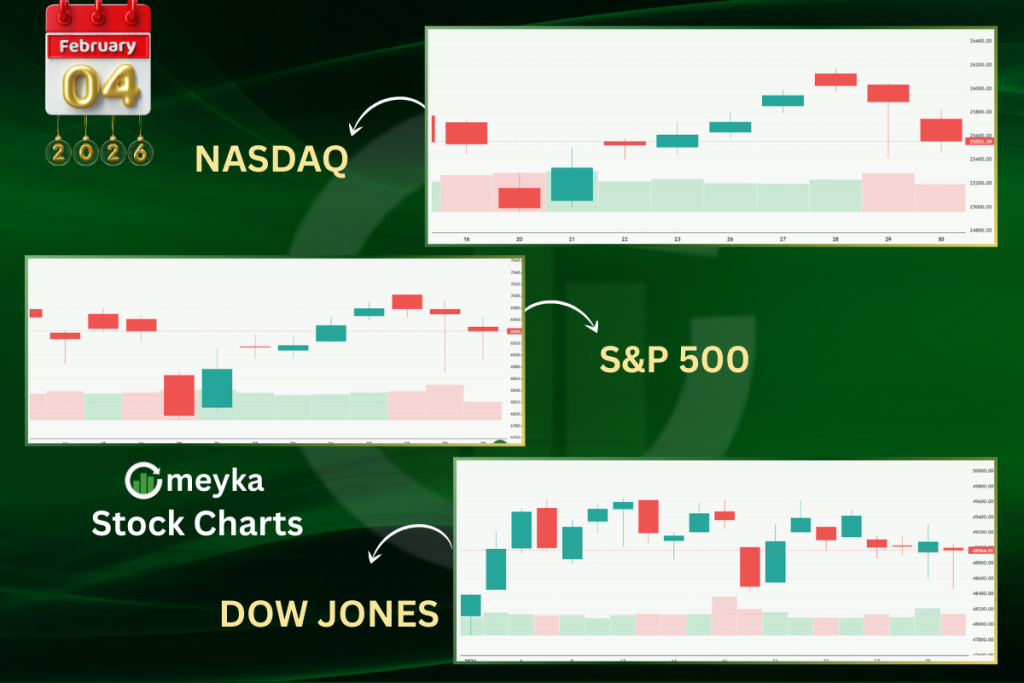
On February 3, 2026, U.S. stock market saw broad declines as major indexes pulled back ahead of key corporate earnings, including Alphabet (Google). The S&P 500 dropped 0.8% to 6,917.81, the Dow Jones Industrial Average slid 0.3% to 49,240.99, and the Nasdaq Composite fell 1.4% to 23,255.19. The tech-heavy Nasdaq’s fall was the steepest, reflecting intense selling pressure in technology and software stocks.
Big technology names such as Nvidia (NVDA) and Microsoft (MSFT) each fell more than 2%. Broad pressure extended beyond chipmakers to software and analytics firms as investor concerns grew over the impact of artificial intelligence on long‑term profitability.
Despite the negative performance of the headline indexes, most S&P 500 stocks actually finished higher on the day, with Palantir Technologies outperforming thanks to stronger‑than‑expected earnings. Precious metals like gold and silver also rebounded from recent lows as traders sought alternative assets.
Short‑term index futures reflected mixed sentiment, while Nasdaq and S&P 500 futures showed modest gains ahead of Wednesday’s open, Dow futures lagged slightly, illustrating uneven expectations among sectors.
This market move continues a broader theme in early 2026: significant volatility as investors reassess the valuations of high‑growth stocks, especially in technology and AI‑linked sectors, against the backdrop of upcoming earnings and economic data releases.
What’s Driving the Market Downturn?
Why are Tech and Software Stocks Falling?
A major driver of today’s decline was weakness in technology and software names. Investors increasingly worry that rapid advancements in AI may disrupt traditional business models rather than simply enhance them. Industry developments, like Anthropic’s new AI tools, sent shockwaves through software and analytics stocks.
Companies such as Salesforce, Datadog, Adobe, Gartner, Intuit, and Equifax saw steep losses, some down double‑digit percentages, as traders priced in the risk of shrinking future profit margins. This broad software selloff dragged down the overall tech segment, causing the tech‑heavy Nasdaq to underperform the broader market.
Does AI Innovation Cause Fear or Confidence?
Although artificial intelligence powers optimism over long‑term growth, recent developments have sparked valuation concerns. Analysts and investors are questioning whether AI will compress margins in sectors once seen as beneficiaries of technological expansion. One strategist noted that many companies are “priced for perfection,” leaving little room for earnings disappointment.
In this environment, even positive AI news can feed volatility, a paradox where disruptive innovation causes fear rather than confidence in the short term.
How Do Earnings Expectations Affect Stocks?
The market’s near‑term outlook is heavily tied to earnings expectations from megacap tech firms. Google (Alphabet) was set to report results on February 4-5, 2026, and Amazon follows shortly after. Negative guidance or cautious forecasts from these earnings giants can amplify selling pressure across major indexes, especially given their significant weighting in the S&P 500 and Nasdaq.
In addition, investors are watching broader earnings trends for signs of slowing growth or margin contraction in the enterprise software and cloud segments.
Broader Trend Signals: What the Data Shows
Recent market data indicates that volatility is becoming more common as investors grapple with competing economic and sector drivers. After reaching record levels earlier in January, indexes have shown increasing sensitivity to macro news and earnings forecasts.
This backdrop includes:
- Elevated bond yields that can make high‑growth tech stocks less attractive as future profits are discounted more heavily.
- Rotations into value and defensive sectors, which can put downward pressure on growth indexes like the Nasdaq.
- Broader macroeconomic uncertainties that keep traders cautious about overextended valuations.
Analysts also point to four key market backstops that could trigger broader declines if they falter: high profit margins in tech, tight credit spreads, low oil prices supporting valuations, and unexpectedly high inflation.
A breakdown in any of these could accelerate selling pressure. While markets remain near historical highs in early 2026, these trend signals suggest that short‑term volatility is likely to persist as traders digest a blend of earnings data, sector rotation, and macroeconomic information.
Conclusion: Strategic Takeaways for Investors
Today’s drop in the Dow, S&P 500, and Nasdaq underscores how investor sentiment can shift rapidly in response to tech sector pressure and earnings uncertainty. Even though broader indexes remain not far below recent all‑time highs, the intensity of selling in technology and software stocks highlights growing unease around high valuations and AI’s real‑world impact on profits.
For investors, this market behavior suggests several key takeaways:
- Monitor upcoming earnings releases closely, especially from megacap tech firms like Google and Amazon, as these results often set the tone for broader sentiment.
- Recognize that AI innovation can drive both volatility and opportunity, short‑term price moves don’t always reflect long‑term fundamentals.
- Diversification across sectors can help cushion against sharp declines in concentrated areas like software.
- Frequent use of tools like real‑time heatmaps and AI‑powered analytics, including platforms that integrate AI stock analysis tools , can give more context around shifting market drivers.
While markets may test new lows in certain segments, selective buying on weakness and careful risk management could position patient investors for gains once volatility eases.
Frequently Asked Questions (FAQs)
On February 3, 2026, the Dow, S&P 500, and Nasdaq fell due to tech stock weakness, AI concerns, and rising investor caution ahead of major earnings. Markets showed higher volatility.
Big Tech earnings, like Google’s, influence indexes because they are heavily weighted. Strong results can lift the market, while weak or cautious forecasts may trigger declines.
The current pullback in early February 2026 is mostly seen as a short-term correction. Analysts say it reflects profit-taking, tech pressure, and caution, not a long-term market crash.
Disclaimer:
The content shared by Meyka AI PTY LTD is solely for research and informational purposes. Meyka is not a financial advisory service, and the information provided should not be considered investment or trading advice.
What brings you to Meyka?
Pick what interests you most and we will get you started.
I'm here to read news
Find more articles like this one
I'm here to research stocks
Ask our AI about any stock
I'm here to track my Portfolio
Get daily updates and alerts (coming March 2026)