











US Stock Market futures drop: Dow, S&P 500, Nasdaq slide amid Iran war volatility
U.S. stock market futures slid sharply as Wall Street reacted to rising tensions in the Middle East. On Tuesday, March 3, 2026, Dow Jones futures dropped around 800 points, while S&P 500 and Nasdaq futures also lost ground as investors grew nervous about the unfolding conflict between the United States and Iran.
The sharp sell‑off came alongside a surge in oil prices and a jump in market fear gauges, signaling rising anxiety across global markets. Traders pulled back from risky assets and sought safe havens as geopolitical risk spiked. This sudden shift has put fresh pressure on U.S. equities early in the trading week, setting the stage for potentially volatile sessions ahead.
U.S. CURRENT MARKET SNAPSHOT – BIG MOVES & DATA YOU NEED
On Tuesday, March 3, 2026, U.S. stock market futures weakened sharply as traders reacted to rising tensions between the United States, Israel, and Iran. Futures linked to the Dow Jones Industrial Average (YM=F) fell about 1.7%, while S&P 500 futures (ES=F) dipped roughly 1.7%.
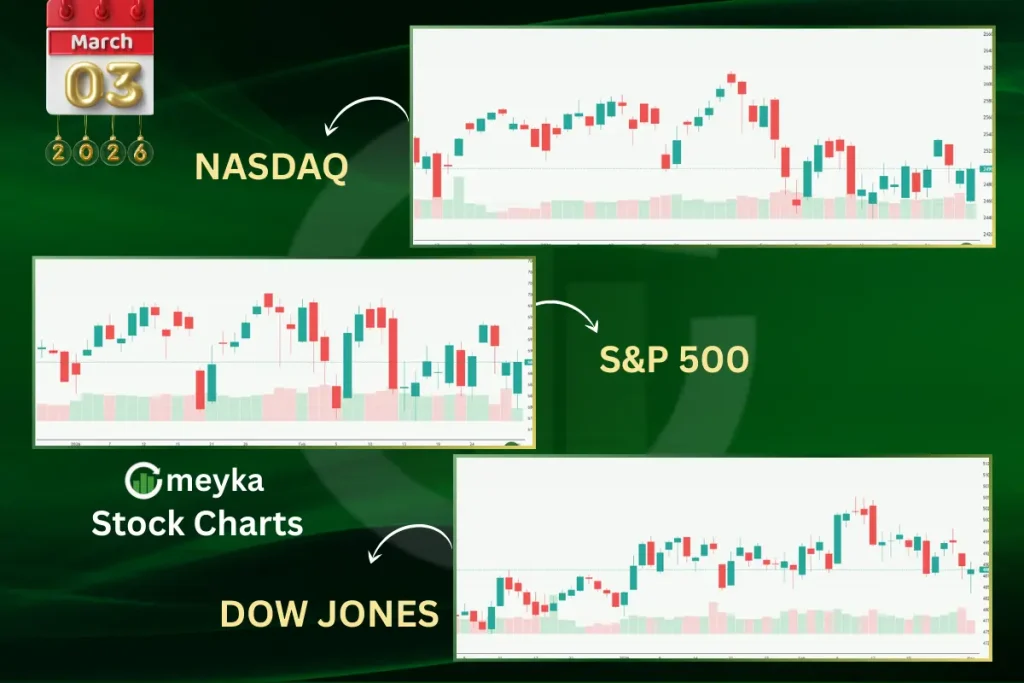
The tech‑heavy Nasdaq 100 futures (NQ=F) led losses, sliding around 2.2% amid strong risk‑off sentiment. Oil prices jumped sharply, driving up inflation fears and shaking investor confidence in equities. Geopolitical headlines drove market swings and prompted safe‑haven buying in commodities like oil and precious metals. Amid this backdrop, the Cboe Volatility Index (VIX) climbed above 27, its highest level in three months, signaling heavy demand for protection against further declines.
By the end of the session, major benchmarks were mixed, though still lower than recent levels, as dip‑buyers provided some support later in the day. This volatile action reflects ongoing uncertainty as investors grapple with fresh geopolitical risk premiums and look toward upcoming economic reports for direction.
WHY MARKETS ARE DROPPING -GEOPOLITICAL & ECONOMIC DRIVERS?
What sparked the sell‑off?
Market weakness is driven mainly by escalating U.S.-Iran conflict fears. Over the weekend, joint U.S. and Israeli airstrikes targeted strategic sites in Iran, triggering Iranian retaliation and heightened global geopolitical risk. Concerns grew that the conflict could draw in multiple Middle Eastern nations and disrupt key trade routes, especially around the Strait of Hormuz, a chokepoint for nearly 20% of global oil shipments.
Investors often view intense geopolitical conflict as a risk to global economic growth. This fear prompted a shift out of risky assets like stocks and into safer ones, such as commodities and volatility instruments. The surge in oil prices reflected traders’ expectations of supply disruptions. Higher energy costs can feed into inflation, complicate central bank policy decisions, and weigh on corporate profits.
WHAT HAPPENED TO KEY INDICATORS?
How did the indices perform?
- Dow Jones Industrial Average: Early Tuesday sessions saw losses near 1.7-1.8%, reflecting broad risk aversion.
- S&P 500: Also down roughly 1.6-1.7% on heavy selling sentiment.
- Nasdaq Composite: Tech stocks were under pressure, with declines of over 1.7% as growth names sold off.
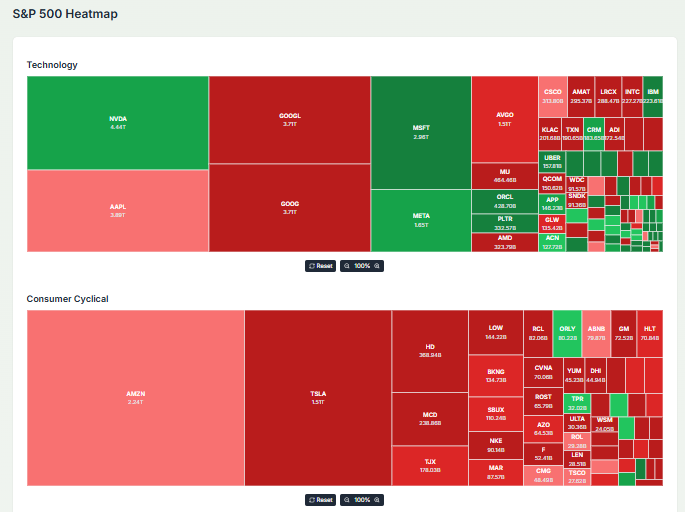
Indexes that track smaller companies, such as the Russell 2000, saw even sharper drops as risk assets lost leadership.
What about volatility and sentiment?
- The VIX (fear gauge) spiked to above 27, indicating expectations of bigger swings ahead.
- Broad market breadth turned negative, with most sectors trading in the red.
Market sentiment tilted toward caution as traders weighed geopolitical risk against any near‑term economic data or earnings catalysts.
SECTOR IMPACT – WHO’S WINNING AND LOSING
Which sectors underperformed?
Airlines and travel companies were hit hard because higher oil prices increase fuel costs and dampen demand. Tech stocks also lagged as investors sold growth names in favor of safer assets. Retailers and discretionary sectors faced pressure as broad risk‑off sentiment dominated.
Which sectors gained?
Energy producers and oil majors posted strength as oil benchmarks surged. Higher crude prices can boost profit expectations for producers even as they contribute to higher inflation risks. Defense stocks also benefited from expectations of increased military spending in an extended conflict scenario.
What Experts are Saying on U.S. Stock Indices?
Market analysts say the reaction reflects headline risk rather than fundamental deterioration. Short‑term volatility can spike on geopolitical events but may not signal deeper economic trouble. Some fund managers point out that dip‑buying can appear once volatility stabilizes, or fresh data offers clarity.
One AI stock analysis tool noted that traders are increasing hedges via volatility ETFs and options strategies, which can exaggerate downside moves in the short run.
Financial strategists emphasize watching inflation data, Fed policy signals, and geopolitical developments as markets look for direction beyond headline fear. Longer conflict scenarios may keep risk assets under pressure while benefiting safe havens and commodities.
IMMEDIATE MARKET INDICATORS TO WATCH
What numbers matter next?
- Oil prices: Continued strength can sustain inflation pressure and weigh on growth expectations.
- VIX readings: Persistent high volatility can lead to choppy stock price action.
- Treasury yields: Rising yields signal inflation expectations and could pressure equity valuations.
- Economic data: Jobs reports and inflation figures will influence whether markets shift focus from geopolitical risks.
CONCLUSION
The recent drop in U.S. stock market futures shows how quickly geopolitical risk can move markets. Sharp declines in the Dow, S&P 500, and Nasdaq reflect fear of a prolonged conflict and rising energy prices. While volatility may persist, watching key data and market signals can help investors navigate turbulence ahead.
Frequently Asked Questions (FAQs)
Why are US stock market futures down today?
On March 3, 2026, US stock market futures fell because traders worried about the Iran conflict. Investors sold risky assets and bought safer options like gold and bonds.
How does the Iran conflict affect the Dow, S&P 500, and Nasdaq?
The Iran conflict raises fears of war and oil supply issues. This makes the Dow, S&P 500, and Nasdaq drop as traders reduce risk and expect higher costs.
Is the stock market crash real or just short‑term volatility?
On March 3, 2026, the market drop is mainly due to short-term volatility. It reacts to geopolitical news. Long-term fundamentals of the economy remain mostly stable for now.
Disclaimer: The content shared by Meyka AI PTY LTD is solely for research and informational purposes. Meyka is not a financial advisory service, and the information provided should not be considered investment or trading advice.
What brings you to Meyka?
Pick what interests you most and we will get you started.
I'm here to read news
Find more articles like this one
I'm here to research stocks
Ask our AI about any stock
I'm here to track my Portfolio
Get daily updates and alerts (coming March 2026)