The United States is considering a major shift in how advanced artificial intelligence hardware is sold around the world. In early March 2026, officials reportedly drafted new rules that could require companies like Nvidia and AMD to get a U.S. permit before exporting AI chips to nearly any country. These AI accelerators, especially Nvidia’s latest GB300 GPUs, power everything from cloud computing to cutting‑edge AI models.
The proposal would expand existing controls, which now cover about 40 countries, into a global export licensing system. For chipmakers, data centers, and nations racing to build AI infrastructure, this could be a game‑changing moment in geopolitics and tech trade.
Advertisement
What are the New U.S. AI Chip Permit Proposals and How Do They Work?
In early March 2026, U.S. officials drafted a new regulatory plan. It could require companies like Nvidia and AMD to get government approval before exporting advanced AI chips. Current rules mostly restrict exports to about 40 countries. The new plan would expand these rules into a global licensing system. The U.S. Department of Commerce would oversee it.
Under the draft plan:
- Smaller shipments (e.g., up to 1,000 of Nvidia’s GB300 GPUs) would undergo a streamlined review process before approval.
- Larger deployments might need pre‑clearance and additional disclosures about business models, corporate ownership, or even site visits by U.S. officials before a license is issued.
- For very large clusters, over 200,000 AI chips owned by one entity in one country, the host government would need to participate in the approval process and possibly commit to security guarantees or U.S. investment requirements.
The draft does not ban exports outright. Instead, it creates a tiered license regime that gives Washington oversight over global AI infrastructure buildouts.
Why Is the U.S. Considering This Policy?
The draft rules are designed to balance national security, economic interests, and geopolitical strategy.
One key goal is to maintain U.S. leadership in AI and prevent advanced AI chips from boosting the capabilities of countries seen as rivals. AI accelerators have become critical for data centers and AI model training. By controlling global chip flows, the U.S. aims to limit the potential misuse of these technologies and ensure allied access aligns with U.S. interests.
Additionally, in some versions of the proposal, Washington could tie AI chip exports to foreign commitments to invest in U.S. AI infrastructure or data centers. For example, foreign governments seeking access to large quantities of chips (e.g., ≥200,000 units) might be required to offer investments or security guarantees.
Officials say this could help the U.S. retain an edge in the AI technology race while supporting domestic investments and jobs. However, critics argue that bureaucratic delays could slow global tech growth and push other nations to develop AI hardware outside U.S. influence.
How Is the Market Reacting to the Proposal?
Financial markets have already responded to this news.
According to analysis from investing and financial sites, both Nvidia and AMD saw share price declines when draft rules were reported in early March 2026. NVIDIA’s stock dropped around 1.7%, while AMD’s fell by about 2%, reflecting investor concerns over potential export hurdles and revenue risk abroad.

Industry sources suggest that the proposed licensing regime could introduce export friction that slows international sales, especially for advanced accelerators like Nvidia’s GB300 GPUs, widely used to power AI systems from companies including OpenAI and Google.
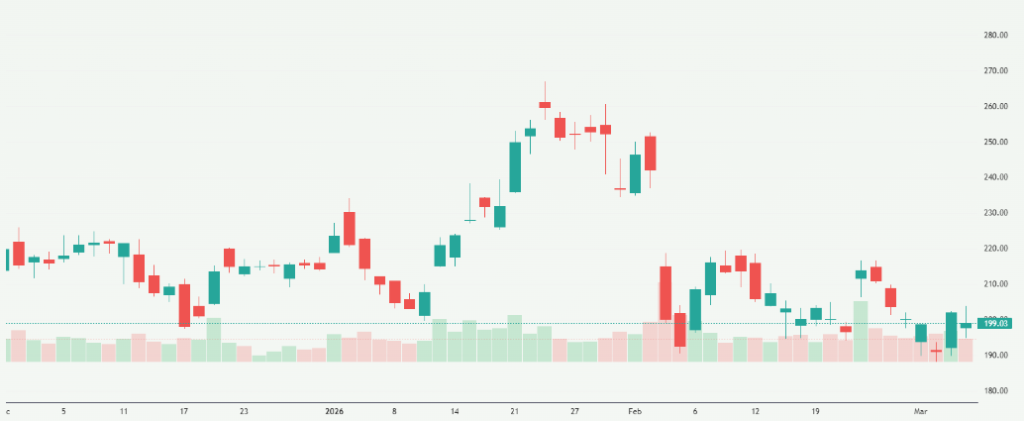
Some analysts note that investor confidence may recover if approval processes are efficient. Tools like AI stock analysis platforms are already being used by traders to gauge potential long‑term impacts on Nvidia and AMD’s earnings. However, regulatory uncertainty continues to weigh on sentiment.
Which Countries and Companies Will Be Most Affected by U.S. AI Chip Export Rules?
The proposed global permit system could change the AI supply chain. It may affect data center builders, cloud operators, and governments. Companies using many high‑performance chips for AI or machine learning could face delays. Costs may also rise if approvals take time or have extra conditions.
Moreover, the policy may have different effects depending on the country and partnership status. Allies willing to partner on U.S. AI infrastructure might secure faster approvals, while others could face more stringent requirements.
Emerging markets and countries with ambitious AI goals might find it harder to build out large‑scale AI data centers without aligning with U.S. regulations. This could, in turn, encourage some nations to accelerate domestic semiconductor development to reduce dependence on U.S. technology.
What are the Geopolitical Stakes?
The draft rules reflect broader geopolitical tensions, especially around competition with China. U.S. export controls have already limited certain high‑end AI chips to China. Trade data and policy reports indicate that even under current case‑by‑case licensing systems, actual shipments have been slow due to security and compliance reviews.
By expanding global permits, the U.S. could use its technology leadership as leverage in diplomatic negotiations and to influence global AI standards. However, critics warn that such policies may prompt tech decoupling, encouraging other regions (such as Europe or Asia) to invest more heavily in local AI chip manufacturing and research.
When Could These Rules Take Effect?
As of March 2026, the global AI chip permit system remains in draft form and has not been officially published. Officials at the U.S. Commerce Department have not released a finalized policy.
Before becoming binding, the draft framework would likely go through public comment periods, interagency reviews, and revisions. Stakeholders, including Nvidia, AMD, cloud providers, and foreign governments, will likely engage in feedback and negotiations.
Should Tech Companies and Investors Be Worried?
Industry experts are divided:
- Some warn that the new licensing regime could slow global AI infrastructure growth and add costs for tech companies.
- Others believe that, if well‑managed, a permit system could ensure more stable and secure global deployment of advanced AI chips without halting exports.
Given ongoing geopolitical tensions, the permit proposal may accelerate debates over technology sovereignty, export controls, and international cooperation in AI development.
Wrap Up
The U.S. draft plan to require permits for virtually all global AI chip exports marks a pivotal moment in the intersection of tech policy, geopolitics, and market dynamics. How this framework evolves, and how companies like Nvidia and AMD adapt, will shape the future of international AI infrastructure and competition.
Advertisement
Frequently Asked Questions (FAQs)
As of March 2026, the U.S. may require permits for global AI chip sales by Nvidia and AMD. It is not a full block, just tighter export rules.
The U.S. wants to protect national security and maintain AI leadership. Export rules aim to control advanced chips and limit access to countries seen as strategic rivals.
NVIDIA and AMD shares dropped slightly in early March 2026 after the news. Investors worry about export delays, but the effects depend on license approvals and global demand.
Disclaimer:
The content shared by Meyka AI PTY LTD is solely for research and informational purposes. Meyka is not a financial advisory service, and the information provided should not be considered investment or trading advice.
Advertisement
What brings you to Meyka?
Pick what interests you most and we will get you started.
I'm here to read news
Find more articles like this one
I'm here to research stocks
Ask Meyka Analyst about any stock
I'm here to track my Portfolio
Get daily updates and alerts (coming March 2026)