











U.S. spot Bitcoin ETFs experienced a sharp reversal in late March 2026, bleeding about $296 million in net outflows during the week ending March 28, snapping their recent streak of inflows and signaling rising investor caution in crypto markets. This sudden shift came after weeks of strong capital entering BTC‑linked funds, making the turnaround noteworthy for traders and institutions alike.
Alongside Bitcoin’s slide from earlier highs, other digital asset funds also shifted from positive flows to net outflows, breaking a four‑week inflow trend across global crypto investment products. The change highlights growing macro uncertainty and calls into question how institutional appetite for crypto may be evolving.
What Happened: Bitcoin ETF Outflows This Week
U.S. Spot Bitcoin ETFs Reverse Course
Last week marked a clear shift in institutional sentiment toward Bitcoin exchange‑traded funds. U.S. spot Bitcoin ETFs reported $296.18 million in net outflows for the week ending March 28, 2026. That figure reversed a four‑week inflow streak that had brought roughly $2.2 billion into these funds earlier in March.
The reversal was especially sharp on Friday, when investors pulled about $225.62 million in Bitcoin ETF shares, the largest single‑day redemption since March 3. BlackRock’s iShares Bitcoin Trust (IBIT) led the exodus, accounting for a major portion of those withdrawals, followed by smaller redemptions in Bitwise and Ark Invest products.
As a result, total net assets under management across all U.S. spot Bitcoin ETFs slid to roughly $84.77 billion, down from more than $90 billion just one week earlier. This change came even as Bitcoin’s price held within its broader range near $67,000–$68,000 at the end of March.
Ethereum and Other Spot ETFs Also See Redemptions
The outflows were not limited to Bitcoin. U.S. spot Ethereum ETFs posted about $206.58 million in net outflows during the same period, extending a consecutive run of weekly redemptions.
Across the broader market, digital asset investment products worldwide saw roughly $414 million in net outflows for the week ending March 27, the first negative week in five, according to CoinShares data. Ethereum products were hit hardest, with $221.8 million leaving the sector, pushing their year‑to‑date cumulative flow into negative territory.
This broader reversal highlights how risk sentiment in financial markets, from equities to crypto, is shifting as macro conditions evolve and traders reassess exposure to digital assets.
Why Flows Matter: Market Signal or Noise?
Are Outflows a Sign of Weakness?
Outflows from Bitcoin ETFs can feel alarming, especially when they break positive streaks. But one week of redemptions does not necessarily signal a lasting trend. Recent research shows that Bitcoin ETF flows represent only a small portion, roughly 3% to 5%, of total Bitcoin trading volume, meaning they may not carry outsized price influence on their own.
Historical patterns also suggest that isolated outflow events do not always predict price crashes. For example, prior weekly outflows occurred alongside strong price rallies, because investors rotated capital rather than panicked.
That said, when multiple major funds consistently lose assets over several weeks, and this coincides with worsening macro conditions, the combination can be more telling about broader risk sentiment.
What Might Be Driving These Moves?
Several factors may be influencing the current trend:
- Macro‑level risk aversion as investors seek safety amid inflation concerns and geopolitical tensions.
- Speculative rotation into other assets that may offer near‑term gains or carry different risk profiles.
- Short‑term profit‑taking by institutional holders after earlier inflow weeks.
- Changes in interest‑rate expectations following upcoming Federal Reserve meetings.
Machine‑assisted tools like an AI stock analysis tool can help institutional traders interpret flow data within broader market signals, but human context and macro indicators remain vital for sound decisions in crypto markets.
Global Crypto Fund Trends Breaking Inflows
How Widespread Is the Outflow Trend?
The outflows from Bitcoin and Ethereum ETFs in the U.S. coincided with a broader pullback in global crypto investment products. According to the latest CoinShares weekly report, crypto funds saw roughly $414 million in net outflows for the week ending March 27, 2026, the first negative weekly reading in five weeks.
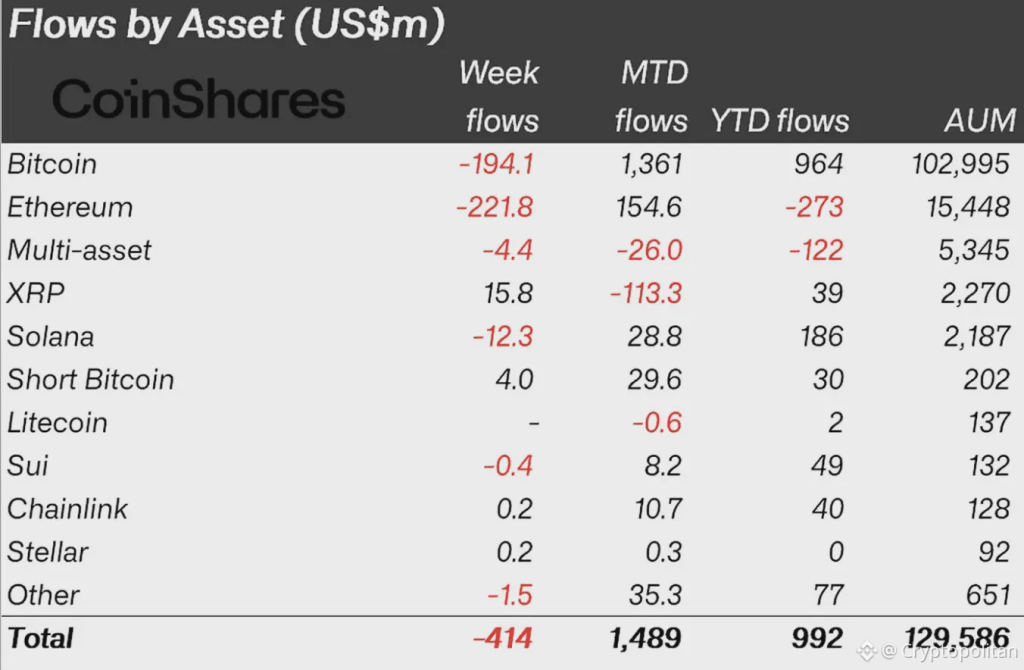
This marked the first significant break in the multi‑week inflow trend that had helped support market optimism. Total assets under management across tracked crypto products fell to about $129.59 billion as a result.
The global pullback suggests that investor caution is not isolated to U.S. Bitcoin ETFs alone, but reflects a wider reassessment of digital asset exposure in response to changing macro conditions.
Are Altcoins Seeing Different Flows?
While Bitcoin and Ethereum products lost capital, some smaller or specialized funds showed relative resilience or slight inflows in recent weeks. For example, certain altcoin ETFs and exchange‑traded products related to tokens like XRP have seen episodic buying interest, though flows remain modest compared with Bitcoin’s scale.
However, these inflows into individual altcoins have not been strong enough to offset the broader outflow trend in most major institutional products. The divergence between altcoin flows and BTC/ETH flows may reflect capital rotation within the crypto ecosystem rather than a full exit from risk assets.
Price Context & Technical Snapshot
Where Does Bitcoin Stand Now?
Despite ETF outflows and broader crypto fund redemptions, Bitcoin’s price has shown relative resilience. As of March 30, 2026, BTC was trading near $67,800, holding a narrow range despite macro pressures and mixed sentiment.
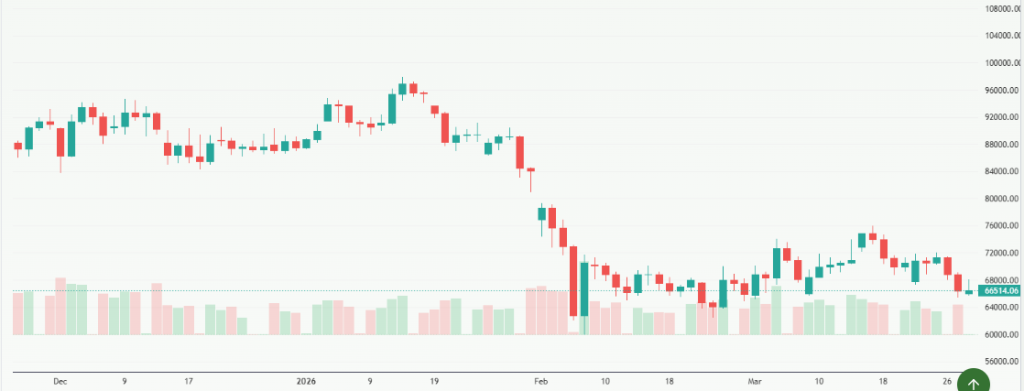
Short‑term price action has ranged between roughly $65,000 and $72,000 in recent sessions, reflecting reduced volatility and a lack of strong directional conviction. Some analysts see this as a range‑bound phase while markets digest recent flows and macro developments. Other traders view ETF outflows as a factor in short‑term price softening, though not the sole driver.
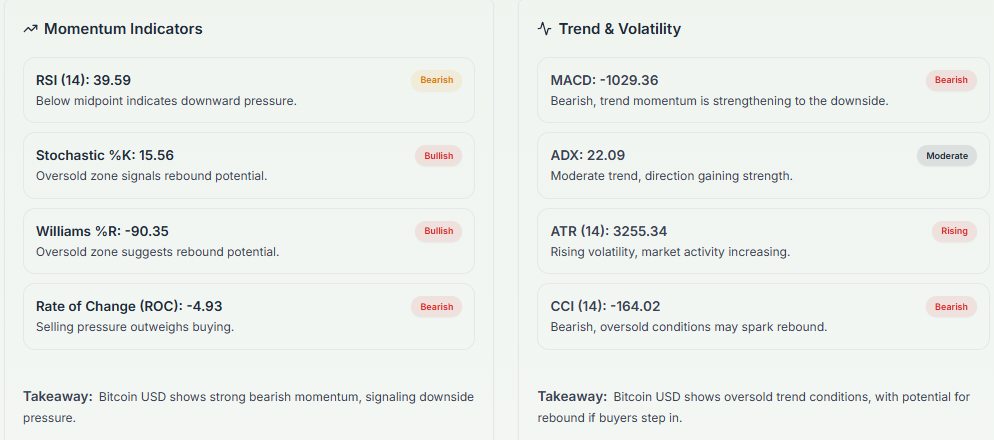
Technical indicators show support near mid‑$60,000s and resistance around the higher end of the recent range, meaning traders are watching these levels closely for breakout or breakdown signals.
What’s Next for ETF Flows: Outlook for Investors
Market observers emphasize that ETF flows should be viewed alongside macro signals and price action rather than in isolation. Continued outflows might reflect short‑term repositioning amid risk-off sentiment, while renewed inflows could signal returning confidence. Institutional interest in regulated crypto products remains significant overall, even if weekly flows fluctuate.
Traders should watch upcoming economic data, central bank decisions, and geopolitical news, as these will continue to shape sentiment in digital asset markets. Fundamental adoption trends, including product innovation and regulatory clarity, could support longer‑term recovery once immediate uncertainties stabilize.
Closing Note
The recent $296 million weekly outflow from U.S. Bitcoin ETFs and broader global crypto fund redemptions signal a notable shift in short‑term investor behavior. However, isolated outflows alone do not necessarily indicate a long‑term downturn.
When combined with macro pressures and broad sentiment shifts, they can highlight caution among institutions. For now, it’s essential to balance these flow metrics with price action and broader economic signals to get a clearer picture of where the crypto market may head next.
Frequently Asked Questions (FAQs)
Bitcoin ETFs lost $296M in late March 2026 due to investor caution and recent shifts in crypto market sentiment.
Global crypto funds saw $414M outflows by March 27, 2026, ending a multi-week inflow trend, showing cautious investor behavior.
Institutional investors mainly withdrew from U.S. Bitcoin ETFs by March 28, 2026, signaling short-term risk aversion in crypto markets.
Disclaimer:
The content shared by Meyka AI PTY LTD is solely for research and informational purposes. Meyka is not a financial advisory service, and the information provided should not be considered investment or trading advice.
What brings you to Meyka?
Pick what interests you most and we will get you started.
I'm here to read news
Find more articles like this one
I'm here to research stocks
Ask our AI about any stock
I'm here to track my Portfolio
Get daily updates and alerts (coming March 2026)