











United Rentals has a new insider filing that got Wall Street’s attention. On March 3, 2026, the company disclosed that its Chief Operating Officer surrendered a portion of his United Rentals (NYSE: URI) shares to cover taxes tied to vested restricted stock units. This wasn’t an open‑market sale, but a tax withholding action reported on a SEC Form 4, and it reflects equity compensation dynamics at one of the largest equipment rental firms in the world.
Investors watch these moves closely because they can hint at how executives manage their stock and what that signals about confidence in the business. If you follow URI insider activity or executive tax share submissions, this is an event worth understanding.
What Happened: URI COO Share Forfeiture Explained
On March 3, 2026, United Rentals (NYSE: URI) disclosed an insider filing that grabbed Wall Street’s attention. According to a SEC Form 4, Executive Vice President and Chief Operating Officer Michael D. Durand surrendered 82.272 shares of URI stock to satisfy tax withholding obligations tied to vested restricted stock units. This was not an open‑market sale, but a routine share surrender to cover taxes on executive equity compensation. The shares were valued at $820.58 per share, and after the transaction, Durand directly holds 7,375.265 URI shares in total.
Tax‑related dispositions like this are usually neutral and common with RSUs. They do not necessarily signal a lack of confidence in the company. Instead, they reflect standard executive compensation mechanics under U.S. tax rules when equity awards vest and tax becomes due.
Insider filings matter because they can provide transparency into what executives are doing with their stock. Smart investors track these alongside broader trading activity, earnings, and market context to better understand trends in shares like United Rentals.
United Rentals (URI) Short Stock Details & Forecast
Current Market Snapshot
United Rentals shares have shown mixed trading performance in recent sessions. On March 3, 2026, URI stock climbed 1.57% to $833.47 despite a weak broader market, snapping a short losing streak. Trading volume also exceeded its 50‑day average, hinting at active investor interest. However, the stock still sits around 18‑19 % below its 52‑week high of $1,021.47 set in October 2025.
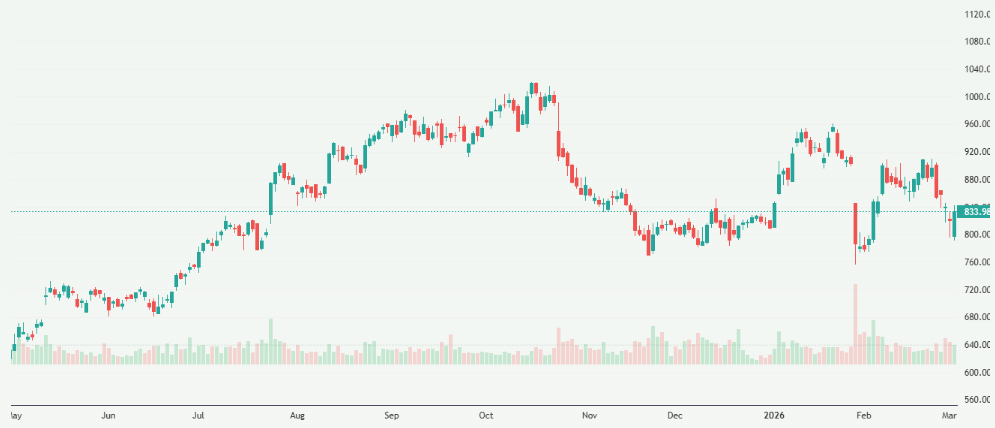
Short-Term Technical Profile
- Shares have seen volatility around key levels recently, with both gains and pullbacks.
- Momentum over short horizons shows mixed signals as buyers and sellers balance around current price levels.
Meyka Stock Forecast
According to Meyka’s recent market commentary and analysis, United Rentals is poised for continued focus ahead of earnings and guidance. Meyka and analysts like UBS have highlighted resilience in pricing and utilization trends, leading to an upgrade to Buy and price targets above $1,000. Consensus analyst targets cluster near a median ~$988 to $1,035 range, underscoring potential upside if fundamentals stay strong.
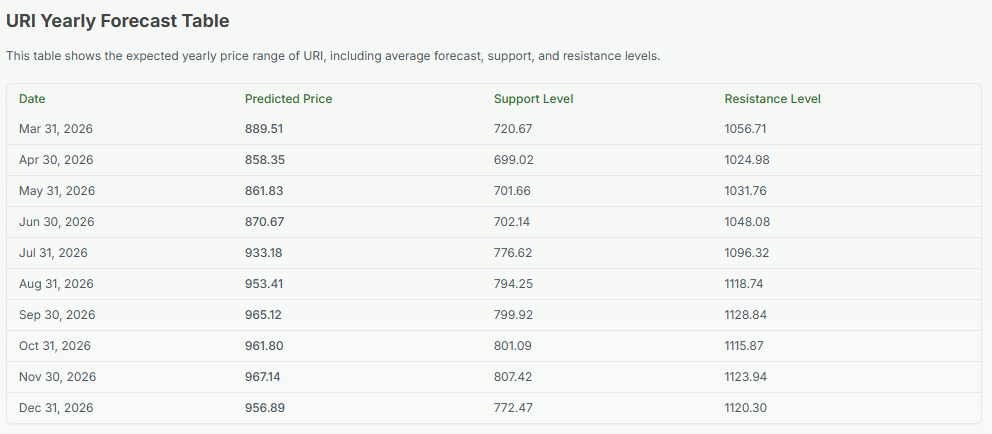
Keep in mind, forecasts are not guarantees but reflect what analysts and tools are pricing in based on current trends, similar to how an AI stock analysis tool models probabilities and scenarios.
Why Executives Forfeit Shares for Taxes?
What does share forfeiture for taxes mean?
When executive equity awards like Restricted Stock Units (RSUs) vest, the IRS considers that vested value as income. Companies are required to withhold taxes at the point of settlement. Instead of asking the executive to pay cash, many firms allow executives to surrender a portion of the vested shares to the company. This is exactly what United Rentals’ COO did on March 3, 2026: he turned in 82.272 shares to satisfy tax withholding rather than sell them in the open market.
Does this reflect selling pressure?
No. This action is not a sell‑off or trading activity designed to realize profit. It is a compulsory tax mechanism. Analysts and investor watchers differentiate these from open‑market sales when interpreting insider activity.
Broader Market & Company Context for United Rentals
What is URI’s recent operational and financial backdrop?
United Rentals reported Q4 and full‑year 2025 results on January 28, 2026, posting:
- Record fourth quarter revenue of $4.208 billion.
- Full‑year revenue of roughly $16.1 billion with adjusted EBITDA near $7.3 billion.
- Announced a $5 billion share repurchase plan and a 10 % dividend increase for 2026.
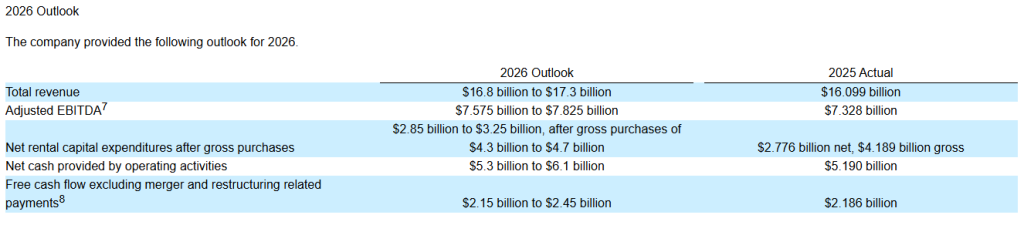
The company also provided 2026 guidance, including revenue between $16.8 billion and $17.3 billion, reflecting steady growth expectations.
How does this tie into recent stock moves?
URI has seen short‑term price swings. For example:
- It underperformed peers on March 2, 2026, slipping ~2.3 % despite higher trading volume.
- It outperformed many peers the next day, rising ~1.6 %.
This suggests investor sentiment fluctuates in line with broader market conditions.
What strategic actions support URI stock?
- Ongoing capital returns, including dividend increases and aggressive buybacks, reflect financial discipline and shareholder focus.
- New partnerships, such as an integration with Procore Technologies for telematics data, add operational value and visibility for revenue streams.
Together, these fundamentals and strategic moves create a broader context for understanding both share price behavior and insider filings like the COO’s share forfeiture.
What Investors Should Watch Next?
How could future insider activity matter?
Tracking ongoing SEC Form 4 filings is useful. Forfeitures for tax withholding are neutral, but open‑market sales or purchases can signal changes in confidence or liquidity needs.
Key company catalysts
- Quarterly earnings reports and updated 2026 guidance will likely move the stock.
- Fleet utilization and pricing trends, especially in construction and industrial end‑markets, are key drivers of revenue.
Market sentiment and volume
Strong institutional interest or reduced trading volume can influence trends over time. Days of heavy trading volume relative to averages may signal shifts in investor commitment.
Conclusion
United Rentals’ COO shares surrender for tax withholding on March 3, 2026, reflects normal executive equity compensation mechanics rather than a bearish signal. When viewed alongside recent earnings, guidance, share repurchases, and analyst targets, this insider filing is only one piece of a larger puzzle.
Investors should continue to monitor URI insider trends, earnings updates, and market data as part of a broader evaluation strategy to understand the stock’s trajectory.
Frequently Asked Questions (FAQs)
On March 3, 2026, the COO of United Rentals surrendered 82 shares to cover taxes on vested stock units. It was a tax requirement, not a sale of stock.
No. The share surrender was to pay taxes on RSUs. It does not show selling for profit or a lack of confidence in United Rentals. The executive still holds stock.
After the March 3, 2026, transaction, the United Rentals COO directly holds 7,375 shares. This reflects the remaining stock after the tax-related share surrender.
Disclaimer:
The content shared by Meyka AI PTY LTD is solely for research and informational purposes. Meyka is not a financial advisory service, and the information provided should not be considered investment or trading advice.
What brings you to Meyka?
Pick what interests you most and we will get you started.
I'm here to read news
Find more articles like this one
I'm here to research stocks
Ask our AI about any stock
I'm here to track my Portfolio
Get daily updates and alerts (coming March 2026)