Textile stocks surge up to 10% after the US Supreme Court ends Trump-era tariffs
On February 23, 2026, global markets moved sharply after the U.S. Supreme Court struck down a major portion of President Donald Trump’s tariff policy. The court ruled that the way tariffs were imposed under emergency powers exceeded presidential authority, touching off a wave of relief across export‑linked sectors.
One of the standout market reactions was in textile stocks, where several leading companies jumped up to around 10% as investors reacted to the potential easing of trade barriers. The ruling has stirred fresh debate about U.S. trade policy, stock market volatility, and what this means for exporters around the world.
Advertisement
How Did the U.S. Supreme Court Ruling Change Trump‑Era Tariffs?
On February 20, 2026, the U.S. Supreme Court ruled 6‑3 that President Donald Trump’s sweeping global tariffs were unlawful because he lacked clear legal authority under the International Emergency Economic Powers Act (IEEPA) to impose them without Congress’s approval. The decision came in Learning Resources, Inc. v. Trump and was seen as a landmark check on executive trade power.
The court held that tariff authority is a power reserved chiefly for Congress, not the presidency, under emergency laws. This stopped the administration’s broad levies that targeted imports globally.
Trump reacted swiftly. He declared new global import tariffs of 10%, later announcing plans to raise them to 15% under a different trade statute (Section 122 of the Trade Act of 1974) that allows temporary measures for up to 150 days.
These developments created a split situation: the Supreme Court removed the legal basis for past tariffs, but new levies are set to take their place, keeping the trade outlook uncertain.
What Was the Immediate Market Reaction?
After the Supreme Court’s decision, global stock markets moved higher, reflecting relief from tariff‑related uncertainty. Wall Street indices ended higher:
- The S&P 500 rose about 0.7%.
- The Nasdaq Composite climbed nearly 0.9%.
- The Dow Jones Industrial Average gained about 0.5%.
- Broader indexes snapped short losing streaks amid the news.
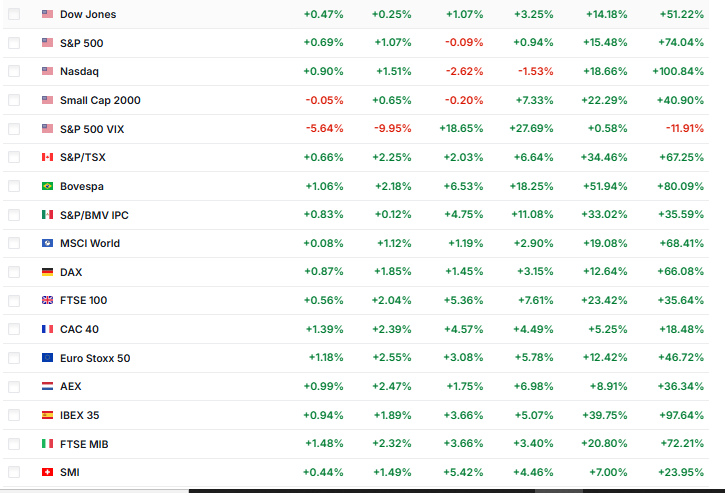
Investors saw relief because the ruling reduced the risk of unpredictable trade barriers that can raise costs for companies using global supply chains. Analysts say this greater predictability is key to long‑term planning.
Consumer stocks and import‑heavy sectors saw mixed but generally positive reactions. Apparel, retail, and luxury companies initially rose on expectations of lower cost pressures.
How Did Textile Stocks Perform After the Ruling?
Textile stocks reacted strongly but unequally after the tariff news.
Recent trading showed mixed performance:
- Kitex Garments surged around 11% intraday.
- Welspun Living gained roughly up to 5%.
- Pearl Global also posted gains near 4%.
- Meanwhile, Gokaldas Exports dipped about 3-4%.
- Indo Count and K.P.R. Mill slipped slightly.
Analysts say this variation reflects market uncertainty over the long‑term impact of both the court decision and Trump’s new tariffs. Stocks with higher export exposure tend to benefit, while others may see mixed flows as investors weigh costs, demand strength, and pricing outlook.
Why are Textile Stocks Moving After This Decision?
The Supreme Court ruling eased one source of uncertainty for global trade. For many textile companies, tariffs meant higher costs on imported inputs and lower competitiveness in key markets like the U.S. The court decision initially signalled a potential reduction in trade friction, which could support earnings and margin recovery.
However, President Trump’s announcement of fresh 10-15% global tariffs under alternate legal authority complicates the picture. While the legal basis shifted, tariffs remained. This has kept investors cautious, especially for export‑heavy textile firms that rely on stable trade access.
Moreover, the short‑term nature of the new tariff authority (150 days) adds a layer of uncertainty around future trade policy. Analysts say this may temper strong buy‑and‑hold conviction until clarity emerges.
What Does This Mean for Exporters and Global Trade?
The Supreme Court ruling could eventually reshape how trade policy is made in the U.S. by reinforcing Congressional authority over tariffs. This may reduce sudden policy shifts in the future, which is sometimes positive for exporters.
But tariffs have not disappeared. The new levies under Section 122 mean exporters still face added costs, at least temporarily. This could slow demand growth in key markets until the full legal and trade negotiations play out.
Export‑focused markets like textiles, gems, and chemicals are expected to stay in focus as traders react to evolving policy headlines and earnings guidance.
What Analysts are Saying About the Textile Stocks Surge After US Tariff Ruling?
Market watchers note that:
- Removing the Supreme Court’s tariff basis is a win for trade predictability.
- New, temporary tariffs show that trade policy risk is far from over.
- Consumer, retail, and import‑dependent firms may experience margin relief.
- Exporters may benefit in the long term if tariffs are reduced or clarified.
Some firms and investors track these developments using AI stock analysis tools to model policy outcomes and price reactions.
Final Words
The U.S. Supreme Court’s ruling against Trump’s broad tariffs triggered a notable shift in markets. Textile stocks showed both strength and weakness as investors balanced optimism about legal clarity against the reality of continued tariffs under a different law.
The ruling underscores how legal and policy factors influence markets, and how traders and exporters must watch both government decisions and trade negotiations closely.
The situation remains fluid, and future tariff adjustments, Congressional actions, or trade agreements could further shape global stock performance and export trends.
Advertisement
Frequently Asked Questions (FAQs)
Textile stocks jumped up to 10% on February 23, 2026, after the US Supreme Court struck down Trump‑era tariffs. Investors expect lower costs and better export opportunities for companies.
The Supreme Court removed the legal basis for Trump‑era tariffs on February 23, 2026, but new temporary tariffs may still apply under different trade laws. Full removal is not yet permanent.
Textile exporters may gain from the February 2026 ruling as cost pressures drop and US market access improves. Companies could see better profit margins and stronger demand for their products.
Disclaimer:
The content shared by Meyka AI PTY LTD is solely for research and informational purposes. Meyka is not a financial advisory service, and the information provided should not be considered investment or trading advice.
Advertisement
What brings you to Meyka?
Pick what interests you most and we will get you started.
I'm here to read news
Find more articles like this one
I'm here to research stocks
Ask our AI about any stock
I'm here to track my Portfolio
Get daily updates and alerts (coming March 2026)