Stoxx 600 Index Drops Nearly 2% at Open as Travel Stocks Slide, Energy and Defense Gain
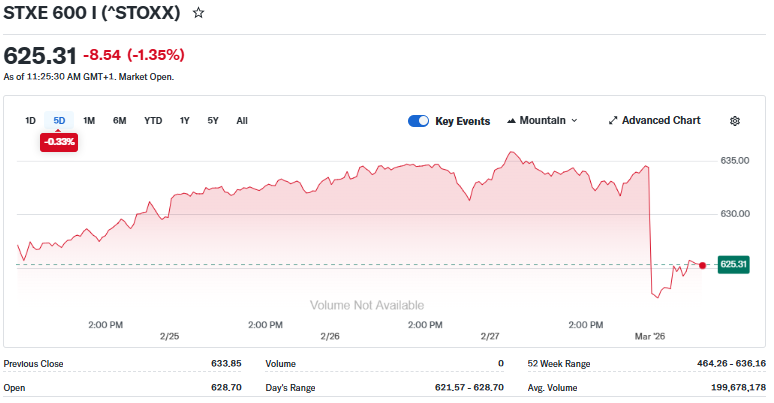
European markets opened sharply lower on March 2, 2026, as rising geopolitical tensions rattled investors and sent major benchmarks into negative territory. The Stoxx 600 index slid nearly 2% at the open, pulling back from recent highs and marking one of its steepest early‑session drops in weeks.
Markets were hit hard by a sell‑off in travel and leisure stocks, particularly airlines, even as energy and defence sectors showed strong gains on fears of disrupted oil flows and heightened risk appetite for safe‑haven assets. The sudden rotation in stock performance highlights how quickly sentiment can shift when global conflict and economic uncertainty collide, setting the tone for what could be a volatile trading week.
Advertisement
Breaking Down the Data: What the Opening Drop Shows
European markets started the trading week on the back foot on March 2, 2026. The Stoxx 600 index opened sharply lower, falling about 1.8% to 622.35, its weakest level in two weeks. This followed a record high reached only days earlier, showing how quickly sentiment can shift when global tensions rise and investor risk appetite declines. Most sectors dropped steeply, led by travel and leisure shares, while a few defensive areas bucked the trend.
Travel & Leisure Stocks Slide
Travel and leisure stocks were among the worst hit. The sector dropped sharply, with major airline operators like Lufthansa suspending flights and seeing heavy losses. Investors reacted to rising geopolitical risks and weaker demand prospects, pushing travel names down by more than 4% in the early session. This slide highlighted how conflict can immediately impact travel‑linked equities.
Energy Stocks Rally
In contrast, energy stocks led gains. Companies such as Shell, BP, and TotalEnergies each climbed more than 5% as crude oil prices surged on fears of supply disruption around the Strait of Hormuz. Brent crude jumped up to about 13%, nearing $82 per barrel amid the unrest, as energy markets priced in risk to Middle East flows.
Defense Stocks Surge
Defense stocks also gained in the risk‑off environment. Firms like BAE Systems and Rheinmetall rose between 5%-8% as investors anticipated higher defense spending and broader military demand. This shift into defense shares reflects a common pattern in times of geopolitical uncertainty.
What’s Driving the Sell‑Off? Geopolitical & Macro Catalysts
Why Did the Market Sell Off?
The primary driver was escalating conflict in the Middle East. Renewed strikes and counter‑strikes between major regional powers created fresh fears that the situation could widen further. This fueled a risk‑off move in global stocks, particularly in sectors tied to growth and travel.
Global markets reacted not only to the direct threat to regional stability but also to concerns over disrupted oil shipments. The Strait of Hormuz, a key transit route for about one‑fifth of the world’s oil, faced increased risks, prompting traders to re‑price energy and equity assets accordingly.
How Did Broader Markets React?
The impact was not limited to Europe. U.S. and Asian markets also saw early weakness. Wall Street futures slumped on the same conflict backdrop, while oil prices climbed sharply, boosting safe‑haven assets like gold and the U.S. dollar. This global reaction underlines how interconnected markets have become in today’s trading environment.
Comparisons & Recent Trends in European Markets
What Was the Market Doing Before This Drop?
Just days before this sell‑off, the Stoxx 600 was trading near record highs, supported by strong earnings and optimism over economic resilience. The recent uptick was partly due to strong performance in defensive sectors and expectations of stable corporate profits.
Are Sector Rotations Visible?
Yes. Even before the March 2 drop, investors were repositioning capital away from some growth themes. According to recent data, defensive and asset‑heavy companies had outperformed, while tech and cyclicals faced pressure. In part, this reflected concerns about disruption from new technologies and broader structural shifts.
This type of sector rotation also rings true with patterns seen globally as markets grapple with inflation, monetary policy changes, and geopolitical risk.
What This Means for Investors: Key Insights and Strategies
How Should Investors Think About This Drop?
Investors often need to balance near‑term volatility with long‑term strategy. Sharp market declines like the one on March 2, 2026, can offer opportunities to rebalance portfolios. Shifts into defensive areas such as energy and defense stocks may help cushion risk in turbulent times.
Using tools like an AI stock analysis tool can assist in identifying sector trends and potential entry points, but these should complement broader market research and risk management practices.
Is This a Broader Warning Sign?
While the sell‑off was sharp, not all downturns signal deeper economic trouble. Part of this drop stems from geopolitical shocks, not underlying corporate weakness. Investors should monitor key indicators like earnings forecasts, inflation data, and geopolitical developments to better gauge the environment ahead.
Conclusion
The sharp drop in the Stoxx 600 index on March 2, 2026, highlights how quickly markets can react to global tensions. While travel stocks took a hit, energy and defense sectors benefited from rising oil prices and geopolitical uncertainty.
Investors are reminded that volatility brings both risks and opportunities. Staying informed and focusing on diversified, defensive positions can help navigate uncertain market conditions while remaining ready for potential rebounds.
Advertisement
Frequently Asked Questions (FAQs)
The Stoxx 600 index fell about 2% on March 2, 2026, due to rising Middle East tensions, weaker travel stocks, and investor fear. Energy and defense sectors showed gains.
On March 2, 2026, the energy and defense sectors gained. Oil and gas stocks rose with higher crude prices, while defense companies climbed on expectations of increased military spending.
The drop signals higher market volatility for European investors. Defensive sectors may offer safety. Investors should stay cautious, diversify portfolios, and watch geopolitical and economic developments closely.
Disclaimer:
The content shared by Meyka AI PTY LTD is solely for research and informational purposes. Meyka is not a financial advisory service, and the information provided should not be considered investment or trading advice.
Advertisement
What brings you to Meyka?
Pick what interests you most and we will get you started.
I'm here to read news
Find more articles like this one
I'm here to research stocks
Ask our AI about any stock
I'm here to track my Portfolio
Get daily updates and alerts (coming March 2026)