











Indian stock market opened on a weak note on February 6, 2026, as selling pressure returned to Dalal Street. The BSE Sensex slipped over 300 points, while the Nifty 50 fell below the crucial 25,600 level, signaling rising caution among investors. The decline came as traders reacted to the RBI’s latest monetary policy stance, mixed global cues, and continued weakness in IT stocks.
Asian markets traded mixed, and overnight losses on Wall Street also weighed on sentiment. With key support levels now under watch, market participants are reassessing near-term risks. Is this just a routine dip, or the start of a deeper correction? Today’s market action offers important clues for traders and long-term investors alike.
Latest Market Movement: Sensex & Nifty Extend Losses
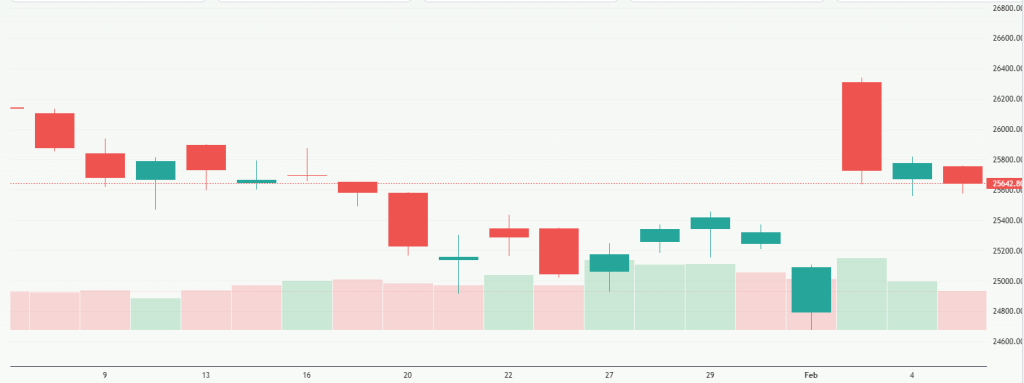
Benchmark Indian equity indices remained under selling pressure on February 6, 2026, as investors reacted to key economic signals. The BSE Sensex slipped over 300 points early in the session, with the NSE Nifty 50 trading below 25,600, reaffirming a cautious mood on Dalal Street. Domestic sentiment was weighed down by a Reserve Bank of India (RBI) decision to keep the repo rate unchanged at 5.25 percent, along with mixed global cues that dampened risk appetite among traders.
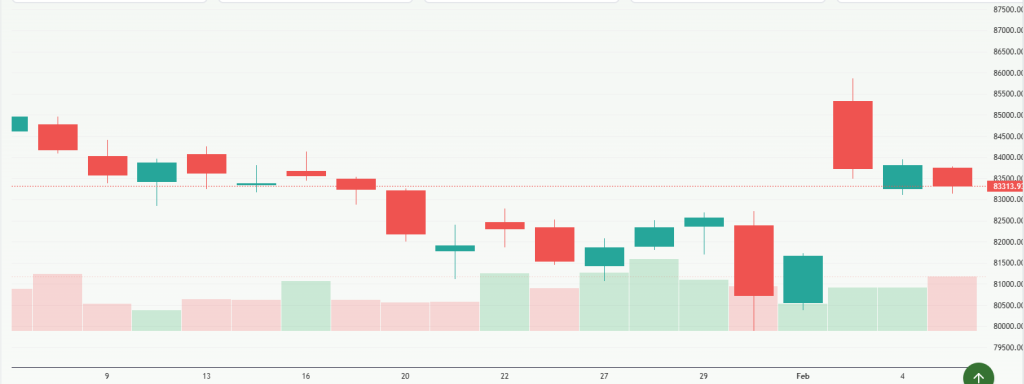
At around mid-morning trade, the Sensex hovered near the 83,000 mark, down roughly 0.36 percent, while the Nifty 50 moved lower by about 0.42 percent. Broader market indices such as the Midcap 100 and Smallcap 100 also showed weakness.
What’s Driving the Indian Stock Market Decline?
Why are Markets Falling Today?
Two main factors drove the downturn:
1. RBI Monetary Policy Stance
The RBI’s Monetary Policy Committee (MPC) held the policy rate steady at 5.25 percent on Feb 6, surprising some market participants who had hoped for a rate cut to spur growth. The central bank also maintained its “neutral” stance, signalling patience on monetary easing even as inflation expectations edged up slightly. This decision reduced expectations of immediate policy support for stocks.
2. Global Sell-Off and Risk Aversion
Weak performance in U.S. indices and a broader sell-off in global markets dampened risk appetite. Asian markets also opened lower, pulling Indian benchmarks down from the outset. These global headwinds amplified domestic selling pressure.
Indian Stock Market Sector Performance: What’s Weak and Why
Which Sectors Led Losses?
While most sectors declined, several were particularly weak:
IT Stocks: The Nifty IT index was among the worst performers, reflecting heightened fears over the disruptive impact of artificial intelligence (AI) on traditional IT service models. This resulted in losses of nearly $22.5 billion in market value for Indian IT stocks, with heavyweights like TCS, Infosys, and Coforge sliding on investor caution.
Midcaps and Smallcaps: Both midcap and smallcap indices gave up ground as broader market risk sentiment soured, signalling that traders were reducing exposure beyond major blue-chip stocks.
Which Sectors Held Up Better?
Some defensive segments such as Oil & Gas and select financial stocks exhibited modest resilience, trading in positive territory in a predominantly negative session.
Technical Levels to Watch in the Near Term
What Support Levels Matter?
Technical traders will monitor the following levels closely:
- Nifty 50 Support Zones: Around 25,500-25,400
- Sensex Support Range: Around 82,800-83,000
These ranges are considered critical for short-term sentiment. A sustained break below these levels could imply deeper correction risk.
What Resistance Levels Should Traders Watch?
On the upside, Nifty resistance lies near 25,700-25,800, where selling pressure may intensify if markets attempt a rebound. Sensex resistance mirrors these thresholds in index terms. Technical sentiment is currently cautious, as volatility remains elevated.
Macro Backdrop: Rupee & Foreign Flows
What’s Happening with the Rupee?
The Indian rupee strengthened to about 90.18 per U.S. dollar during the session, extending gains ahead of the RBI policy outcome. This appreciation was partly due to one-off flows and optimism from recent trade developments, including a U.S.-India trade deal. However, foreign portfolio investors sold roughly $200 million of Indian equities the previous day, highlighting the tension between currency strength and equity outflows.
What About Foreign Investors?
Sustained foreign investor selling has been a persistent headwind, contributing to equity market weakness despite strong macro data in other segments. Net outflows can magnify downward pressure on benchmarks when sentiment weakens.
What Does This Means for Investors?
Is This a Short-Term Dip or a Deeper Correction?
For now, analysts suggest that the market is experiencing a near-term correction rather than a structural downturn. The lack of policy support, combined with global market weakness and sector-specific concerns (especially in IT), has triggered selling.
However, broader economic indicators like GDP forecasts and foreign trade optimism still offer an undercurrent of support for longer-term investors. Market participants using advanced tools like AI stock analysis tools may find signal-to-noise ratios improving as data evolves.
What Should Investors Watch Next?
Investors should track:
- RBI’s future monetary policy signals
- Earnings announcements from key index constituents
- Foreign institutional investor (FII) flows
- Global market trends
Final Words
On February 6, 2026, Indian markets posted notable declines as the Sensex fell over 300 points and the Nifty 50 slipped below 25,600. This movement reflected investor caution ahead of central bank policy confirmation, persistent global risk aversion, and significant sector compression, especially in the IT space. While short-term weakness persists, longer-term structural fundamentals remain intact for patient investors. Tracking support levels, macro flows, and global cues will be key for navigating the market ahead.
Frequently Asked Questions (FAQs)
On February 6, 2026, Sensex fell over 300 points due to weak global markets, selling pressure, and caution among investors. Key sectors like IT also dragged the index lower.
The RBI kept the repo rate at 5.25% on February 6, 2026, and stayed neutral. Investors were cautious, as no immediate stimulus was seen for the equity market.
IT stocks led the decline on February 6, 2026, due to fears about AI disruption. Midcap and smallcap sectors also fell, while oil and financial stocks held up slightly.
Disclaimer:
The content shared by Meyka AI PTY LTD is solely for research and informational purposes. Meyka is not a financial advisory service, and the information provided should not be considered investment or trading advice.
What brings you to Meyka?
Pick what interests you most and we will get you started.
I'm here to read news
Find more articles like this one
I'm here to research stocks
Ask our AI about any stock
I'm here to track my Portfolio
Get daily updates and alerts (coming March 2026)