











The KOSPI Index, South Korea’s main stock market benchmark, has recorded a stunning surge of more than 10%, marking its strongest rally since the 2008 global financial crisis. The sharp jump came in March 2026, as investors rushed back into Korean equities after weeks of market volatility. Strong demand for semiconductor and AI-related stocks, especially companies like Samsung Electronics and SK Hynix, helped push the market higher.
Analysts say improving investor sentiment and renewed foreign investment also played a major role in the rebound. For global investors, the sudden rally has raised an important question: Is this the start of a new bullish phase for South Korea’s stock market, or just a short-term recovery after recent market turbulence?
What Is the KOSPI Index and Why Does It Matter?
What does the KOSPI Index track?
The KOSPI Index is the main benchmark for the South Korean stock market. It tracks the performance of companies listed on the Korea Exchange. The index is often compared to the S&P 500 in the United States.
The KOSPI includes large companies that dominate global industries. These firms represent key sectors of South Korea’s economy, including technology, automobiles, finance, and manufacturing.
Because many KOSPI companies export globally, the index also reflects international economic trends. Key sectors represented in the index include:
- Semiconductors
- Consumer electronics
- Automotive manufacturing
- Shipbuilding and heavy industry
- Financial services
Investors worldwide monitor the index closely because South Korea is one of the largest exporters of advanced technology products.
Which companies have the biggest influence on the index?
Several large companies carry significant weight in the index. Major market drivers include:
- Samsung Electronics
- SK Hynix
- Hyundai Motor
Semiconductor companies dominate the index. Their performance often determines whether the KOSPI rises or falls.
For example, strong global demand for artificial intelligence chips has boosted semiconductor stocks across Asia. This trend has played a major role in the KOSPI rally during 2025 and 2026.
The 10% Rally: What Happened in the Market?
Why did the KOSPI suddenly surge more than 10%?
The market experienced sharp volatility in early March 2026. After a heavy sell-off triggered by geopolitical fears, the index quickly rebounded.
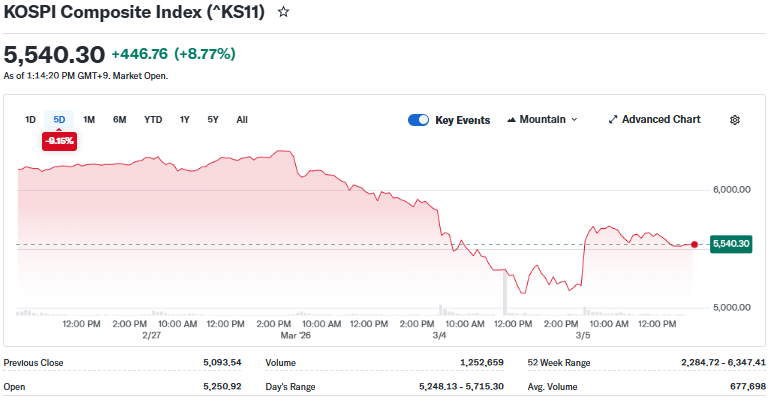
At one point, the benchmark had dropped more than 12% in a single session, its largest decline since the 2008 financial crisis. The fall was driven by global risk concerns and falling semiconductor stocks.
Soon after the crash, investors rushed back into the market. Key reasons behind the sudden rebound included:
- Bargain buying after the sharp sell-off
- Strong confidence in semiconductor earnings
- Institutional and retail investor demand
Markets often rebound strongly after extreme panic selling. That pattern played out again in the Korean market.
How strong has the KOSPI rally been recently?
The rally leading into 2026 has been extraordinary. Important milestones include:
- The index crossed 6,000 points for the first time in February 2026.
- It later surged beyond 6,300 during intraday trading.
- Korean equities have delivered around 160% returns since early 2025 in U.S. dollar terms.
This performance made South Korea one of the best-performing stock markets in the world. Technology companies, particularly semiconductor manufacturers, were the biggest contributors to the rally.
Major Drivers Behind the KOSPI Rally
1. Artificial Intelligence and Semiconductor Boom
One of the biggest drivers behind the rally is the global expansion of artificial intelligence infrastructure. Semiconductor companies in South Korea play a major role in the global AI supply chain. Two companies dominate the market:
- Samsung Electronics
- SK Hynix
These firms produce advanced memory chips used in AI servers and data centers. Global technology companies are expected to spend around $655 billion on AI infrastructure by 2026, according to brokerage estimates.
That massive investment is increasing demand for high-performance memory chips produced in South Korea. As a result, semiconductor stocks have surged and pushed the KOSPI index higher.
2. Government Corporate Reform Policies
Another important factor is the South Korean government’s push to improve corporate governance. The government launched reforms aimed at eliminating the long-standing “Korea discount.” This term refers to the historically lower valuation of Korean companies compared with global peers.
Key reforms include:
- Encouraging companies to increase dividends
- Promoting share buybacks
- Improving transparency and governance
These steps aim to make Korean stocks more attractive to foreign investors. As confidence in corporate governance improves, global funds are increasing exposure to Korean equities.
3. Strong Foreign Investor Participation
Foreign investors often drive large movements in the Korean stock market. During the rally, international funds increased investment in Korean technology companies.
Several factors attracted global capital:
- Rising semiconductor earnings
- Strong export growth
- Competitive valuations compared with U.S. tech stocks
Foreign institutional inflows reached over $1.2 billion in a single week during one rally phase, supporting the index climb. This influx of capital helped push the KOSPI to record levels.
Volatility Warning: Why the Rally May Not Be Stable
What risks could slow the KOSPI rally?
Despite the strong performance, analysts warn that the market remains vulnerable to global shocks. In March 2026, the Korean stock market experienced extreme volatility due to geopolitical tensions in the Middle East.
The conflict raised concerns about oil supply disruptions. South Korea imports about 70% of its oil from the Middle East, making the economy sensitive to energy price spikes. These fears triggered heavy selling in Asian markets.
Semiconductor heavyweights also suffered losses during the sell-off. For example:
- Samsung Electronics dropped around 10%
- SK Hynix fell about 11.5% in one session
Together, the two companies lost about $170 billion in market value during the decline. Such volatility shows how quickly global events can affect the Korean stock market.
How the KOSPI Rally Compares With Other Global Markets
The performance of the KOSPI in 2025 and 2026 has outpaced many major global indices. Several international markets experienced slower growth during the same period.
Comparison with major indices:
| Index | Performance Trend |
| KOSPI Index | One of the strongest rallies globally |
| Nikkei 225 | Moderate growth |
| S&P 500 | Slower gains due to interest-rate concerns |
| Shanghai Composite | Mixed performance |
The main reason behind Korea’s strong performance is its heavy exposure to the semiconductor industry. As the demand for artificial intelligence expands globally, companies producing AI hardware are benefiting the most.
What Analysts Expect Next for the KOSPI?
Will the KOSPI continue rising in 2026?
Analysts believe the next phase of the market will depend on several key factors.
Bullish outlook scenarios include:
- Continued AI chip demand
- Strong earnings from semiconductor companies
- Ongoing foreign investor inflows
Some investment banks have even raised their long-term targets for the index.
However, rising valuations are also raising caution among analysts. The KOSPI’s cyclically adjusted price-to-earnings ratio has climbed to near 24x, well above its historical average. That means investors may see periods of consolidation after the rapid rally.
What does the AI Stock analysis tool suggest?
According to data insights from an AI stock analysis tool, the outlook for the KOSPI remains linked to the semiconductor cycle.
Technical indicators show:
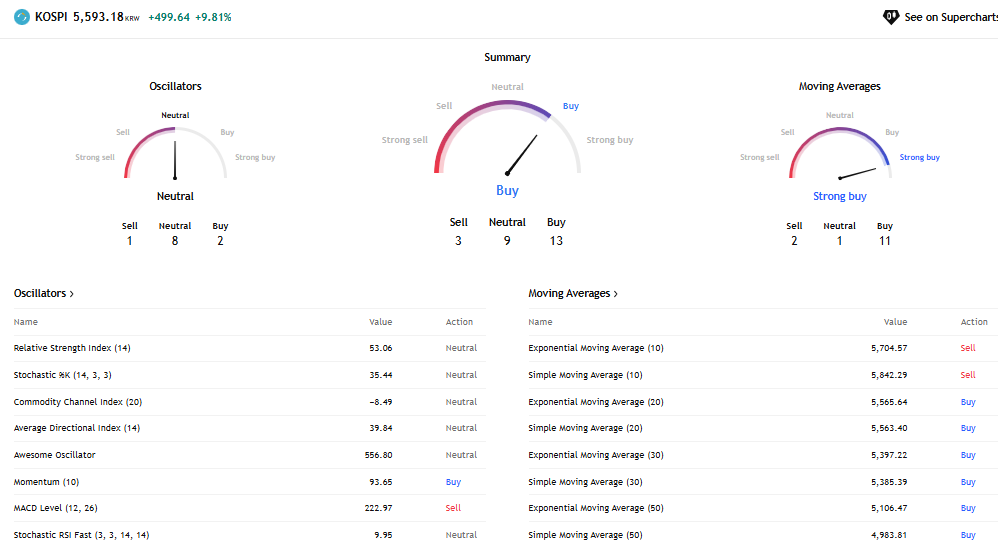
Technical analysis summary:
- Long-term trend: bullish
- Momentum indicators: volatile but positive
- Key support levels: near previous correction zones
- Resistance levels: around recent record highs
Short stock forecast:
- If semiconductor earnings remain strong, the index could test new highs in 2026.
- If geopolitical tensions increase or oil prices spike, the market may experience short-term corrections.
Other analysts share similar views. Many expect strong earnings growth in semiconductor companies to remain the biggest catalyst for the Korean market.
Wrap Up
The recent surge in the KOSPI Index highlights South Korea’s growing importance in the global technology economy. The rally has been fueled by artificial intelligence demand, semiconductor leadership, and improved corporate governance.
However, the market remains highly sensitive to geopolitical risks and global economic shifts. Investors will now watch semiconductor earnings and global demand trends to determine whether the KOSPI can sustain its momentum or enter a period of consolidation.
Frequently Asked Questions (FAQs)
The KOSPI Index surged over 10% in March 2026 after heavy sell-offs. Investors returned to technology stocks as semiconductor demand improved and global market sentiment stabilized.
Large technology companies strongly influence the KOSPI Index. Firms such as Samsung Electronics and SK Hynix hold significant weight and often drive market direction through semiconductor performance.
Analysts say the outlook depends on semiconductor demand and global economic conditions. If technology exports remain strong through 2026, the KOSPI Index could maintain upward momentum, though volatility may continue.
Disclaimer:
The content shared by Meyka AI PTY LTD is solely for research and informational purposes. Meyka is not a financial advisory service, and the information provided should not be considered investment or trading advice.
What brings you to Meyka?
Pick what interests you most and we will get you started.
I'm here to read news
Find more articles like this one
I'm here to research stocks
Ask our AI about any stock
I'm here to track my Portfolio
Get daily updates and alerts (coming March 2026)