Shop Price Inflation Slows to 1.1% in February, Food Costs Still 3.5% Higher Year-on-Year
In February 2026, new data showed a welcome shift in UK retail price pressure. Shop price inflation slowed to just 1.1% year‑on‑year, down from 1.5% in January, giving some relief to shoppers feeling the cost squeeze. Yet, the story isn’t all positive. Food prices remain stubbornly high, still running about 3.5% above last year’s levels, keeping pressure on household budgets.
These mixed signals matter. They affect grocery bills, spending power, and how economists view the broader cost‑of‑living picture heading into spring. If you’ve been watching prices at the till, this shift could change what you spend, and what to expect next.
Advertisement
UK Current Inflation Snapshot
UK Shop Price Inflation – February 2026 Figures
In February 2026, shop price inflation in the United Kingdom slowed to 1.1% year‑on‑year, down from 1.5% in January. This result came from the latest British Retail Consortium (BRC) and NielsenIQ data. It mirrors a three‑month average that also sat at 1.1%. Retailers say this cooling reflects increased price competition and promotional activity across many product categories.
Food Price Trends
Food prices remain a key issue. Overall food price inflation eased to around 3.5%, down from about 3.9% in January 2026, but still significantly above general shop price growth. † Consumer prices for groceries and staples continue to outpace other categories.
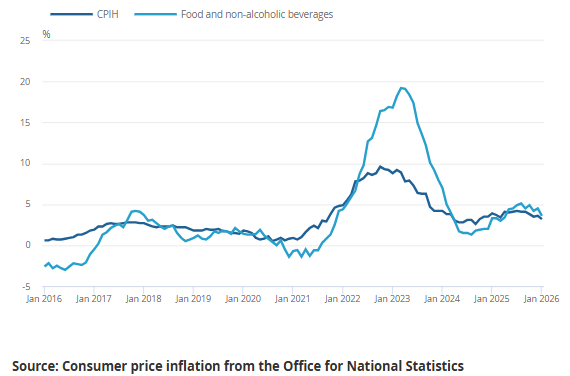
Non‑food prices also shifted. Clothing, electronics, and other non‑food items saw small declines in February, contributing to slower headline inflation. Retail sources described ambient food prices, including canned, packaged, and non‑perishables, hitting their lowest inflation in four years.
This pattern shows inflation is firmly trending down, but not yet low enough to offer full relief to households still adjusting budgets. Overall UK CPI inflation for January 2026 was around 3.0%, marking the slowest in nearly a year, pushing economic discussions about future interest rate moves.
Why Is UK Inflation Cooling?
What’s causing the drop in shop price inflation?
Slowing shop price inflation in the UK comes from several connected forces:
- Strong competition among retailers. Supermarkets and large retail chains pushed harder on promotions and price cuts, especially in fashion, health, and beauty categories. This helped keep non‑food goods from rising in price as fast.
- Lower ambient food inflation. Prices of packaged and non‑perishable foods eased and hit one of their lowest yearly increases in recent history.
- Falling overall consumer inflation. General CPI inflation across the UK slowed to around 3.0% in January 2026, helping to pull broader price pressures down.
Economists also point to global cost trends, such as steadier energy markets, which reduce input costs for retailers and producers. However, there is a risk that volatile international energy prices could still push inflation up later in the year if global conflicts intensify.
Are external risks still a factor?
Yes. Retailers warn that higher labor costs, new regulatory requirements, and energy cost volatility could offset this slowdown. Many industry leaders caution that easing isn’t guaranteed to continue without structural shifts in supply chains and business costs.
Economic Impact & Consumer Outlook
How does this price shift affect UK households?
The slowdown in shop price inflation means that prices are rising more slowly than before. Customers may notice smaller increases at checkouts and more promotional deals on everyday items. This can slightly ease household budgets. However, food prices are still about 3.5% higher than a year ago, meaning essential groceries remain more expensive for many families.
What are retailers doing?
Retailers are responding in different ways. Many are using discounting strategies to retain customer loyalty. Firms are also improving supply chain efficiency. Some non‑essential goods have even seen price falls. At the same time, rising operational costs particularly from new worker rights legislation could force prices up later.
What is the link with monetary policy?
Slower inflation can influence central bank decisions. The Bank of England closely watches price trends when setting interest rates. If inflation continues to ease, it could increase the chances of future rate cuts later this year. Public inflation expectations also recently fell, with people anticipating lower price growth in the near term, which may support monetary easing.
An AI analysis tool or macroeconomic model might show that lower store price growth could ease consumer price expectations, boosting confidence and spending. This could support broader economic recovery if labor markets remain stable.
Wrap Up
Slow shop price inflation in February 2026 signals easing cost pressures in the UK retail sector, but food prices remain stubbornly above last year’s levels. While consumers may see slight relief at the tills, broader economic forces and rising household costs mean the full impact is still unfolding. Continued monitoring of wage growth, energy costs, and supply chain pressures will be key to understanding future inflation trends and living‑cost dynamics.
Advertisement
Frequently Asked Questions (FAQs)
In February 2026, UK shop price inflation slowed to 1.1% year-on-year, down from 1.5% in January. Prices rose slower due to promotions and retailer competition.
Food prices in the UK remain 3.5% higher than last year. Costs for groceries and fresh goods stay high, even though overall shop inflation is slowing.
Slower inflation eases some pressure on household spending. People pay less extra on non-essential items, but high food prices still affect monthly grocery bills.
Disclaimer:
The content shared by Meyka AI PTY LTD is solely for research and informational purposes. Meyka is not a financial advisory service, and the information provided should not be considered investment or trading advice.
Advertisement
What brings you to Meyka?
Pick what interests you most and we will get you started.
I'm here to read news
Find more articles like this one
I'm here to research stocks
Ask our AI about any stock
I'm here to track my Portfolio
Get daily updates and alerts (coming March 2026)