











Shin-Etsu Chemical Jumps After Report of $3.4B U.S. Investment in PVC Materials
On March 5, 2026, shares of Japanese chemical maker Shin-Etsu Chemical climbed sharply after reports of a $3.4 billion U.S. investment plan in key polyvinyl chloride (PVC) materials. Shintech, the company’s U.S. arm, will expand production in Louisiana with new ethylene, chlorine, and related raw material facilities. This move comes as global PVC markets show signs of recovery and demand continues to rise.
Investors and industry watchers are paying close attention because this is one of the biggest capital commitments in the sector this year. With set completion toward the end of 2030, the project could reshape supply chains and drive growth across North America’s chemical industry.
What Does the $3.4 Billion U.S. Investment Include?
Shin‑Etsu Chemical U.S. arm, Shintech Inc., will use the $3.4 billion investment to expand its production footprint in Louisiana. This plan focuses on making more of the raw materials needed to build polyvinyl chloride (PVC), a widely used plastic in pipes, wiring, packaging, and construction. It will add:
- A second ethylene production unit
- A fourth chlor‑alkali facility
- A fourth vinyl chloride monomer (VCM) unit
These expansions are at the existing plant in Plaquemine, Louisiana. Construction will happen in phases, and the first phase is expected to finish by 2030. These new units will strengthen Shintech’s ability to supply key feedstocks at lower cost and higher volume.
The company says the move is part of a long‑term strategy to serve growing global demand while cutting costs and improving reliability. It continues to study further steps in PVC markets, including possible new finished goods lines.
Why Is This Expansion Happening in the U.S.?
The U.S. Gulf Coast is a major hub for petrochemical production. Shin‑Etsu’s choice of Louisiana makes sense for several reasons. It has access to raw materials, deepwater ports for exports, and an established workforce trained in chemical production. Shintech has operated in Louisiana since 2000 and has invested about $9 billion in previous projects there.
Another key reason is market balancing. Excess PVC supply from China has weighed on global prices. With that overcapacity easing, Shin‑Etsu sees a clearer path to profitable expansion. Increasing U.S. production helps the company meet demand closer to customers in North America and around the world.
Louisiana officials have also provided incentives, including workforce training programs, performance‑based grants, and tax support to secure the project for the state. These incentives aim to make the expansion more cost‑effective and to bring long‑term jobs to the region.
What are the Job and Economic Impacts?
This expansion is not just about manufacturing. It is also expected to be a major economic boost for the local community. According to Louisiana Economic Development:
- 163 new direct jobs will be created
- The average annual wage for new jobs is about $117,329, which is roughly 42% higher than the local average
- 725 existing jobs will be retained
- Around 655 indirect jobs could be created through contracts and supply chains. This brings the total potential job impact to over 800 positions in the Capital Region.
In addition, thousands of construction jobs will be generated during the build‑out phase. This uplift could benefit local contractors, service firms, suppliers, and households over the coming years.
How Has the Market Reacted to the News?
Reports of the investment triggered a sharp rise in Shin‑Etsu Chemical’s stock price on March 5, 2026. Shares listed in Tokyo climbed as much as 8.3 % intraday before settling with solid gains. Investors appear to be betting this move will strengthen the company’s long‑term revenue and competitiveness as PVC demand rebounds.
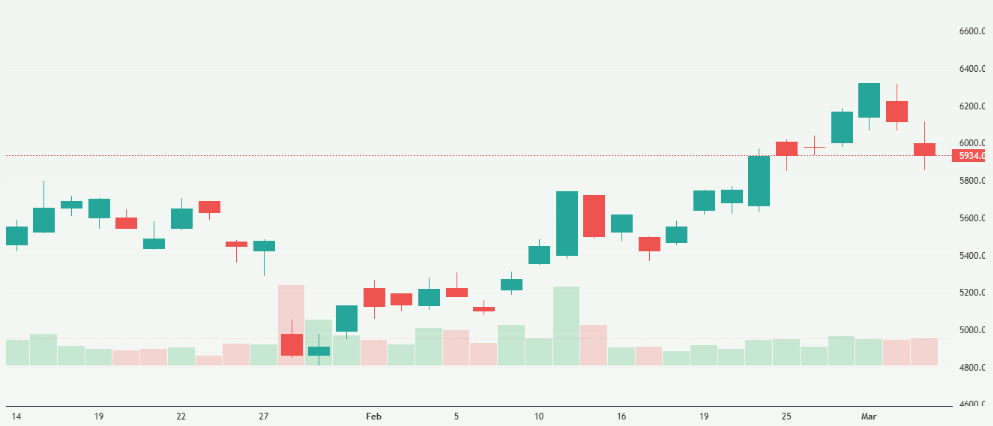
Analysts note that the timing coincides with signs of demand recovery for PVC and related chemicals. As excess Chinese supply eases, global prices and utilization rates should rise. This will likely boost margins for producers with strong feedstock integration, such as Shin‑Etsu.
Some technical analysts using AI stock analysis tools also point to improving momentum in the chemicals sector, though broader economic factors will influence performance into late 2026 and beyond.
What Is Driving PVC and Caustic Soda Demand?
PVC and caustic soda are basic materials with wide industrial use. PVC powers construction materials, electrical cables, and window frames. Industries use caustic soda for paper, textiles, soaps, and aluminum. Demand for both continues to grow steadily.
A recent MarketScreener report shows global PVC demand may grow by over 750,000 tons per year for the next five years. Caustic soda demand could rise by about 1.3 million tons annually. Growth comes from expanding infrastructure, manufacturing recovery, and new uses like battery materials and critical minerals.
These long‑term trends provide a backdrop for Shin‑Etsu’s investment decision. By scaling up production now, the company aims to capture market share and secure a reliable feedstock supply for future growth.
Are There Environmental and Regulatory Considerations?
Large chemical projects face strict environmental and regulatory standards, especially in the United States. Shintech says it will adopt advanced manufacturing technologies designed to reduce emissions per unit of PVC and caustic soda produced. This approach reflects greater industry focus on sustainability and regulatory compliance.
Louisiana’s regulatory environment requires oversight of air quality, water usage, and waste streams. The company’s past expansions have built relationships with state and local authorities, which could help streamline permitting and environmental reviews. Community leaders support the project because it boosts the economy and upholds safety and environmental standards.
What Does This Mean for the Global PVC Market?
Shin‑Etsu Chemical is the world’s largest producer of PVC resin. Its decision to spend billions in the U.S. sends a signal about future market direction. Increased production capacity could help balance global supply and support price stability as demand grows.
By locating key feedstock units in Louisiana, Shintech strengthens its supply chain efficiency and positions itself closer to North American buyers. This could give it a competitive edge over peers without similar integrated facilities.
Global analysts expect the chemicals industry to continue consolidating and shifting capacity toward regions with stable markets and favorable logistics. Shin‑Etsu’s move may influence other producers to consider similar strategic investments.
Closing Note
The Shin‑Etsu Chemical $3.4 billion U.S. expansion strengthens its global PVC and caustic soda leadership. The Louisiana project boosts capacity, meets rising demand, stabilizes supply chains, and drives long-term growth.
Frequently Asked Questions (FAQs)
Shin‑Etsu plans to expand U.S. PVC production to meet rising demand. The $3.4 billion investment announced on March 5, 2026, strengthens supply and lowers costs for future growth in North America.
The expansion could balance global PVC supply and support prices. It helps meet demand in North America and worldwide while reducing reliance on imports and improving market stability in 2026.
The new Louisiana facilities are scheduled for completion by 2030. The phased development will gradually increase production of PVC, ethylene, and caustic soda over the next few years.
Disclaimer:
The content shared by Meyka AI PTY LTD is solely for research and informational purposes. Meyka is not a financial advisory service, and the information provided should not be considered investment or trading advice.
What brings you to Meyka?
Pick what interests you most and we will get you started.
I'm here to read news
Find more articles like this one
I'm here to research stocks
Ask our AI about any stock
I'm here to track my Portfolio
Get daily updates and alerts (coming March 2026)