Sensex rallies over 500 pts and Nifty 50 tops 25,700 even as IDFC First Bank stock tumbles sharply
On Monday, February 23, 2026, Indian markets kicked off the week with a bang as the Sensex jumped more than 500 points and the Nifty 50 crossed above the 25,700 mark, reflecting strong buying interest across key sectors and renewed optimism among traders.
Yet not all headlines were positive. IDFC First Bank shares plunged nearly 20% after the lender disclosed a ₹590 crore fraud at its Chandigarh branch, rattling investors and sparking widespread concern. This sharp divergence between broad market strength and a heavy sell‑off in financials sets the stage for a gripping market story. Read on to understand what drove these moves and what it means for traders and long‑term investors.
Advertisement
Market Overview: Sensex & Nifty Gain Ground While A Banking Stock Crashes
On Monday, 23 February 2026, Indian equity markets opened with strong upward momentum. The BSE Sensex rallied more than 500 points, and the Nifty 50 index climbed above the 25,700 level, lifted by positive global cues and broad buying across major sectors. Market sentiment improved after the U.S. Supreme Court struck down President Trump’s tariffs, easing trade tensions and boosting export‑oriented stocks.
As of early trade, the Nifty was around 25,733, and the Sensex was near 83,333, with 15 out of 16 major sector indices in positive territory. Small‑cap and mid‑cap indices also showed gains, reflecting broad participation. However, market volatility remains on traders’ radar, given ongoing global policy uncertainty.
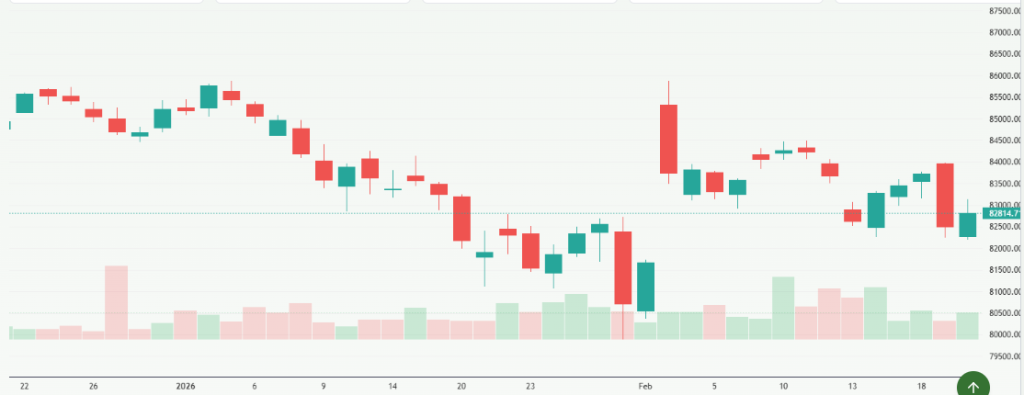
Despite strong headline gains, not all stocks participated in the rally, creating a sharp contrast in market breadth.
What Drove Today’s Rally?
Global Sentiment Boosted Buying
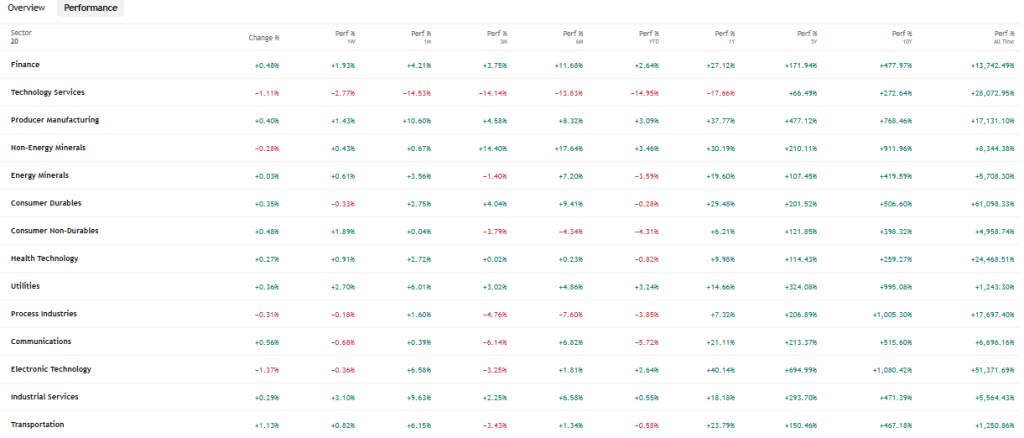
Indian markets reacted positively to global developments. A key trigger was the U.S. Supreme Court’s rejection of heightened tariffs, which had threatened global trade flows. This decision eased concerns around export costs and supply chain disruptions, providing fresh impetus to risk assets worldwide, including Indian equities. Most sectors, including banking, energy, and industrials, recorded gains in early trade.
Domestic Flows and Sector Rotation
Domestic institutional investors (DIIs) appeared active, supporting buying momentum. Heavyweights such as Reliance Industries, HDFC Bank, and Axis Bank led index gains, while small‑ and mid‑cap stocks also saw respectable upticks. This broad participation suggested confidence in earnings prospects and macro stability, at least in the short term.
Caution Amid Volatility
Despite gains, analysts noted potential volatility ahead. Global policy shifts, inflation data, and domestic earnings could influence near‑term market direction. Traders are closely watching key technical levels around 25,750 on the Nifty and 83,000 on the Sensex for signs of trend continuation or reversal.
Why Did IDFC First Bank Shares Plunge?
While most of the market climbed on Monday, IDFC First Bank shares fell sharply, dragging the broader banking index lower. The stock plunged as much as 20%, hitting its lower circuit limit after the bank disclosed a suspected Rs 590 crore fraud at its Chandigarh branch. The irregularities came to light when accounts held for Haryana government entities were being reconciled, and significant mismatches were found between recorded and actual balances.
Bank management identified that the fraud appeared to be limited to a specific group of government‑linked accounts and did not affect other customers of the branch. The bank suspended four employees pending investigation, reported the discrepancy to authorities, and has commenced legal action. An independent forensic audit is underway and expected to take several weeks.
How the IDFC First Bank Stock Crash Affected Investors?
The impact of the fraud was immediate and severe.
- Market Capitalisation Lost: The fraud disclosure wiped off an estimated Rs 14,438 crore in shareholder wealth in a single session.
- Investor Groups Hit: Major stakeholders, including the Government of India and LIC, saw significant erosion in the value of their holdings due to the steep share price decline.
- Sentiment Shock: The sharp fall underscored concerns about internal controls and governance, especially in managing government and institutional deposits.
Brokerages and analysts are now debating the long‑term implications for the bank, its risk controls, and its ability to reassure investors. Some see the event as isolated, while others, like Nomura, caution that profit risks and governance weaknesses could linger.
Sector Impact: Banking and Beyond
The sharp drop in IDFC First Bank shares also influenced the broader banking index, though most other lenders did not suffer equally.
- AU Small Finance Bank saw its shares under pressure after it was temporarily barred by the Haryana government due to a fraud‑related issue.
- Other private and public banks remained relatively stable, with no widespread contagion reported so far. Market watchers stress that the event highlights the importance of monitoring operational risks in financial stocks.
This divergence between the broader market rally and trouble in a specific bank has heightened trader focus on individual corporate governance risks.
What Top Analysts are Saying About the Market Rally and IDFC First Bank Crash?
- Nomura retains a Buy rating on IDFC First Bank with a target price higher than current levels, but warns of potential 28% profit risk due to the fraudulent activity and suggests governance concerns merit scrutiny.
- Analysts also point to the company’s retail deposit‑led model and strong capital buffers as positives, noting that the fraud amount represents a small percentage of net worth.
- Technical indicators like RSI readings around neutral levels suggest the stock may not be oversold yet, leaving room for further downside or consolidation.
Traders using advanced tools, including an AI stock analysis tool, are also watching broader risk sentiment and sector rotation for clues on where money may flow next.
Sensex Today: What Does This Mean for Traders and Investors?
This market session illustrates a key lesson: strong headline index gains can coexist with significant stock‑specific pain. While indices climbed on confidence in global policy improvements and domestic buying, weaknesses in corporate controls and governance can overshadow broader trends.
Investors should:
- Track forensic audit findings and regulatory actions related to IDFC First Bank.
- Monitor sectoral cues, especially in financials and mid‑caps.
- Follow key technical levels on major indices for trend clarity.
In uncertain markets, a blend of macro insight and company‑specific research will remain critical for both short‑term traders and long‑term investors.
Closing Note
Today’s session showed how markets can rally broadly while individual stocks face sharp shocks. Staying alert to both macro trends and company‑specific risks is key to smart investing.
Advertisement
Frequently Asked Questions (FAQs)
On 23 February 2026, IDFC First Bank shares fell nearly 20% due to a ₹590 crore fraud at its Chandigarh branch. Investors reacted quickly to this news.
On 23 February 2026, the Sensex rose over 500 points. Strong global cues, easing U.S. trade tensions, and buying by domestic investors lifted major stocks across sectors.
The fraud may create short-term worries. Experts say the bank has strong capital and a limited impact, but investors will watch audits and regulatory actions closely for future guidance.
Disclaimer:
The content shared by Meyka AI PTY LTD is solely for research and informational purposes. Meyka is not a financial advisory service, and the information provided should not be considered investment or trading advice.
Advertisement
What brings you to Meyka?
Pick what interests you most and we will get you started.
I'm here to read news
Find more articles like this one
I'm here to research stocks
Ask our AI about any stock
I'm here to track my Portfolio
Get daily updates and alerts (coming March 2026)