











SENSEX Falls Nearly 1,000 Points as NIFTY50 Slips Below 23,600: Key Things to Know
India’s stock markets faced a sharp shock on Thursday, March 12, 2026, as key indices plunged with surprising speed. The BSE Sensex slid nearly 1,000 points while the NSE Nifty50 slipped below the important 23,600 mark during early trading, marking a fresh bout of volatility on Dalal Street.
Investors saw broad‑based selling as concerns over rising crude prices, geopolitical risk, and weak global cues intensified market anxiety.
This sudden downturn wiped out wealth and spiked fear gauges, leaving traders and long‑term investors asking one big question: Is this a deeper market correction or a blip in a larger upward trend?
Why Did Sensex & Nifty50 Plunge Today?
On Thursday, March 12, 2026, Indian benchmark indices saw a sharp sell‑off. The BSE Sensex fell nearly 1,000 points, while the NSE Nifty50 slipped below the key 23,600 level. The drop came as global and domestic risk factors weighed heavily on market sentiment.
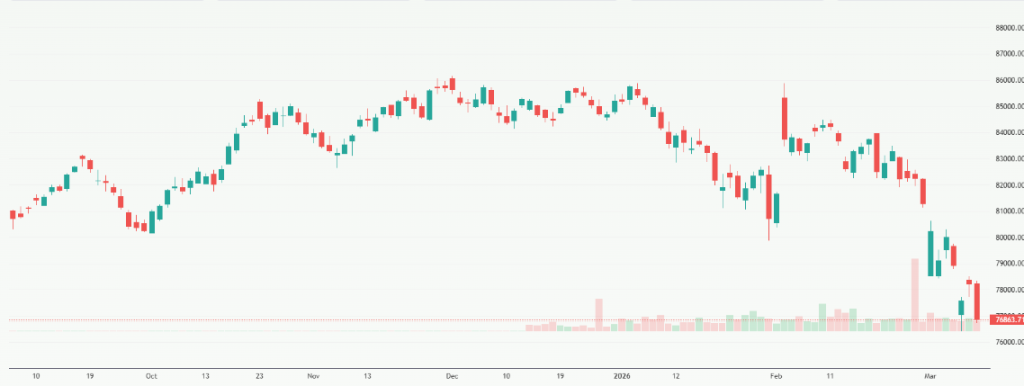
At the peak of the decline, the Sensex fell as much as 993 points, and the Nifty50 hit an intraday low near 23,556. Markets continued bearish momentum from the prior session, with selling pressure broadening across sectors, including banking, auto, and metals.
This sell‑off wiped out significant investor wealth and triggered sharp moves in the volatility gauge, India VIX, reflecting deepening fear and uncertainty.
India Stock Market Data Snapshot: March 12, 2026
Here are key markers from the session:
- Sensex: Fell up to ~993 points during intraday trade.
- Nifty50: Dropped below 23,600, trading near 23,556.
- Sector sentiment: Most heavyweight stocks traded in the red, especially in financials and auto.
- Market breadth: Broader market underperformed with mid‑ and small‑cap indexes declining more sharply.
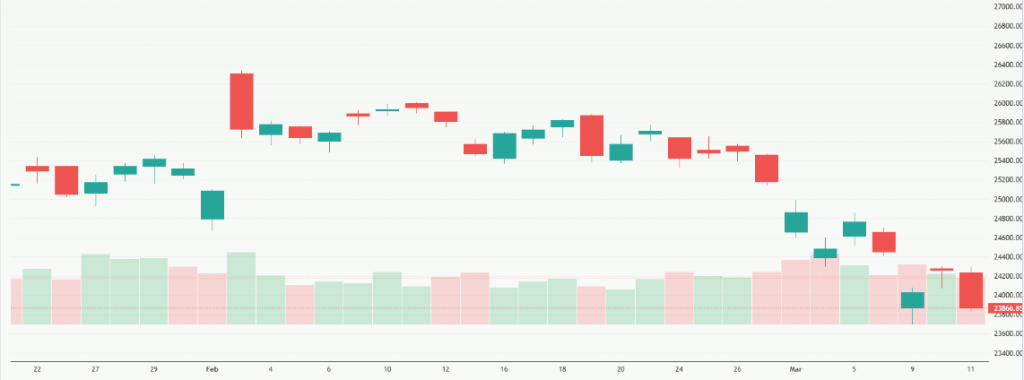
This sharp slide marked a continuation of volatility seen in the Indian market over recent sessions, driven by both domestic and global catalysts.
Geopolitical Tension and Oil Price Spike
Why did rising geopolitical risks hit the market?
One of the core triggers for the downturn was escalating conflict in the Middle East, particularly tensions involving the United States, Iran, and Israel. These developments heightened the fear of wider instability.
This uncertainty pushed Brent crude oil prices above $100 per barrel, increasing inflation expectations in import‑dependent economies like India. Higher oil costs raise production and transportation expenses for companies and increase consumer price pressure. These macro forces often dampen equity valuations.
A weak Indian rupee also accompanied this trend, sliding to near record lows as crude import costs rose, which further worsened investor sentiment.
Foreign Institutional Investor (FII) Selling
Are foreign investors exiting Indian markets?
Yes. Persistent FII selling has been a consistent bearish pressure in 2026. Major foreign funds have been withdrawing capital from Indian equities, reducing demand and pressuring prices.
Over recent sessions, FIIs have sold significant net amounts, especially in the cash segment, as global uncertainty rises and yields elsewhere become attractive.
This outflow continues despite domestic institutional investors picking up some buying. The difference in foreign vs domestic flow has tilted overall sentiment negative.
Weakness Across Key Sectors
Which sectors led the decline?
Market weakness was broad‑based. Heavyweights across banking, private financials, and auto stocks saw heavy selling:
- Banking stocks dragged indices lower with profit booking.
- Financial services names like HDFC Bank, ICICI Bank, Axis Bank, and Bajaj Finance were under pressure.
- Other blue‑chips such as Reliance Industries and Bharti Airtel also weakened.
Broad sectoral softness makes benchmark indices vulnerable even if a few defensive names outperform.
Does Technical Analysis Signal More Weakness?
What key chart levels are breaking?
From a technical perspective, the Nifty50 breaching 23,600 support signals potential extended weakness in the short term. Key support zones at 23,500-23,400 may face pressure if selling continues.
The volatility indicator (India VIX) spiked during the sell‑off, indicating rising fear and the likelihood of continued swings.
AI stock analysis tools also suggested weakening momentum on daily charts ahead of this move, with key moving averages under stress, a sign that traders were primed for heightened volatility.
Investor Wealth Impact
How much value was lost?
While precise closing numbers fluctuate, markets erased billions in investor wealth in a short span, reflecting the rapid re‑pricing of risk assets.
Earlier sessions also saw capital erosion running into multiple lakh crores as indices struggled. This wealth impact stresses the urgency for risk management among investors.
Sensex Update: What are Traders Watching Next?
What signals matter now?
Traders and analysts are focused on a few key benchmarks:
- Critical support levels: Nifty50 around 23,500-23,400
- Crude oil price direction: Continued global conflict could push oil higher
- Rupee movement: Further forex weakness may compound outflows
- FII flow data: Continued selling will keep sentiment cautious
Technical levels will likely guide short‑term trading strategies, while macro factors will dictate the broader outlook.
Conclusion
The steep fall of the Sensex and Nifty50 on March 12, 2026, reflects the clash of geopolitical shocks, rising oil prices, foreign capital outflows, and broad selling across major sectors. These combined forces amplified market volatility and triggered a breach of key support levels. While short‑term pressure may persist, investors should watch major technical levels and global cues closely to assess whether this downturn is part of a deeper correction or a volatile blip in longer‑term trends.
Frequently Asked Questions (FAQs)
Why did Sensex and Nifty fall sharply?
The Sensex and Nifty fell on March 12, 2026, due to rising oil prices, FII selling, and global market fears.
Is the stock market drop a short-term correction or a deeper crash?
On March 12, 2026, analysts say the fall may be a short-term correction, but risks remain due to global uncertainties.
Should investors buy the dip after the Sensex/Nifty slide?
Investors on March 12, 2026, are advised to watch support levels carefully before buying; a cautious approach is recommended in volatile markets.
Disclaimer: The content shared by Meyka AI PTY LTD is solely for research and informational purposes. Meyka is not a financial advisory service, and the information provided should not be considered investment or trading advice.
What brings you to Meyka?
Pick what interests you most and we will get you started.
I'm here to read news
Find more articles like this one
I'm here to research stocks
Ask our AI about any stock
I'm here to track my Portfolio
Get daily updates and alerts (coming March 2026)