











OpenAI has shaken up the tech world again. On March 23, 2026, the AI pioneer openly warned investors that its deep reliance on Microsoft could pose a serious business risk ahead of a potential IPO. In a document resembling an IPO prospectus, OpenAI said Microsoft provides a “substantial portion” of its financing and computing power, and any change to that partnership could hurt its growth plans. This is unusual for a private tech company preparing for a public offering.
The disclosure has sparked fresh debate about how startups juggle big‑tech alliances, risk, and investor confidence. Investors, analysts, and AI watchers are paying close attention.
Background: OpenAI, Microsoft & the Road to an IPO
OpenAI is an American artificial intelligence firm founded in December 2015. It leads the AI sector with products like ChatGPT and GPT‑5.4, and employs thousands in San Francisco. It operates as both a nonprofit and a for‑profit public benefit corporation, allowing it to raise capital for growth.
Microsoft has been OpenAI’s biggest partner and investor. The company has invested about $13 billion into OpenAI and hosts much of its computing infrastructure. This partnership has helped OpenAI scale quickly.
In early 2026, OpenAI appears to be preparing for a potential initial public offering (IPO). It has raised a massive $110 billion private funding round backed by Amazon, Nvidia, and SoftBank, giving it an estimated $730 billion valuation.
But this partnership also comes with risks. OpenAI now warns that reliance on Microsoft’s financing and computing could become a major business vulnerability if the relationship changes. This warning appeared in a pre‑IPO investor document that resembles a prospectus, a rare move for a private company.
The Risk Flag: What Did OpenAI Actually Disclose?
What did OpenAI say about Microsoft’s risk?
In an investor document shared in March 2026, OpenAI listed its reliance on Microsoft as a top risk factor ahead of its possible IPO. The disclosure said that Microsoft provides a “substantial portion” of its financing and computing resources. If this support changed or ended, OpenAI’s business outlook, results, and financial health could suffer.
This note appeared in sections titled “Risks Related to the Transaction” and “Risks Related to our Business.” It resembles what companies publish when preparing to go public.
Why is this disclosure notable?
Companies rarely flag a key partner as a risk so clearly, especially before an IPO. Most startup filings focus on strengths, not on warnings about major alliances. This candid risk statement signals investor caution and highlights how dependent OpenAI is on a single tech giant.
OpenAI also said it needs to diversify business partnerships to reduce this reliance and protect future growth.
What does this mean for Investors & Market Sentiment?
How could this affect Microsoft?
This risk disclosure has implications for Microsoft’s stock narrative. Investors track Microsoft not just as a cloud and software leader, but also as a major AI partner. OpenAI’s warning may raise questions about how strong that alliance really is. Some market watchers debate whether Microsoft’s exclusive access to OpenAI technologies will stay intact as OpenAI grows.
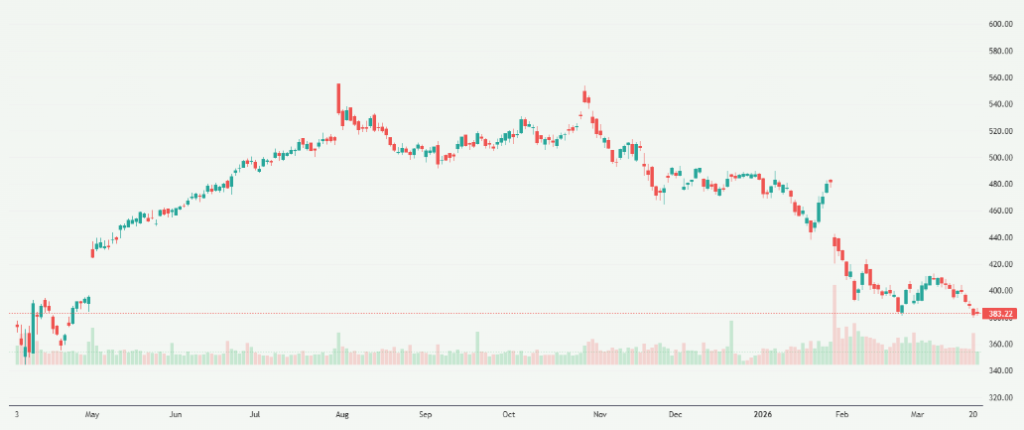
At the same time, Microsoft is facing other pressure. In mid‑March 2026, Reuters reported the company was considering legal action because a $50 billion cloud deal with Amazon could breach its exclusivity on hosting OpenAI models. That legal tension shows the partnership is not without conflict.
How could this affect OpenAI’s IPO timing?
OpenAI’s IPO timeline may also be affected. Disclosing such major risk factors may make public market investors more cautious. Some analysts note that structural and governance issues could delay a 2026 IPO window. AI analysis tools show that clear, diversified partnerships are usually viewed positively by markets before public offers. OpenAI is seeking an additional $10 billion in commitments from a broader investor base to help address this.
Wider Industry Context: AI Funding & Competition
What is happening in the broader AI IPO landscape?
AI companies are attracting massive capital in 2026. OpenAI’s funding round, near $110 billion, stands as one of the largest ever. Investors are watching closely as billions flow into frontier AI, and many startups aim to tap public markets soon.
How does competition shape this?
OpenAI faces rising competition from other AI firms such as Anthropic and Google. These competitors are building their own models and cloud support, reducing reliance on single partners like Microsoft. Experts note that diversified infrastructure and partner networks are becoming key competitive advantages in AI sector valuations.
Final Words
OpenAI’s candid warning about its reliance on Microsoft ahead of a potential IPO highlights a deeper shift in the AI market. Investors now see partnership risks and governance transparency as crucial.
While the Microsoft link helped fuel rapid growth, this risk disclosure may reshape how Wall Street views OpenAI’s path to public markets. For now, diversification and strategic clarity will be key themes in this next phase of AI investing.
Frequently Asked Questions (FAQs)
OpenAI warned on March 23, 2026, that heavy reliance on Microsoft’s funding and computing could affect future business stability.
Yes, OpenAI’s dependence on Microsoft may cause investors to hesitate, potentially pushing its IPO beyond 2026, as disclosed in reports.
Microsoft’s support helped OpenAI grow fast, but any change in the partnership could influence its market
Disclaimer:
The content shared by Meyka AI PTY LTD is solely for research and informational purposes. Meyka is not a financial advisory service, and the information provided should not be considered investment or trading advice.
What brings you to Meyka?
Pick what interests you most and we will get you started.
I'm here to read news
Find more articles like this one
I'm here to research stocks
Ask our AI about any stock
I'm here to track my Portfolio
Get daily updates and alerts (coming March 2026)