On March 9, 2026, global oil markets crossed a major milestone. Oil prices surged past $100 per barrel, a level not seen in nearly four years. The sudden jump followed rising tensions and war fears involving Iran and regional powers in the Middle East, a region that supplies a large share of the world’s crude oil.
Traders reacted quickly as concerns grew about disruptions to oil shipments through key routes like the Strait of Hormuz, one of the busiest energy corridors on the planet. Within days, benchmark crude prices climbed sharply, sending shockwaves through stock markets and raising new worries about inflation and fuel costs.
Advertisement
As the conflict risk grows, investors, governments, and consumers worldwide are closely watching what happens next in the global energy market.
Oil Prices Break the $100 Barrier: What the Data Shows
Oil markets reacted sharply in early March 2026. Within days, crude prices moved from moderate levels to a four-year high. Brent crude, the international oil benchmark, rose above $107 per barrel on March 9, 2026, after gaining more than 16% in a single trading session.
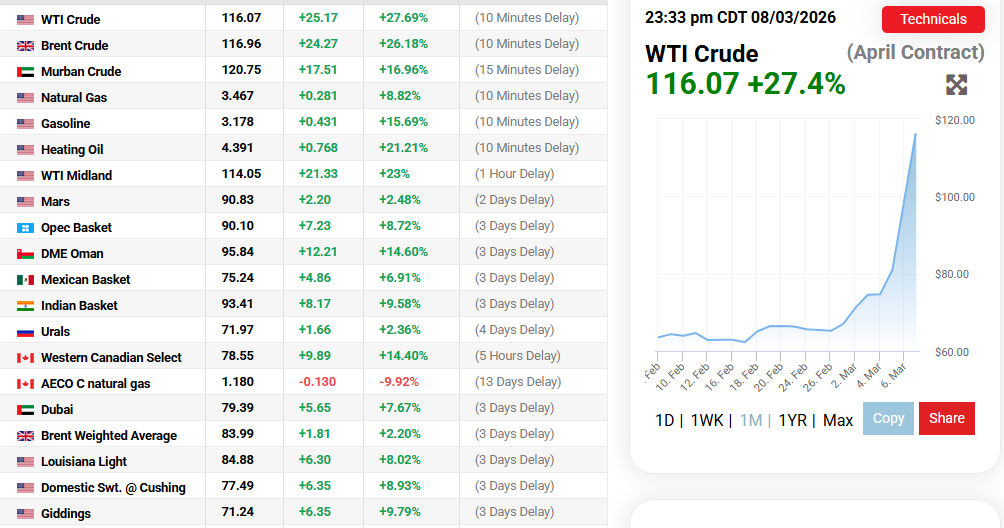
At the same time, West Texas Intermediate (WTI) climbed to around $106 per barrel, its highest level since mid-2022.
Several factors triggered the surge:
- Escalating conflict involving Iran, Israel, and the United States
- Disruption of tanker routes in the Persian Gulf
- Production cuts by several Middle Eastern oil exporters
- Panic buying by traders hedging against supply shortages
In fact, oil prices have increased dramatically in just a few weeks. In January 2026, Brent crude averaged roughly $65 per barrel. By early March, it had jumped by more than 40%, reflecting how sensitive energy markets are to geopolitical risks.
This sharp rise pushed oil above the psychologically important $100 level, which traders often see as a warning sign for inflation and economic pressure.
Why Did the Iran War Trigger an Oil Price Shock?
The surge in oil prices is closely linked to the expanding conflict in the Middle East.
When did the conflict start affecting markets?
The latest escalation began on February 28, 2026, after joint military strikes targeting Iranian facilities triggered retaliatory attacks across the region.
Soon after, the conflict intensified:
- Energy facilities were damaged
- Tankers faced higher security risks
- Regional oil production slowed
Markets reacted immediately because the Middle East produces a significant share of global oil.
How did attacks affect energy infrastructure?
Strikes on oil depots, refineries, and storage facilities increased fears of supply shortages. At the same time, several Gulf countries started cutting production due to storage limits and shipping disruptions. This combination of physical supply risks and market speculation caused a rapid spike in oil futures.
Political developments also added uncertainty
Leadership changes in Iran and continued military responses from multiple countries have increased geopolitical uncertainty. Investors worry that the conflict could expand further across the region. When oil markets sense prolonged instability in the Middle East, prices often rise quickly.
Strait of Hormuz Disruptions and Global Supply Risks
One of the biggest concerns for energy traders is the Strait of Hormuz.
Why is the Strait of Hormuz so important?
The strait connects the Persian Gulf with the global ocean and serves as a major export route for Gulf oil producers.
Key facts:
- Nearly 20 million barrels of oil pass through the strait every day
- That equals around one-fifth of global oil consumption
- Major exporters using the route include Saudi Arabia, Iraq, Kuwait, and the UAE
Even small disruptions can push prices higher.
What is happening to shipping traffic?
Recent attacks and security risks have forced shipping companies to slow or suspend tanker movements. Reports show that:
- Tanker traffic dropped sharply
- Several ships were attacked or damaged
- Insurance costs for vessels in the region increased significantly
When shipments slow down, global supply tightens, and prices climb.
Production cuts are making the situation worse
Some Gulf producers have reduced output because they cannot export their oil easily. Limited storage capacity has forced countries like Iraq and Kuwait to temporarily cut production. This further tightens the global supply balance.
How Global Markets Reacted to the Oil Price Shock?
Oil prices do not move alone. When energy costs surge, financial markets usually react quickly.
What happened to stock markets?
Global equity markets saw immediate volatility.
- Dow futures dropped more than 1,000 points during early trading sessions.
- Asian stock markets declined sharply.
- Energy company shares rose while airline and transport stocks fell.
Investors often shift money into energy stocks when oil prices rise.
Why are inflation fears returning?
Oil is a key input cost for many industries. Higher crude prices quickly affect:
- Transportation
- Manufacturing
- Electricity generation
- Consumer fuel prices
In the United States, gasoline prices rose to about $3.45 per gallon, while diesel climbed to $4.60 per gallon during the surge. If oil stays above $100 for a long time, economists warn it could push global inflation higher again.
What Analysts Predict for Oil Prices Next?
Energy analysts say the future path of oil prices depends largely on geopolitics.
Could oil prices rise even further?
Many analysts believe crude prices could climb higher if the conflict expands or shipping routes remain blocked.
Some forecasts suggest:
- Brent crude could reach $120 per barrel if disruptions continue.
- In extreme scenarios, prices might approach $150 or more.
These projections depend on how long the supply disruptions last.
Can governments stabilize oil markets?
Governments may use several tools to reduce price pressure:
- Releasing oil from strategic petroleum reserves
- Increasing production from non-OPEC countries
- Securing tanker routes through naval protection
However, these solutions often take time to impact markets.
How are investors analyzing the market?
Many traders now rely on data platforms and analytics tools to monitor energy markets. For example, investors sometimes use an AI stock analysis tool to track macro trends, commodity movements, and geopolitical risk signals affecting energy prices.
These tools help investors understand how oil volatility may impact broader financial markets.
Why the $100 Oil Milestone Matters for Consumers and Businesses?
Oil prices affect daily life more than many people realize.
Higher fuel prices for households
When crude oil rises:
- Gasoline prices usually increase
- Diesel costs rise for transport
- Heating fuel becomes more expensive
This directly affects household budgets.
Businesses face rising operating costs
Industries most affected include:
- Airlines
- Shipping companies
- Manufacturing firms
- Logistics providers
Higher fuel costs reduce profit margins and often lead to higher consumer prices.
Oil-importing countries face economic pressure
Countries that rely heavily on imported oil can see:
- Higher inflation
- Currency depreciation
- Slower economic growth
This is especially true for emerging markets in Asia and Africa.
Wrap Up
The return of $100 oil highlights how quickly geopolitical tensions can disrupt global energy markets. The Iran conflict has already shaken supply chains, financial markets, and inflation expectations. If shipping routes remain unstable or production cuts deepen, prices could stay elevated for months. For governments, investors, and consumers, the coming weeks will be critical in determining whether this surge becomes a short-term shock or the start of a new global energy crisis.
Advertisement
Frequently Asked Questions (FAQs)
Oil prices rose above $100 per barrel in early March 2026 after tensions linked to Iran increased fears of supply disruption. Traders reacted quickly because the Middle East supplies a large share of global oil.
The Iran conflict raises concerns about oil shipments through the Strait of Hormuz, a key route for global exports. On March 9, 2026, these risks pushed crude prices higher in international markets.
Oil prices may stay volatile during 2026. Analysts say prices will depend on how the Iran conflict develops, global supply levels, and whether major producers increase output to stabilize markets.
Disclaimer:
content shared by Meyka AI PTY LTD is solely for research and informational purposes. Meyka is not a financial advisory service, and the information provided should not be considered investment or trading advice.
Advertisement
What brings you to Meyka?
Pick what interests you most and we will get you started.
I'm here to read news
Find more articles like this one
I'm here to research stocks
Ask our AI about any stock
I'm here to track my Portfolio
Get daily updates and alerts (coming March 2026)