











Oil Prices Surge Above $112/bbl as West Asia Tensions Rise; US Stocks Close Lower
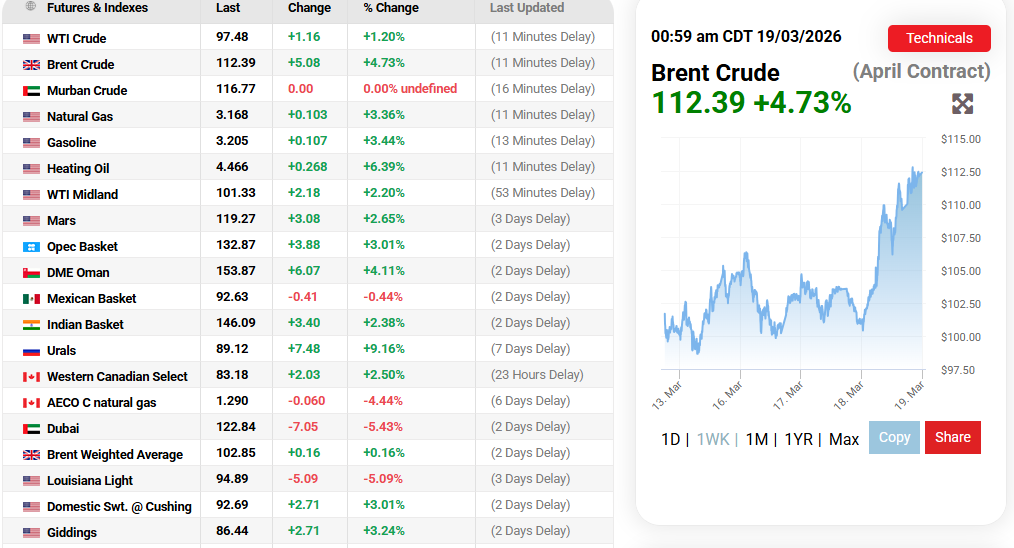
Oil markets took a sharp turn on March 19, 2026, as crude benchmarks climbed above $112 per barrel, driven by intensifying geopolitical tensions in West Asia. Recent attacks on energy infrastructure in Iran, Qatar, and other Gulf states pushed traders into a risk‑off mindset, lifting oil prices and rattling global markets. At the same time, major U.S. equity indexes closed lower as investors weighed the growing threat to supplies and broader economic stability.
The jump in oil isn’t just another price swing; it reflects deepening supply concerns tied to conflict dynamics near the Strait of Hormuz, a chokepoint for roughly 20 % of world oil flows. This sudden energy shock has captured the attention of traders, policymakers, and everyday consumers alike.
What Triggered the Oil Price Spike?
Oil prices climbed sharply above $112 per barrel on March 19, 2026, as tensions in West Asia escalated. The rise followed attacks on energy infrastructure in Iran and the surrounding Gulf states. These strikes damaged major oil and gas facilities and raised fears of long‑term supply disruptions. Tehran also warned regional energy sites to evacuate. This uncertainty about future supply pushed traders to bid up crude prices sharply. Brent crude peaked near $112.86 before settling just above $112, while U.S. West Texas Intermediate crude hit about $97.28.
At the heart of the issue is the 2026 Strait of Hormuz crisis, where shipping traffic through this key oil transit corridor has been nearly halted since late February. About 20 % of global oil and gas normally flows through the strait, so any disruption can quickly tighten supply and lift prices.
How Have Benchmark Oil Prices Moved?
Oil benchmarks ended the week at multi‑week highs as the conflict intensified. Brent crude is trading above $112, while WTI remains near $97, widening the typical gap between the two. This wider Brent‑WTI spread reflects geopolitical risk and the impact of U.S. Strategic Petroleum Reserve releases that have kept WTI lower relative to Brent.
Earlier in March 2026, Brent first rose above $100 per barrel for the first time in four years as the Iran war disrupted normal supply channels and pushed traders to price in risk premiums.
Why Is the Strait of Hormuz So Important?
The Strait of Hormuz is one of the world’s busiest energy chokepoints. It sits between the Persian Gulf and the Gulf of Oman and normally handles around 20 % of all globally traded oil and natural gas. When shipping slows or stops, it directly affects how much crude can reach major buyers in Asia, Europe, and the U.S.
Since late February, traffic in the strait has plunged to near zero due to military operations and warnings from Iranian Revolutionary Guard units. Analysts say this is the most significant disruption to global energy flows since the 1970s energy crisis.
What Is the Impact on Global Markets?
The oil price surge isn’t happening in isolation. Global stock markets have reacted strongly to rising energy costs and geopolitical risk. Major U.S. indexes have edged lower as investors become cautious, moving funds into safer assets and cutting exposure to riskier equities.
Higher crude prices also fuel inflation expectations. When energy costs rise, the price of goods and transport can increase. That puts pressure on central banks, especially when inflation is already elevated. Some analysts use advanced AI stock analysis tools to track how energy sector shifts affect broader market trends in real time.
Could Oil Prices Go Higher or Lower?
The outlook is mixed and depends on how events unfold in West Asia. Many analysts warn that continued disruption around the Strait of Hormuz and damage to energy infrastructure could keep pressure on supplies and push prices even higher. Some forecasts now mention crude prices potentially going above $150 per barrel in physical markets within the Persian Gulf, even if global benchmarks like Brent don’t immediately reflect that.
At the same time, factors such as resumed shipments through alternate routes, diplomatic progress, or increased production from non‑Gulf sources could ease prices. Traders are watching inventory data, OPEC+ decisions, and geopolitical signals closely.
What This Means for Consumers and Economies?
Rising oil prices can eventually affect everyday costs. Gasoline, heating, and transport fuel prices usually follow crude trends. If prices stay high, countries that import most of their oil, like India, China, and many in Europe, face larger import bills that can weigh on growth.
For economies tied closely to energy, higher oil prices can boost revenues. Energy producers often see sector gains when crude spikes, while sectors sensitive to fuel costs, like airlines and freight, may struggle.
Oil Prices Today: What Comes Next?
The short‑term future for oil prices hinges on how geopolitical tensions evolve. Continued instability in West Asia, especially around key export routes, could keep oil prices elevated and markets uneasy. But if diplomatic or military developments ease pressure on supply channels, prices could stabilize. Watch for updates from major producers, shipping data from Hormuz, and global inventory reports.
Final Words
The recent surge in oil prices above $112 per barrel highlights how West Asia tensions directly impact global energy and financial markets. Rising crude costs are fueling inflation concerns, affecting both consumers and businesses.
Investors are cautious as supply risks persist near the Strait of Hormuz, while energy stocks gain. Monitoring geopolitical developments will be key to understanding oil trends and market stability in the coming weeks.
Frequently Asked Questions (FAQs)
Oil prices rose above $112 per barrel on March 19, 2026, due to West Asia tensions and supply fears.
Conflicts in West Asia disrupt oil shipments, causing higher crude prices, which can raise gasoline and energy costs worldwide.
Oil prices may stay high if tensions continue, but could drop if supply improves or conflicts ease soon.
Disclaimer:
The content shared by Meyka AI PTY LTD is solely for research and informational purposes. Meyka is not a financial advisory service, and the information provided should not be considered investment or trading advice.
What brings you to Meyka?
Pick what interests you most and we will get you started.
I'm here to read news
Find more articles like this one
I'm here to research stocks
Ask our AI about any stock
I'm here to track my Portfolio
Get daily updates and alerts (coming March 2026)