Oil Prices Inch Up After 4% Spike on US-Iran Tensions and Surprise Inventory Draw
Oil prices in markets jolted investors this week as crude prices climbed sharply following renewed geopolitical stress in the Middle East. On 19 February 2026, Brent crude topped $70 per barrel, and U.S. West Texas Intermediate (WTI) surged more than 4 % in a single session after traders reacted to escalating U.S.-Iran tensions and data showing a surprise draw in inventories.
This sudden rally shows how sensitive global energy prices remain to political headlines. Even as diplomatic talks continue, heightened military activity near key supply routes like the Strait of Hormuz has injected fresh uncertainty into the oil complex.
Advertisement
Let’s unpack what’s driving these price moves, what the latest market data tells us, and why traders and policymakers alike are watching every development closely.
What Drove the Latest Oil Price Surge?
How did geopolitical tension between the U.S. and Iran lift prices?
Oil prices climbed sharply on 18-19 February 2026 after market traders reacted to renewed geopolitical tensions involving the United States and Iran. Both countries have increased military activity near the Strait of Hormuz, one of the world’s most important oil transit routes. This pushed Brent crude above $70 per barrel and U.S. West Texas Intermediate (WTI) above $65 per barrel on 19 February, increases of more than 4 % in one session. Traders priced in the risk of potential supply disruption even though full‑scale conflict remains unlikely.
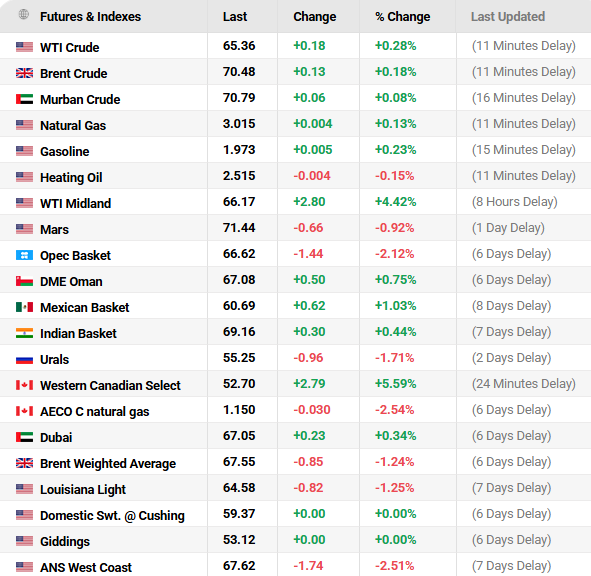
The tension stems from stalled nuclear talks in Geneva, where diplomatic efforts to ease the standoff have not yielded a breakthrough. At the same time, reports of military exercises by Iran and increased U.S. naval deployments have kept risk sentiment high, prompting oil buyers to buy ahead of possible supply issues.
Why Supply Risk Matters So Much in Oil Markets?
Oil traders react strongly to geopolitical headlines, especially in key producing regions. The Strait of Hormuz handles roughly 20 % of global seaborne oil flows. Even the threat of closure or military incidents there can immediately add a geopolitical risk premium to oil prices.
When risk premiums rise, it means traders are willing to pay more today because they fear future supply constraints. This is what happened on 18-19 February, despite other data that could have dampened prices.
What Latest Inventory Data Shows?
Why Crude and Product Stocks Matter?
Oil prices do not move only because of headlines. Market participants also watch data from U.S. energy stocks, especially weekly inventories reported by the American Petroleum Institute (API) and the U.S. Energy Information Administration (EIA). These are key gauges of real supply and demand balance.
Official EIA figures for the week ending 13 February are still pending, but API data released ahead of official numbers showed surprising draws in crude, gasoline, and distillate stocks. This means traders see a tighter supply than expected, which supports higher prices.
What does this inventory draw mean for Prices?
A draw in crude stocks usually signals stronger demand or lower supply than analysts predicted. This can reinforce price gains when risk sentiment is already high. In this case, the inventory draw acted as a second push behind the geopolitical move.
The combination of tension‑driven risk pricing and inventory strength made the recent rally more meaningful than a simple, headline‑driven spike.
Oil Benchmarks at a Glance – Latest Numbers and Trends
Brent Crude: Breaking the $70 Mark
Brent crude futures settled above $70.35 per barrel on 19 February 2026, rising more than 4 % on the day, the highest settlement since 30 January.
Analysts now watch the $72–$74 resistance range. A sustained move above these levels could signal further upside momentum. Pricing models, including AI stock analysis tools used in commodities trading, show that even modest gains above these resistance points can trigger technical buying from hedge funds.
WTI: Near Key Technical Levels
U.S. WTI crude settled around $65.19 per barrel, also posting gains above 4 % after the geopolitical news.
Prices have now reached levels where some analysts see breakout potential, while others warn that renewed diplomatic progress could ease prices sharply. WTI’s technical resistance zone near $66 makes the near term especially volatile.
Broader Market Implications on Oil Prices
Is the Market Pricing a Real Supply Shock?
Even as oil prices rallied, some analysts say the current moves reflect fear more than reality. A Reuters report notes that the risk premium baked into oil prices assumes no actual disruption yet. This means markets are pricing potential risk, not confirmed supply loss.
Historical precedent shows that oil flows through the Strait of Hormuz have been resilient even during past conflicts. But the risk of disruption, however slight, now commands a significant premium. That premium is estimated by some analysts at $7-$10 per barrel.
Demand and Supply Forecasts Still Balanced
Beyond geopolitical noise, fundamental supply and demand conditions remain mixed:
- The International Energy Agency (IEA) sees global demand continuing to grow in 2026, though at a slower rate than in past years.
- OPEC+ members are expected to gradually increase output, which could counterbalance bullish risk pricing.
- U.S. shale production remains robust, offsetting some Middle East supply fears.
These factors keep a floor under prices, even if they cap long‑term gains.
What Analysts are Saying About Future Directions?
- Bullish view: Analysts warn that any real disruption, even a short closure of the Strait of Hormuz, would send prices much higher.
- Neutral view: Some strategists believe diplomatic progress could ease prices back below recent highs.
- Technical perspective: Traders are closely watching breakout levels for both Brent and WTI to determine trend direction. Technical resistance at $72–$74 for Brent and $66 for WTI are key markers.
- Risk analysts: Many emphasize that price spikes right now stem from uncertainty, not confirmed supply loss.
This mix of views shows how complex the oil price equation is right now, blending politics, fundamentals, and technical market behavior.
How does this affect markets and Consumers?
This oil price spike has ripple effects:
- Higher crude prices can push gasoline and diesel prices up worldwide.
- Energy stocks may rise on better revenues for producers.
- Inflation pressures can increase in import‑dependent economies.
- Currency and bond markets may react to shifting inflation expectations.
Investors watching commodity markets, equities, or inflation trends will need to monitor both geopolitical headlines and real data like inventories in the coming weeks.
Final Words
Oil prices surged over 4% on 19 February 2026 due to U.S.-Iran tensions and a surprise inventory draw. While geopolitical risks pushed markets higher, fundamentals remain mixed. Traders should watch supply updates, inventories, and diplomatic developments closely, as these factors will continue to drive short-term volatility in Brent and WTI prices.
Advertisement
Frequently Asked Questions (FAQs)
Oil prices rose over 4% on 19 February 2026 because U.S. and Iran tensions increased. Traders feared possible supply disruptions, pushing Brent above $70 and WTI over $65 per barrel.
A drop in U.S. crude stocks signals tighter supply. On 19 February 2026, surprise inventory draws made traders expect stronger demand, which helped push global oil prices higher.
If tensions escalate near the Strait of Hormuz, oil supply could be disrupted. Experts say prices might rise sharply, possibly toward $80, depending on conflict severity and market reactions.
Disclaimer:
The content shared by Meyka AI PTY LTD is solely for research and informational purposes. Meyka is not a financial advisory service, and the information provided should not be considered investment or trading advice.
Advertisement
What brings you to Meyka?
Pick what interests you most and we will get you started.
I'm here to read news
Find more articles like this one
I'm here to research stocks
Ask our AI about any stock
I'm here to track my Portfolio
Get daily updates and alerts (coming March 2026)