NVIDIA remains the central force in the artificial intelligence rally as earnings approach in February 2026. Goldman Sachs recently revised its Nvidia outlook, sharpening investor focus on valuation, AI demand, and forward guidance. The Nvidia share price has climbed roughly 29 percent year-to-date, showing resilience even during broader market weakness.
This momentum reflects sustained spending on AI infrastructure and strong expectations for data-center revenue. Analysts now view the upcoming earnings release as a decisive catalyst for near-term direction and longer-term valuation discipline.
Advertisement
Goldman Sachs Forecast & Estimates Ahead of Earnings
Goldman Sachs has recently revised its NVIDIA outlook ahead of the company’s February 25, 2026 earnings:
Revenue & EPS Estimates
- Fiscal Q4 revenue forecast: ~$67.3 billion (billions), about $2 billion above Street expectations.
- Earnings per share (EPS) estimates:
- 4Q (current quarter): ~5% above consensus
- 1Q next fiscal: ~9% above consensus
(Goldman says its EPS views are modestly higher than the Street overall.)
Price Target Update
- Goldman’s updated 12‑month price target is around $250 per share, which they say implies about ~35% upside from recent prices.
Long‑Term Revenue & Earnings Model (through 2028): Goldman also provided a longer‑range forecast in its research note:
- 2026 Revenue: ~$215.1 billion with EPS around $4.49
- 2027 Revenue: ~$382.9 billion with EPS around $8.75
- 2028 Revenue: ~$513 billion with EPS around $12.13
What This Means:
- The bank is forecasting strong demand for Nvidia’s AI chips, especially in data centers and next‑gen GPU rollouts.
- Their estimates for both revenue and EPS are above the consensus from other research analysts heading into the upcoming report.
Consensus & Other Analyst Views (for context)
- The average analyst 12‑month price target from TipRanks is about $260.06, with a Strong Buy consensus, indicating broad optimism among Wall Street analysts.
Revised expectations and valuation logic
Goldman Sachs adjusted its Nvidia forecast to reflect continued AI-driven demand and elevated capital spending across hyperscale cloud providers. The revision signals confidence in revenue durability but also highlights valuation sensitivity before earnings.
Such positioning suggests Nvidia’s growth narrative remains intact, yet increasingly dependent on execution and guidance clarity. Investors, therefore, watch margins, supply constraints, and forward orders as primary indicators of sustainability.
Nvidia: Earnings Expectations and Growth Drivers
Revenue engines supporting the thesis
Data-center acceleration remains Nvidia’s dominant growth engine. AI model training demand, enterprise adoption, and sovereign computing initiatives continue expanding the total addressable market size.
At the same time, gaming and edge computing provide diversification that stabilizes cyclicality. This balanced revenue mix strengthens confidence in sustained multi-year expansion rather than a short-term AI spike.
Risks shaping the forecast
Despite bullish sentiment, valuation multiples remain historically elevated. Any slowdown in AI spending or weaker guidance could trigger sharp repricing.
Regulatory controls, supply-chain limits, and competitive semiconductor innovation also represent structural risks. These variables explain why Goldman Sachs refined, not simply raised, its Nvidia expectations.
Market Sentiment and Technical Momentum
Media and investor signals
Recent media coverage highlights Nvidia’s resilience during wider equity weakness, supported by persistent AI capital expenditure.
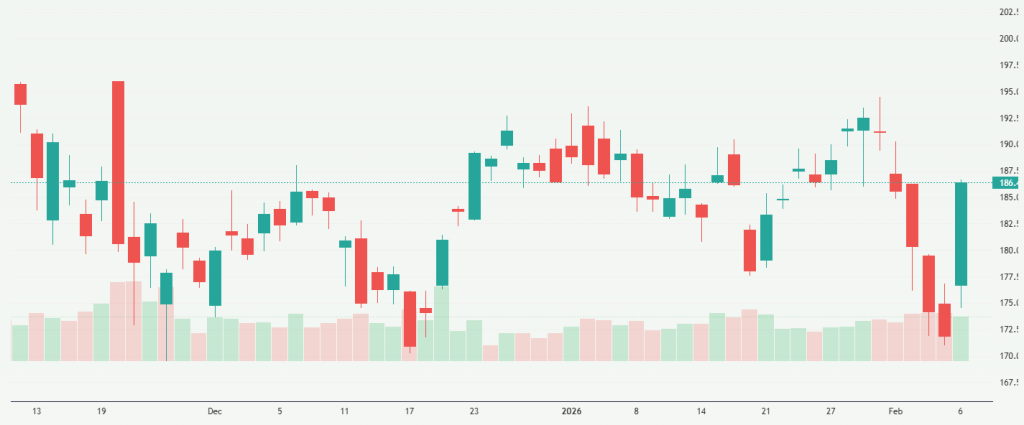
Meanwhile, long-term enthusiasm remains visible in the stock’s 29 percent gain in 2026, reinforcing bullish conviction across institutional and retail investors. Such sentiment alignment typically precedes elevated volatility around earnings announcements.
Forward-looking interpretation
Market psychology suggests expectations are already high. Strong results may sustain momentum, but only exceptional guidance could drive another major rally.
Conversely, even modest disappointment could produce rapid downside due to crowded positioning. This asymmetric setup defines the current Nvidia trade.
Recent Updates on Nvidia 2026
- NVIDIA shares have climbed about 29 percent in 2026, underscoring continued AI-driven optimism.
- Analysts increasingly frame upcoming earnings as a decisive valuation checkpoint rather than a routine quarterly report.
- Institutional demand remains concentrated in AI leaders, keeping Nvidia central to technology-sector performance.
- Broader market weakness has not materially reduced Nvidia’s momentum, highlighting structural rather than cyclical demand.
These developments collectively show Nvidia’s trajectory still hinges on AI spending durability and earnings execution.
Conclusion
Goldman Sachs’ revised Nvidia outlook reinforces a clear narrative: structural AI demand supports long-term growth, but valuation sensitivity is rising before earnings. Strong year-to-date gains and resilient institutional flows confirm continued confidence. Yet elevated expectations create asymmetric risk around guidance.
For investors, the key takeaway is disciplined positioning. Monitoring data-center revenue, margin trends, and forward demand signals will determine whether Nvidia sustains leadership or enters consolidation. The upcoming earnings release, therefore, represents a pivotal moment for the broader AI equity cycle.
Advertisement
Frequently Asked Questions (FAQs)
The revision reflects sustained AI demand alongside valuation sensitivity before earnings, balancing optimism with execution risk.
NVIDIA shares have risen about 29 percent year-to-date, showing strong investor confidence.
The upcoming earnings report will determine whether AI-driven growth justifies current valuation levels.
Slower AI spending, regulatory limits, supply constraints, or weaker guidance could trigger downside volatility.
Yes. Persistent capital flows and recent price resilience indicate continued institutional confidence.
Disclaimer:
The content shared by Meyka AI PTY LTD is solely for research and informational purposes. Meyka is not a financial advisory service, and the information provided should not be considered investment or trading advice.
Advertisement
What brings you to Meyka?
Pick what interests you most and we will get you started.
I'm here to read news
Find more articles like this one
I'm here to research stocks
Ask our AI about any stock
I'm here to track my Portfolio
Get daily updates and alerts (coming March 2026)