











Rare earth minerals are critical for modern technology and national security. They are used in electric vehicles, wind turbines, smartphones, and advanced military systems. In March 2026, Australia-based mining company Lynas Rare Earths moved closer to a major supply agreement with the United States Department of Defense to provide key rare-earth oxides.
The proposed deal could strengthen the United States’ effort to secure a stable supply of these strategic materials. It also reflects growing concern about global supply chains dominated by China. If finalized, the partnership may reshape how critical minerals are sourced for defense, clean energy, and high-tech manufacturing in the coming years.
Why are Rare Earth Minerals a Strategic Priority for the U.S.?
What is the global rare-earth supply imbalance?
Rare earth elements are critical materials used in advanced technology and defense systems. These minerals are essential for producing permanent magnets used in electric vehicles, wind turbines, fighter jets, and electronics.
However, global production is highly concentrated. China dominates the rare-earth industry, controlling most of the refining and magnet manufacturing capacity. This supply imbalance has created geopolitical risks for countries that rely on these materials.
According to industry estimates, China controls a large share of global rare-earth processing capacity and remains the largest supplier to technology and defense manufacturers worldwide. Governments in the United States, Europe, and Japan are now trying to diversify supply sources.
That is where companies like Lynas Rare Earths play an important role. The firm is widely recognized as the largest rare-earth producer outside China.
Why is the Pentagon investing in critical minerals?
The United States Department of Defense views rare earths as a national security priority. These materials are used in advanced military technologies such as:
- precision missiles
- radar systems
- fighter jets
- satellites
- secure communication devices
Because of these strategic uses, the Pentagon has launched several programs to strengthen domestic and allied supply chains. These initiatives support mining companies, processing facilities, and research projects aimed at reducing dependence on Chinese rare-earth materials.
Details of the Lynas-Pentagon Rare-Earth Supply Agreement
What is the value and duration of the deal?
In March 2026, Lynas announced a binding letter of intent with the U.S. government for a new rare-earth supply agreement. The deal outlines a four-year framework under which the Pentagon will purchase rare-earth oxide products from Lynas.
Key details include:
- Total agreement value: about $96 million
- Supply period: four years
- Materials: light and heavy rare-earth oxides
The agreement aims to ensure stable access to critical minerals for defense manufacturing and strategic industries.
Which materials are included in the agreement?
One of the most important materials in the deal is neodymium-praseodymium oxide (NdPr). This compound is essential for producing high-performance magnets used in electric motors and advanced electronics.
The contract establishes a minimum price of about $110 per kilogram for NdPr oxide. This price floor helps stabilize the market and ensures producers remain financially viable even during price fluctuations.
NdPr magnets are used in:
- electric vehicle motors
- wind turbine generators
- robotics and automation systems
- advanced military equipment
By securing these materials, the Pentagon aims to protect the supply chain for future defense technologies.
Lynas Rare Earths’ Role in the Global Market
Why is Lynas considered strategically important?
Lynas operates one of the world’s most significant rare-earth mining operations at Mt Weld in Western Australia. The ore is then processed at a major refining facility in Malaysia.
This integrated supply chain makes the company unique. It remains the largest rare-earth producer outside China. Because Western countries lack large-scale refining capacity, Lynas has become a strategic partner for governments seeking alternative suppliers.
How is Lynas expanding into the U.S. market?
Lynas has established a U.S. subsidiary to strengthen its presence in North America. The company is working with U.S. agencies to build processing capacity and support domestic manufacturing. These initiatives aim to create a secure supply chain that links:
- Australian mining
- global processing facilities
- American manufacturing and defense industries
This strategy also supports Washington’s broader effort to develop a resilient critical minerals ecosystem.
Texas Processing Facility and Previous Pentagon Funding
What is the purpose of the Texas rare-earth facility?
The United States has been investing heavily in rare-earth processing projects. One major initiative involves a planned processing facility in Texas designed to separate heavy rare-earth elements. Heavy rare earths are particularly valuable because they are used in:
- advanced defense electronics
- high-temperature magnets
- specialized aerospace components
These materials are harder to produce and are currently dominated by Chinese suppliers.
How much has the U.S. invested in rare-earth processing?
The Pentagon has provided significant funding to develop domestic rare-earth capacity. Several programs have supported mining companies and processing projects across the United States.
These investments aim to build a complete supply chain, from raw minerals to finished magnets. The strategy reflects growing concern in Washington that critical mineral shortages could affect defense readiness and emerging technologies.
Geopolitics Behind the Rare-Earth Race
Why are Western countries reducing reliance on China?
China has dominated rare-earth production for decades. This dominance gives Beijing major influence over global technology supply chains.
In the past, geopolitical tensions have triggered export restrictions on rare-earth materials. These events exposed vulnerabilities in global manufacturing. As a result, governments are now pursuing policies to diversify supply sources.
Key strategies include:
- developing new mines outside China
- supporting processing facilities in allied countries
- funding critical mineral research
These efforts aim to create a more balanced and resilient global supply network.
How are allied nations cooperating on rare-earth supply?
Countries such as the United States, Australia, and Japan are forming new partnerships to strengthen mineral security. For example, Japan recently renewed a major rare-earth supply agreement with Lynas to ensure long-term access to NdPr magnets used in electronics and vehicles. This cooperation reflects a broader trend: Western economies are working together to secure key industrial resources.
Market Impact and Industry Reactions
Could the price floor stabilize rare-earth markets?
Rare-earth prices have historically been volatile. Oversupply, geopolitical tensions, and changing demand can cause large price swings. The new agreement includes a $110 per kilogram price floor for NdPr, which may help stabilize the market.
Stable pricing encourages investment in mining and refining projects. Without predictable revenue, companies often struggle to finance large industrial operations. Analysts say these price-support mechanisms could encourage the development of new rare-earth projects around the world.
What does the deal mean for clean energy industries?
Rare-earth magnets are essential for modern clean-energy technologies. They are used in electric vehicles, wind turbines, and advanced power systems. A stronger supply chain could accelerate the transition toward renewable energy and electrification.
As demand for EVs and green infrastructure grows, reliable access to rare earth minerals will become increasingly important.
Lynas Stock Outlook and Analyst Perspective
Lynas Rare Earths stock overview
The Lynas trades on multiple exchanges, including the Australian Securities Exchange under the ticker LYC and in the U.S. as LYSDY. Recent analyst sentiment toward the company remains generally positive.
Key market insights include:
- Analysts rate the stock “Strong Buy” based on recent forecasts.
- The average 12-month price target is about $17.25, suggesting nearly 20% potential upside from recent trading levels.
Institutional investors also hold significant positions in the company, reflecting growing confidence in the rare-earth sector.
What does Meyka’s analysis suggest?
Forecast data from the AI-driven market platform Meyka indicates a bullish long-term outlook for Lynas. According to the platform:
- The stock is currently around $9-14, depending on the listing
- The 2026 forecast is about $9.81
- The 2030 projection is around $29, suggesting long-term growth potential.
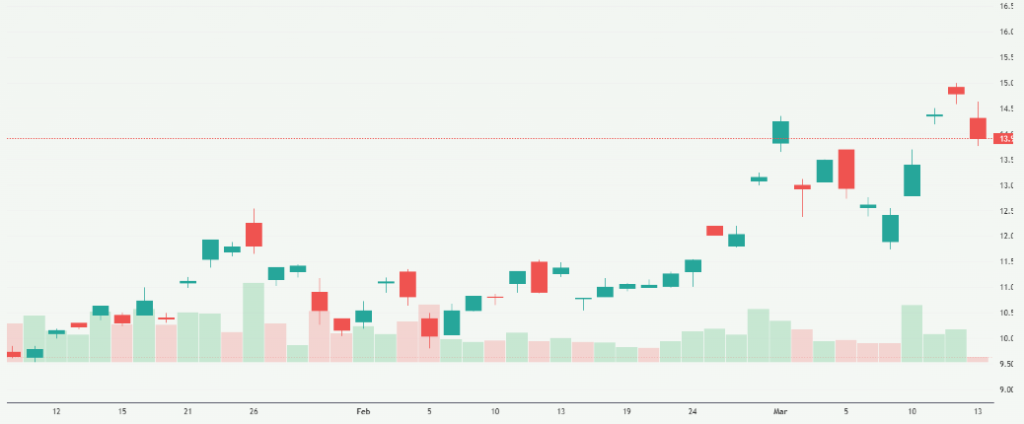
This analysis highlights how demand for critical minerals could support long-term investor interest.
Technical analysis summary
Technical indicators suggest mixed signals in the short term but stronger momentum in the long run. Key points include:
- Short-term price movement may remain volatile.
- Long-term outlook appears bullish due to increasing global demand for rare-earth materials.
- Strategic partnerships with governments could improve revenue stability.
Investors increasingly use advanced tools such as AI stock analysis platforms to evaluate mining companies like Lynas because commodity cycles can shift quickly.
Supporting views from analysts
Several analysts highlight Lynas’ strategic advantage as the only major rare-earth producer outside China with large-scale refining capacity. Financial institutions also note that government partnerships and long-term supply contracts could reduce price volatility and support future expansion.
As global competition for critical minerals intensifies, companies like Lynas may play a central role in shaping the future of technology supply chains.
Final Words
The Lynas-Pentagon rare-earth supply deal highlights how critical minerals are becoming central to global security and technology supply chains. As the United States works to reduce reliance on China, partnerships with trusted allies like Australia are gaining importance.
If finalized, this agreement could strengthen defense manufacturing, support clean-energy industries, and boost Lynas’ position in the rapidly growing rare-earth market.
Frequently Asked Questions (FAQs)
In March 2026, Lynas Rare Earths signed a four-year agreement framework with the United States Department of Defense to supply rare-earth oxides.
Rare earth minerals power electric vehicles, wind turbines, and military systems. The United States wants secure supply chains beyond China.
The agreement may stabilize prices and encourage investment in rare-earth mining and processing projects across allied countries after the March 2026 announcement.
Disclaimer:
The content shared by Meyka AI PTY LTD is solely for research and informational purposes. Meyka is not a financial advisory service, and the information provided should not be considered investment or trading advice.
What brings you to Meyka?
Pick what interests you most and we will get you started.
I'm here to read news
Find more articles like this one
I'm here to research stocks
Ask our AI about any stock
I'm here to track my Portfolio
Get daily updates and alerts (coming March 2026)