











MCX Silver Slip as US-Iran Talks Calm Markets; Investors Await Fed Clues
Silver prices on India’s Multi-Commodity Exchange (MCX) dipped sharply on 26 February 2026, shaking traders and investors alike. The white metal slid about 2% to ₹2,62,892 per kg as US-Iran diplomatic talks eased immediate geopolitical fears that had been driving safe‑haven demand.
At the same time, markets remain on edge, waiting for fresh U.S. Federal Reserve clues on interest rates and inflation that could reshape bullion sentiment worldwide. With global benchmarks like spot silver retreating from recent highs, traders are reassessing risks and opportunities in an uncertain macroeconomic backdrop. This shift has turned a spotlight back on broader forces shaping silver’s next moves.
MCX Silver Price Action: Current Move and Market Data
On 26 February 2026, silver prices on India’s Multi-Commodity Exchange (MCX) slipped sharply. The white metal futures for March 2026 delivery fell about 2% to ₹2,62,892 per kg amid easing geopolitical fears tied to US-Iran talks and ongoing tariff uncertainty. In the same session, MCX gold futures were also lower, with gold near ₹1.60 lakh per 10 grams. Spot silver in international markets retraced to around $89.49 per ounce after hitting a recent three‑week high.
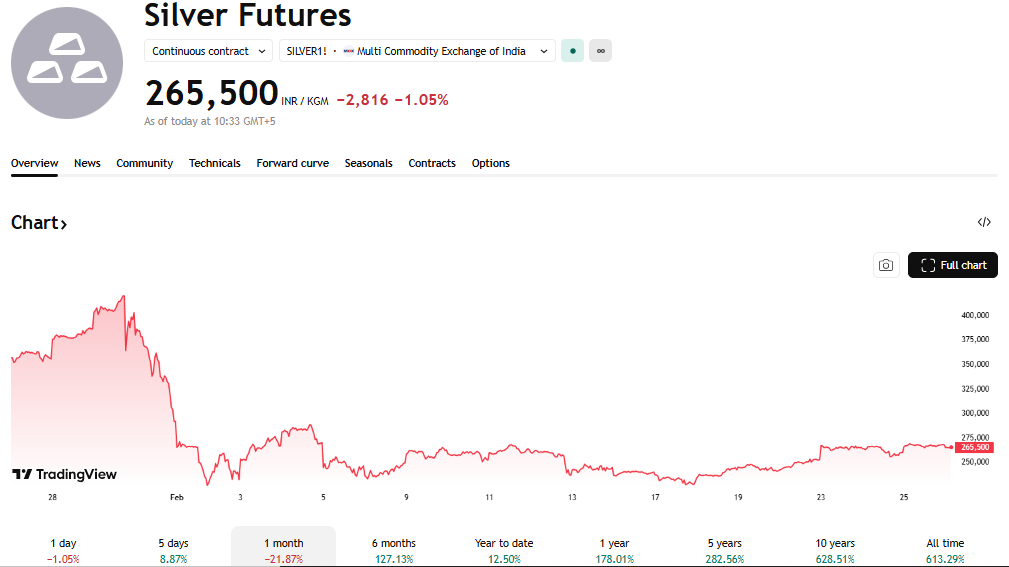
This slip followed robust gains earlier in the week, where global silver briefly passed $90 per ounce before profit‑taking emerged. Traders appear torn between safe‑haven demand and profit booking.
Why Prices are Slipping – Geopolitical Calm and Trade Uncertainty
How Are US-Iran Talks Affecting Silver?
Silver often rises when global risk rises, and safe‑haven flows increase. But on 26 February 2026, prices slipped because renewed US-Iran diplomatic talks in Geneva reduced fears of sudden conflict. These talks aim to ease tensions surrounding Iran’s nuclear program and military buildup, which had previously boosted bullion demand. With some optimism returning, silver’s safe‑haven appeal momentarily weakened.
What Role Do Trade Tensions Play?
Tariff policy uncertainty remains another key driver of silver volatility. After the US Supreme Court struck down reciprocal tariff powers, President Trump signaled higher global tariffs (up to 15%), keeping markets uneasy. This uncertainty initially supported safe‑haven buying, lifting silver prices earlier. But mixed signals on trade and tariff measures have also triggered profit booking and kept investors cautious.
Investors Await Federal Reserve Clues
Why Does the Fed Matter for Silver?
Silver is highly sensitive to shifts in interest rate expectations. Lower rates reduce the opportunity cost of holding non‑yielding assets like metals. Even though markets price in potential rate cuts later in 2026, the upcoming Federal Reserve meeting and economic data, such as weekly jobless claims, are now pivotal for traders. Investors are scanning Fed cues for signals on the strength of the US economy, inflation control, and the likelihood of easing.
What Data are Markets Watching?
Investors focus on:
- US inflation reports
- Jobless claims
- Fed minutes that indicate future policy paths
Even subtle shifts in these indicators can sway silver’s direction because they influence expectations of dollar strength and yields. In fact, some AI stock analysis tools and macro models suggest precious metals may become more attractive if real yields fall. This interplay between rates and metals underpins current market behavior.
Trading Strategies Amid Shifting Trends
What Should Traders Consider Now?
Given current volatility, market experts recommend measured strategies:
- Buy‑on‑dips approach: Rather than entering at peaks, traders may wait for corrective declines for better entry points.
- Profit booking: With sharp swings driven by geopolitical and macro updates, locking in gains at higher levels can shield portfolios from rapid reversals.
- Balanced allocation: Precious metals should be a portion, not the core, of diversified portfolios given their volatility and safe‑haven role.
How are Silver ETFs Performing?
Exchange‑traded funds tied to silver also reflect market nervousness. On 26 February 2026, many silver ETFs declined up to 3% amid tariff worries and geopolitical tensions, underlining broader uncertainty. Industry analysts suggest investors consider a phased investment approach instead of lump‑sum buying to spread risk over time.
What Analysts are Saying on Outlook?
Analysts paint a mixed but cautious picture:
- Some see safe‑haven demand re‑emerging if geopolitical or trade tensions flare again.
- Others expect rate outlook clarity from the Fed to drive the next major moves in silver pricing.
- Broader global developments, such as U.S. trade policy and Middle East risk, continue to be important market catalysts.
Price forecasts vary, but most suggest that volatility will remain elevated in the near term as markets digest geopolitical updates and macro data.
Wrap Up
Silver’s recent slip on the MCX reflects a complex mix of easing geopolitical fears, trade policy uncertainty, and a strong focus on Federal Reserve signals. While safe‑haven demand remains a key driver, near‑term price action will likely hinge on macroeconomic cues and policy shifts. Traders and investors must balance risk and strategy as bullion markets navigate this evolving backdrop.
Frequently Asked Questions (FAQs)
MCX silver prices fell on 26 Feb 2026, mainly because US-Iran talks eased the fear of conflict. This reduced safe‑haven buying. Also, worries over the US tariff and trade policy made traders book profits.
When the US and Iran start talks, markets often calm. This lowers safe‑haven demand. Silver and gold can fall or stay weak if tensions seem to ease.
Investors watch Fed policy cues, interest rate signals, jobless claims, inflation data, and dollar moves. These affect safe‑haven demand and commodity prices like silver.
Disclaimer:
The content shared by Meyka AI PTY LTD is solely for research and informational purposes. Meyka is not a financial advisory service, and the information provided should not be considered investment or trading advice.