On March 11, 2026, the Indian stock market opened hesitantly as key benchmarks, Sensex and Nifty 50, traded almost flat amid growing geopolitical stress. Traders watched nervously as the US‑Iran war and Middle East tensions continued to sway global sentiment and fuel crude oil price swings.
Earlier this week, the Nifty slipped more than 5 % in six sessions, and the Sensex tested near one‑year lows during sharp sell‑offs triggered by rising oil and risk aversion. While benchmark moves were muted today, mixed global cues kept investors cautious. Volatility remains elevated, and market participants are balancing short‑term risks with long‑term opportunities as world events unfold.
Advertisement
Sensex & Nifty 50 Flat Amid Iran War Concerns
Current Market Snapshot – March 2026
On March 11, 2026, the Indian stock market opened in a cautious mood as benchmark indices traded nearly flat amid ongoing geopolitical tensions linked to the US‑Iran war. The Nifty 50 opened just above the 24,250 level, showing a mild gain of about 0.1%. At the same time, the BSE Sensex hovered near 78,300, up slightly in early trade before volatility set in. Mixed global cues and geopolitical risk kept investors on the sidelines while markets digested fresh developments.

Despite the flat start, broader market sentiment remains fragile. Rising crude oil prices linked to heightened conflict concerns continue to be a major market driver. Brent crude and WTI futures have shown sharp swings in recent sessions as investors react to news flows about conflict escalation and potential supply disruptions.
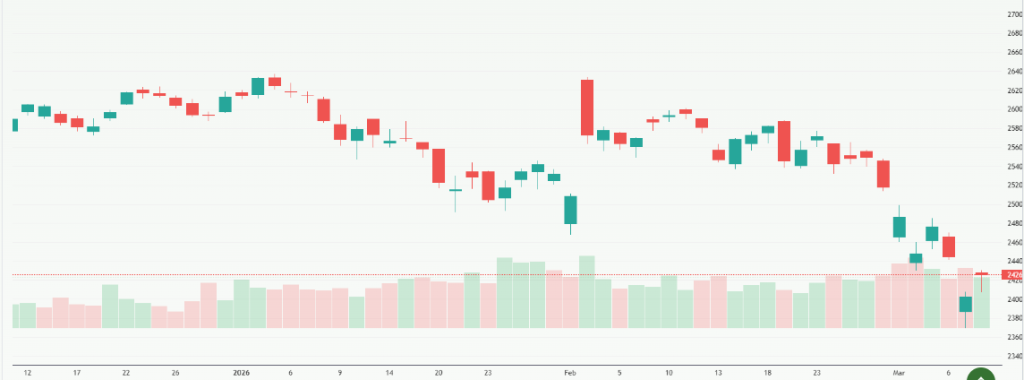
Indian Stock Market Movements This Week
What Recent Trends are Shaping Market Action?
In the past week, Indian markets have seen sharp swings due to oil price volatility and war‑linked fears. On March 9, 2026, the Sensex plunged more than 2,300 points, and the Nifty 50 slid nearly 700 points as crude oil surged above $115 per barrel, triggering broad selling. The sharp selloff wiped out investor wealth and pushed both indices toward one‑year lows.
However, markets attempted to stabilize after oil prices retraced and diplomatic signals hinted at ease in tensions. On March 10, both indices recovered with the Sensex gaining over 600 points, and the Nifty closing above 24,250, supported by positive cues from the US and easing crude prices.
Broadly, this seesawing trend reflects how sensitive Indian markets have become to crude movements and geopolitical narratives. Fed speculation, foreign fund flows, and currency pressures continue to magnify market moves.
Why are Indian Markets Flat Despite Geopolitical Stress?
How Is the Iran War Affecting Investor Sentiment?
The ongoing unrest in the Middle East, particularly major military engagements between the US‑Israel alliance and Iran, has elevated risk perceptions across global markets. Traders remain cautious, preferring to wait for clearer signals before committing to large positions. Oil price swings, supply route disruptions, especially concerns over the Strait of Hormuz, and potential responses from major producers have hit risk assets.

Crude oil prices saw extreme volatility, from highs above $119 to steep pullbacks below $90, depending on broad news flows on the conflict and potential policy interventions by energy agencies. This volatility dampens trading conviction in Indian indices.
In addition, the Reserve Bank of India (RBI) has been actively defending the rupee in currency markets, deploying billions of dollars to temper volatility and limit currency‑linked inflationary pressures.
Sector Highlights – Winners and Losers
Which Sectors are Outperforming or Underperforming?
The ongoing market stress has created mixed sector outcomes:
Sectors that faced pressure
- Financials: Banks like HDFC Bank and ICICI Bank have been under selling pressure amid weak sentiment.
- Energy and oil & gas: While oil companies sometimes benefit from higher crude, market fear has limited gains in this space.
Sectors showing resilience
- Aviation: Stocks such as IndiGo saw gains after certain news flows eased risk perceptions.
- Consumer durables and media: These defensive or less cyclical sectors offered relative stability.
Market breadth remained mixed with midcaps and smallcaps sometimes outperforming benchmark indices amid rotation into perceived value plays.
IN Stock Market: What Does This Mean for Investors?
Should Traders Buy, Sell, or Hold?
Given the current climate:
- Markets remain range‑bound until clarity emerges on geopolitical outcomes and crude price direction.
- Traders and investors should treat this as a high‑risk environment, use tight risk controls, and avoid aggressive positions.
- Technical support and resistance levels should guide short‑term trades, with the Nifty finding support near 24,100-24,200 and resistance near 24,600.
- Tools like an AI stock analysis can help identify trend changes or confirm breakouts when volatility spikes.
Retail traders might prefer holding defensive stocks or cash equivalents, while institutions may seek strategic entry points on dips if macro risks stabilize.
Macro Outlook: Rupee, Oil, and Global Markets
How are Global Indicators Influencing Indian Markets?
Oil prices remain the single most important driver for India, given its heavy dependence on imports. Any surge beyond $100 per barrel quickly feeds into inflation fears, fiscal pressures, and trade balance concerns. Geopolitical stress in the Middle East has amplified these linkages this quarter.
The rupee has felt pressure too, with periods of significant weakness against the US dollar due to capital flight and inflation worries. Strategic intervention by the RBI helped stabilize the currency, yet the trend remains sensitive to global shocks.
Global markets are also volatile, with Wall Street and Asian indices responding sharply to conflict news and economic data. These external cues feed into Indian market sentiment and volume trends.
Final Words
Indian markets are navigating a delicate balance between geopolitical risk and economic fundamentals. With indices trading flat amid Iran war jitters and oil price volatility, investor caution is understandable. Monitoring crude trends, foreign fund flows, and macro policy signals will be crucial in directing market action from here.
Advertisement
Frequently Asked Questions (FAQs)
On March 11, 2026, Sensex and Nifty stayed flat as investors remained cautious, waiting for a clear direction amid global tension.
The Iran‑US war increased oil price swings and risk fears, causing Indian market volatility to rise on March 11, 2026.
On March 11, 2026, Nifty support is near 24,100, while resistance lies around 24,600, guiding short-term trading decisions.
Disclaimer:
The content shared by Meyka AI PTY LTD is solely for research and informational purposes. Meyka is not a financial advisory service, and the information provided should not be considered investment or trading advice.
Advertisement
What brings you to Meyka?
Pick what interests you most and we will get you started.
I'm here to read news
Find more articles like this one
I'm here to research stocks
Ask our AI about any stock
I'm here to track my Portfolio
Get daily updates and alerts (coming March 2026)