











The IN stock market showed strong momentum as the BSE Sensex surged nearly 950 points while the NSE Nifty 50 crossed the 24,300 level, signaling renewed investor confidence in equities. The rally came during early March 2026 after recent market volatility, with investors returning to buy large-cap stocks following a short correction.
Benchmark indices climbed sharply as heavyweight companies and banking stocks attracted strong buying interest. The surge also added around ₹6 lakh crore to investors’ wealth in a single session, highlighting the scale of the rebound.
For market watchers, this move is more than just a daily jump. It reflects changing investor sentiment, global market cues, and domestic economic optimism.
Market Snapshot: Sensex and Nifty Rally in a Single Session
India’s benchmark indices recorded a sharp rally during the latest trading session. The BSE Sensex jumped nearly 900-950 points, while the NSE Nifty 50 moved past the 24,300 level, signaling strong buying interest across the market. The surge followed a short correction that had pushed many stocks into oversold territory earlier in March 2026.
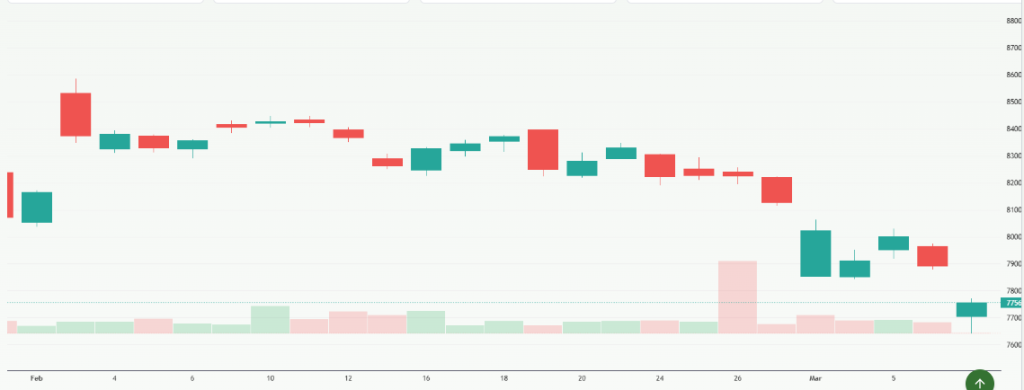
By the close of the session, the Sensex settled above 80,000 points, while Nifty climbed near 24,700 levels, showing a strong rebound in investor sentiment. Several factors supported the rally:
- Broad buying across metals, infrastructure, and auto stocks
- Recovery after a three-day losing streak
- Strong participation from large-cap companies
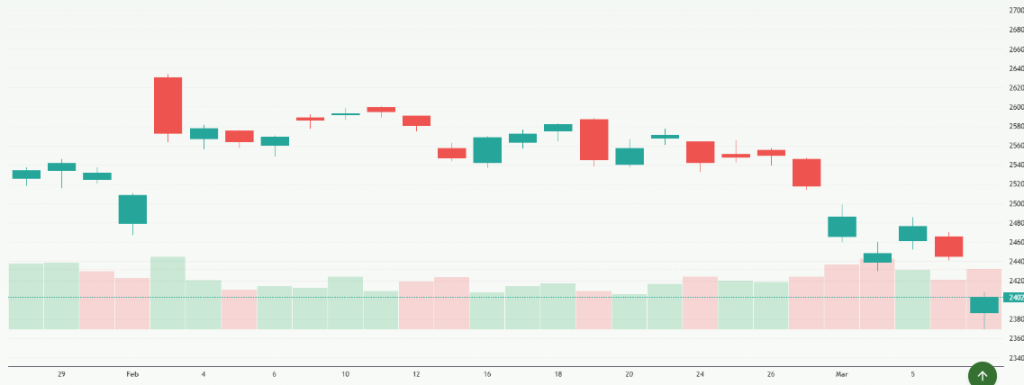
Market breadth also remained positive. More than 2,300 stocks advanced against about 1,480 declines across exchanges. This indicates that the rally was not limited to a few stocks but reflected wider market participation.
What Triggered the IN Stock Market Surge?
Was the Rally Driven by Short Covering?
Yes. One of the main drivers of the surge was short-covering after the recent market correction. In the days before the rally, benchmark indices had declined sharply due to global uncertainty and rising crude oil prices.
When markets fall quickly, traders often build bearish positions, expecting further decline. If prices suddenly rise, those traders rush to close their positions. This process is known as short covering and often causes a rapid rally.
Market analysts noted that the earlier decline had pushed the indices into oversold technical zones, making a rebound likely.
Did Institutional Buying Support the Rally?
Institutional investors also played a major role. Domestic institutions increased buying in major stocks, especially banking and energy companies.
Large-cap stocks often drive index movements because they carry a higher weight in benchmark indices. When institutions buy these stocks, the overall index moves quickly. Key areas that saw strong buying included:
- Banking and financial services
- Infrastructure companies
- Energy and metal stocks
Such sector-wide buying typically signals improving market sentiment.
Did Global Market Trends Influence the Surge?
Global market signals also helped the rally. When major global markets perform well, emerging markets like India usually benefit. Positive cues from international markets, combined with easing volatility, improved risk appetite among investors. At the same time, domestic investors stepped in to buy quality stocks after the recent dip.
Top Stocks Driving the Rally
The rally was largely driven by heavyweight companies that carry high weight in the indices. One of the biggest contributors was Reliance Industries, which gained about 3% during the session, providing strong support to the Sensex and Nifty.
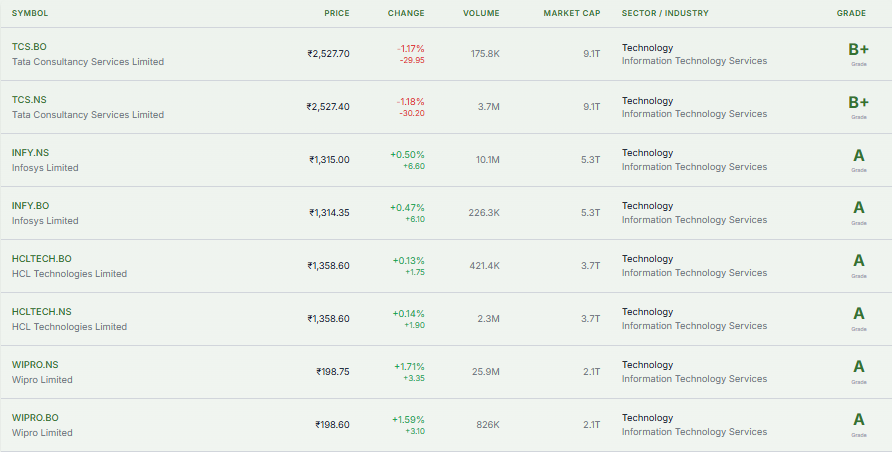
Other major contributors included large banking and infrastructure companies. These stocks are important because they influence the direction of benchmark indices. When several heavyweights rise together, the index often sees a strong upward move.
Some of the sectors that led the rally include:
- Metals
- Infrastructure
- Energy
- Banking
Strong performance across these sectors helped sustain the rally throughout the trading session.
Broader Market Impact: Midcaps and Smallcaps Join the Rally
The surge was not limited to large-cap stocks. Broader market indices also participated in the rally. When mid-cap and small-cap stocks rise along with large-caps, it signals healthier market momentum. It means investor confidence is spread across the market rather than concentrated in a few companies.
Data from the exchanges showed that:
- Over 2,300 stocks advanced on the exchanges
- Declining stocks were significantly fewer
- Market breadth remained firmly positive
Such market breadth often suggests that investors are becoming more optimistic about future growth.
Macroeconomic Factors Supporting the Market
Several economic factors continue to support the Indian stock market.
Strong Domestic Growth Outlook
India remains one of the fastest-growing major economies. Rising consumption, infrastructure spending, and government reforms have helped corporate earnings grow. These fundamentals make Indian equities attractive for long-term investors.
Government Spending and Policy Support
Public investment in infrastructure and manufacturing has boosted economic activity. Strong government spending can increase corporate profits, which often drives stock market growth.
Global Demand and Trade Activity
Indian companies also benefit from global demand in sectors such as IT services, manufacturing, and pharmaceuticals. Strong exports can support earnings growth for listed companies. These macroeconomic factors help maintain investor confidence even during periods of short-term volatility.
Risks and Volatility Still Remain
Despite the strong rally, markets remain sensitive to global developments. Recent volatility shows how quickly sentiment can change. Geopolitical tensions and commodity price movements can influence investor decisions.
For example, global conflicts and rising crude oil prices have previously caused sharp declines in Indian markets. When oil prices rise, India’s import bill increases, which can push inflation higher and pressure the economy.
Other potential risks include:
- Global interest rate changes
- Currency fluctuations
- Geopolitical tensions
- Sudden foreign investor outflows
These risks mean markets may remain volatile in the short term.
What Experts are Saying About the Rally?
Market experts believe the recent surge reflects a technical recovery rather than a full trend reversal. After sharp corrections, markets often experience relief rallies driven by bargain buying and short covering. Analysts suggest that traders should watch key levels on the Nifty index:
- Support level: around 24,100-24,300
- Resistance zone: around 24,700-25,000
If the index holds above support levels, it could continue moving upward in the coming sessions.
Short Stock Details and Forecast
Nifty 50 Index Overview
The Nifty 50 represents the performance of the largest companies listed on the National Stock Exchange of India. It is widely used as a benchmark for the Indian equity market.
Key facts:
- Current trading range: around 24,300-24,700
- Major sectors: banking, IT, energy, consumer goods
- One of the most followed indices in Asia
Technical Analysis Summary
According to the technical indicators available on Meyka:
- Overall sentiment: Neutral
- RSI: around 46, indicating mild downward pressure
- Trend strength: Weak, with markets moving sideways
- Key support and resistance: roughly between 25,196 and 26,060 levels in technical bands
This suggests that the market is currently in a consolidation phase with mixed signals.
What Meyka Says
Forecast data on Meyka suggests that the long-term outlook for the Nifty 50 remains bullish, despite short-term volatility.
Key projections include:
- The index could reach around 28,500 by 2027
- Long-term projections show potential levels above 38,000 by 2031
This indicates strong long-term growth potential if economic conditions remain supportive. In addition, global investment bank BNP Paribas expects the Nifty to reach around 29,500 by the end of 2026, driven by strong corporate earnings and domestic demand.
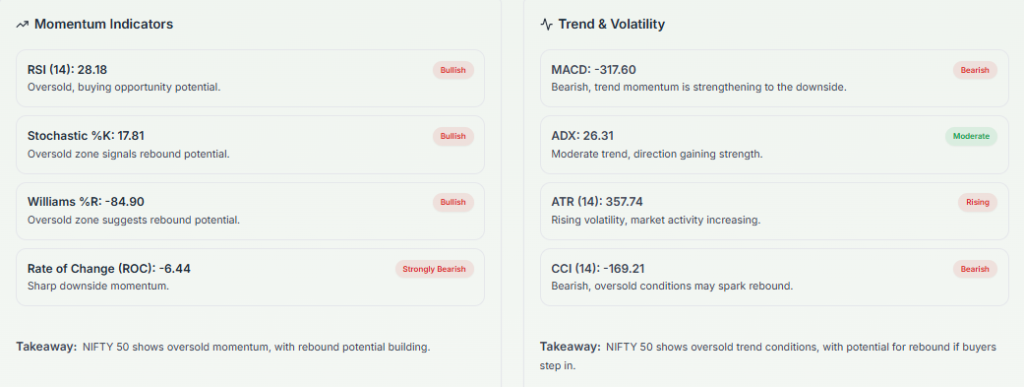
Modern platforms now combine technical indicators with advanced analytics. Many investors also rely on an AI stock analysis tool to evaluate trends, forecast price movements, and identify potential opportunities.
The IN Stock Market Today: What does this mean for Investors?
For investors, the recent surge highlights both opportunity and caution. Short-term rallies can be driven by technical factors such as short covering or derivative positioning. These moves may not always reflect long-term market direction.
Investors should focus on:
- Strong companies with solid earnings
- Long-term investment strategies
- Portfolio diversification across sectors
Markets may continue to experience volatility in the coming weeks. However, India’s economic growth story and improving corporate earnings remain key drivers for the long-term outlook of the stock market.
Final Words
The sharp rally in the IN stock market, with the Sensex gaining around 950 points and the Nifty 50 crossing 24,300, reflects improving investor sentiment after recent volatility. Strong buying in large-cap stocks, short covering, and positive global cues supported the surge.
However, analysts note that markets may remain volatile due to global risks and economic uncertainties. Investors should focus on fundamentally strong companies and maintain a long-term strategy rather than reacting to short-term market swings.
Frequently Asked Questions (FAQs)
The Indian stock market surged as the Sensex jumped nearly 950 points and the Nifty crossed 24,300 in March 2026. Short covering, strong buying in large-cap stocks, and positive global cues supported the rally.
The Sensex rose about 950 points due to strong gains in major companies like Reliance and banking stocks. Investors bought undervalued shares after a recent correction in early March 2026.
Nifty crossing 24,300 in March 2026 shows improved market sentiment. Analysts say it may signal short-term strength, but investors should still watch global risks and economic data before making decisions.
Disclaimer:
The content shared by Meyka AI PTY LTD is solely for research and informational purposes. Meyka is not a financial advisory service, and the information provided should not be considered investment or trading advice.
What brings you to Meyka?
Pick what interests you most and we will get you started.
I'm here to read news
Find more articles like this one
I'm here to research stocks
Ask our AI about any stock
I'm here to track my Portfolio
Get daily updates and alerts (coming March 2026)