Gold and silver markets opened March 18, 2026 with cautious trading as investors paused ahead of a key U.S. Federal Reserve policy decision that could shape price direction for both metals this week. On major exchanges, silver dipped sharply while gold held near the $5,000 per ounce level, reflecting a wait‑and‑watch mood among traders.
This calm belies a tense backdrop. Safe‑haven demand is rising amid Middle East geopolitical risks, and markets are eyeing whether the Fed will signal future rate changes. With rising oil prices boosting inflation concerns and real yields under scrutiny, bullion prices are poised for sharp moves once policymakers speak.
Advertisement
Gold and Silver Rates Today: Markets Await Fed Policy for Price Direction
Global Price Snapshot: Gold & Silver Today
Gold and silver prices showed cautious movement on March 18, 2026, as traders prepared for the U.S. Federal Reserve’s key policy announcement. On this day, spot gold held near $5,000 per ounce, a level that reflects both geopolitical tensions and inflation concerns.
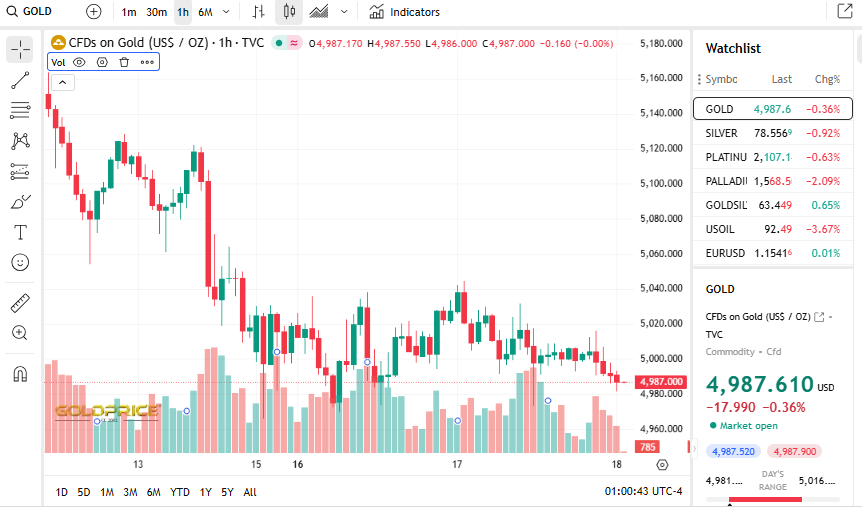
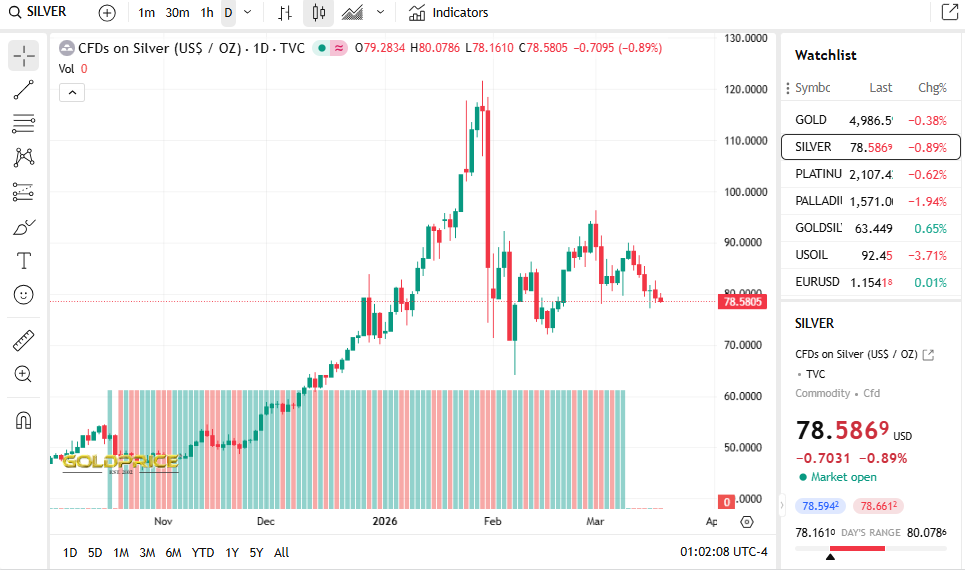
Silver faced selling pressure, declining sharply in multiple sessions, with front‑month contracts falling below $80 per ounce at times. This marked a multi‑day slide, the longest such losing streak in about two years for silver. Markets entered a wait‑and‑watch mode ahead of the Fed meeting, which is expected to provide forward guidance rather than change interest rates.
On Indian commodity exchanges, MCX gold futures eased around 0.21%, and MCX silver futures fell about 0.76%, highlighting subdued trading as investors held back before the Fed decision.
Market participants are also digesting rising oil prices above $100 per barrel, due to escalating Middle East risks. This helps support gold’s safe‑haven demand but adds complexity to rate expectations.
Why Does the Fed Policy Decision Matters Now?
How Does Fed Guidance Impact Gold and Silver?
The U.S. Federal Reserve’s upcoming policy announcement is shaping precious metals prices. Traders do not expect the Fed to change its interest rates at the March 18, 2026 meeting. Instead, they are focused on forward guidance, what the Fed says about future rate paths and inflation expectations. Signals that the central bank may lean toward rate cuts could weaken the U.S. dollar and support higher gold and silver prices. Conversely, hawkish guidance could cap gains in non‑yielding assets.
Gold and silver are sensitive to real interest rates (interest rates adjusted for inflation). When real yields fall, gold and silver often become more attractive as they do not pay interest. If the Fed signals a slower pace of future tightening or potential cuts, this can boost demand for bullion.
Fed Policy: What are the Main Market Drivers?
1. Geopolitical Tensions and Safe‑Haven Demand
Global uncertainty, especially due to Middle Eastern tensions, continues to support gold and silver as safe‑haven assets. This heightened risk sentiment often pushes investors toward metals during times of geopolitical stress. Recent attacks and threats around the Strait of Hormuz have kept oil prices elevated, in turn feeding inflationary concerns that support precious metals.
2. Inflation and Interest Rate Expectations
Inflation trends remain critical. Markets are watching U.S. inflation gauges such as the Personal Consumption Expenditures (PCE) index, the Fed’s preferred measure. Persistently higher inflation could pressure the Fed to maintain tighter policy, which can weigh on gold and silver prices. Conversely, signs of easing inflation may pave the way for future rate cuts, favoring bullion demand.
3. Supply and Demand Fundamentals
Silver’s market structure shows continued tightness in inventory, physical demand, and industrial applications. A report from the Silver Institute highlights persistent physical tightness and strong investment demand as factors likely to support silver prices in 2026. Although prices may remain volatile, the long‑term outlook holds support due to these fundamentals.
Are Gold and Silver Prices Headed Higher or Lower? Market Outlook
Short‑Term Trends: What Analysts Say
Most analysts predict continued consolidation and volatility around the Fed meeting and in the week that follows. Precious metals may see corrective moves as markets digest signals from central banks, including the Fed and other major institutions like the ECB and BOE. Price swings could remain sharp due to mixed influences of rate expectations and geopolitical risk.
Silver’s recent losing streak suggests near‑term downside pressure, but long‑term demand factors could cushion further drops. Meanwhile, gold’s relative stability near key price levels reflects its strong role as a safe haven.
Long‑Term Drivers: Expert Forecasts
Major research groups suggest that gold could continue its broader uptrend in 2026. Emirates NBD Research forecasts gold averaging higher into late 2026, although this outlook includes both upside and downside risks depending on economic conditions and Fed policy shifts. Silver’s industrial demand and physical market dynamics also offer structural support over time.
Gold, Silver Price: What Traders and Investors are Watching Next?
Key Indicators to Follow
Investors are closely tracking:
- Fed policy commentary for clues on future rate cuts.
- Inflation data, especially U.S. CPI and PCE readings.
- U.S. dollar and treasury yields, which influence precious metal returns.
- Geopolitical developments that could shift risk sentiment quickly.
Many market platforms and AI stock analysis tools now incorporate precious metals data into comprehensive investor screens, helping traders see big picture drivers alongside inflation and rate expectations.
Conclusion
Prices for gold and silver are trading cautiously as the market waits for fresh direction from the U.S. Federal Reserve. Demand for safe‑haven assets remains strong amid geopolitical risks and inflation worries, while silver’s recent pullback highlights short‑term volatility.
Looking ahead, central bank signals, inflation data, and macroeconomic trends will be key in shaping future price moves. Stay tuned for how these forces play out in the days after the Fed’s decision.
Advertisement
Frequently Asked Questions (FAQs)
The Fed’s rate decisions and guidance affect investor demand for gold and silver. Low rates usually support higher prices.
Gold and silver may rise if the Fed signals lower rates. Prices could fall if the Fed stays hawkish.
Prices move due to Fed policy, inflation worries, and Middle East tensions. Traders react quickly to new updates.
Disclaimer:
The content shared by Meyka AI PTY LTD is solely for research and informational purposes. Meyka is not a financial advisory service, and the information provided should not be considered investment or trading advice.
Advertisement
What brings you to Meyka?
Pick what interests you most and we will get you started.
I'm here to read news
Find more articles like this one
I'm here to research stocks
Ask Meyka Analyst about any stock
I'm here to track my Portfolio
Get daily updates and alerts (coming March 2026)