Gold prices hold above $5,000 as the Iran war and central bank decisions dominate focus
Gold prices have stayed firmly above the $5,000‑per‑ounce mark in recent weeks, defying pressure from a strong U.S. dollar and tight global financial conditions. This is happening as the U.S.-Israel conflict with Iran, which began in late February 2026, continues to ripple through markets, pushing investors toward safe‑haven assets like gold. Geopolitical risk and rising energy costs have shaken confidence in stocks and bonds, while central banks around the world adjust policy to curb inflation and manage uncertainty.
Traders are now watching every move from major monetary authorities closely, as these decisions could unlock the next big swing in gold prices. The result? A complex market mix that keeps bullion firmly in the spotlight.
Advertisement
Geopolitical Drivers: How the Iran Conflict Is Shaping Gold
What is driving gold’s rise during the Iran war?
Gold remains elevated as investors buy it as a safe‑haven asset amid the ongoing conflict involving the United States, Israel, and Iran. After strikes on Iranian targets in early March 2026, fears about disruption to global energy supply and wider geopolitical risk encouraged many traders to sit in gold rather than riskier assets. Gold prices have held near or above $5,000 per ounce through recent sessions.
A major factor is disruptions around the Strait of Hormuz, a key energy transit point for about 20% of global oil flows. Multiple attacks on ships and threats to shipping routes have prompted sharp rises in oil prices. This, in turn, can raise inflation expectations, something that usually benefits gold as a hedge.
However, gold’s full reaction has been mixed. Despite geopolitical risk, stronger oil prices, and a firmer U.S. dollar have sometimes capped gold’s upside. This has created a range‑bound market rather than runaway gains.
How does the Middle East situation affect global markets?
The Iran conflict has shaken more than just gold. Oil markets have seen Brent crude climb past $100 per barrel, pushing inflation fears higher. Many central banks are now assessing whether to tighten policy further, even as geopolitical tensions persist.
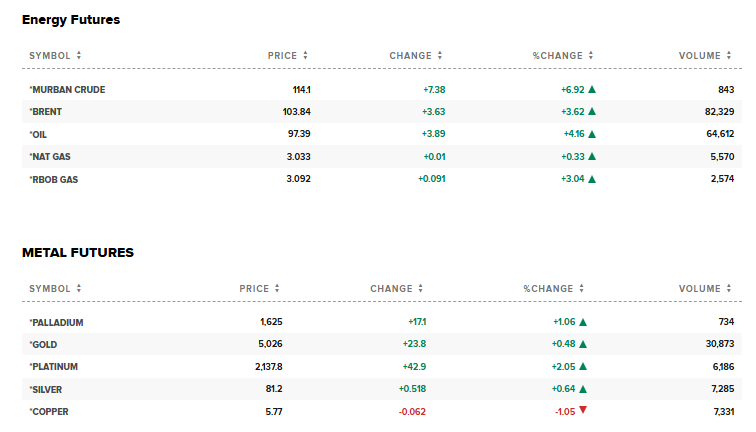
Gold can rise with uncertainty, but it competes with the dollar as a safe haven. When the dollar strengthens, gold often weakens because it becomes more expensive in other currencies. This dynamic has played out several times in March 2026, helping explain price wobbles despite heightened conflict.
Central Banks & Monetary Policy: Inflation, Rates, and Gold
Why central bank decisions matter for gold prices?
Central banks around the world are juggling inflation, growth risks, and war‑driven supply shocks. One of the clearest recent developments is the Reserve Bank of Australia (RBA) lifting its key interest rate by 25 basis points to 4.1% on March 17, 2026. This was done with inflation fears rising due to oil price shocks from the Iran war.
Higher interest rates generally reduce gold’s appeal because gold offers no yield. When rates rise, investors may favor interest‑bearing assets. Still, gold can benefit over time as central banks sometimes turn to bullion to diversify reserves when geopolitical risk rises. Ongoing central bank purchases, sometimes tracked by AI‑driven analysis tools used by financial institutions, remain a structural support for gold over the long term.
Are central banks buying gold right now?
Even with rate hikes, many central banks remain active buyers of gold. A recent aggregated market discussion reported that central banks are projected to average about 585 tonnes of gold bought per quarter in 2026. Such demand supports the gold price over the long term, even if short‑term trading is volatile.
This broad pattern of buying helps explain why gold has held above key technical support levels, even when macro data suggests rate pressure could dampen prices. Analysts from large institutions like Goldman Sachs and JPMorgan have also shifted year‑end targets upward, partly due to ongoing central bank accumulation.
Gold Prices: Market Reactions, Volatility & Key Stats
What recent price trends are markets showing?
Gold has generally stayed near the $5,000+ level in March 2026, with some sessions testing higher ranges near $5,300-$5,400. This reflects a tug‑of‑war between safe‑haven buying and macro pressure from strong yields and a firm dollar.
Some trading venues, for example, India’s MCX bullion market, have seen gold jump roughly 0.5% in recent days as tensions persisted. Both gold and silver exchange‑traded funds (ETFs) also logged gains as investors looked for protection amid volatility.
Which external forces are affecting gold beyond inflation?
Oil prices have been a big driver of market sentiment. As oil has climbed due to disruption fears around the Strait of Hormuz, inflation expectations have risen. This has made some central banks reluctant to cut rates. Instead, a few, like Australia’s RBA, have chosen to raise rates. This has, in some periods, pushed funds from gold toward other assets like the dollar, tempering gold’s upside.
Equity and other market moves remain influenced by these same forces. In some risky asset classes, markets have pulled back as safe‑haven demand has increased. This includes not just gold but also high‑quality government bonds and defensive stocks.
Conclusion
Gold’s ability to remain above $5,000 per ounce in March 2026 highlights its role as a hedge in turbulent times. The Iran conflict and central bank policy shifts have kept markets on edge, driving volatility across asset classes.
While a firm dollar and higher interest rates sometimes limit gold’s upside, sustained geopolitical risk and central bank demand continue to support bullion. Investors are watching closely for new developments, as any major escalation or policy surprise could rapidly shift gold’s outlook.
Advertisement
Frequently Asked Questions (FAQs)
Gold prices stayed above $5,000 in March 2026 due to war fears, oil price rise, and strong investor demand.
The Iran war in March 2026 increased market uncertainty, making investors buy gold as a safe-haven asset to protect wealth.
Central banks’ March 2026 rate moves and reserve gold purchases influence prices, keeping gold supported despite inflation and dollar strength.
Disclaimer:
The content shared by Meyka AI PTY LTD is solely for research and informational purposes. Meyka is not a financial advisory service, and the information provided should not be considered investment or trading advice.
Advertisement
What brings you to Meyka?
Pick what interests you most and we will get you started.
I'm here to read news
Find more articles like this one
I'm here to research stocks
Ask Meyka Analyst about any stock
I'm here to track my Portfolio
Get daily updates and alerts (coming March 2026)