











Gold price is catching the market’s attention again in early February 2026. After a steep sell‑off, bullion has now climbed for a second straight day. Spot gold rebounded above $5,000 per ounce, rising around 2.1% amid renewed buying interest and a softer US dollar.
Traders say this rebound came as dip buyers stepped in and broader markets showed improved risk appetite. Silver and other precious metals are also gaining ground, adding to the bullish tone.
With investors watching inflation data, interest rate expectations, and global tensions, this renewed uptick has many speculating about what comes next for the world’s oldest safe‑haven asset.
What Happened: Gold’s Rebound Explained
After a dramatic sell‑off that shook precious metals markets, gold bounced back strongly in early February 2026. Spot gold climbed more than 2% on February 4, building on a massive rebound from the prior session that saw prices surge nearly 6%, the largest single‑day gain since 2008.
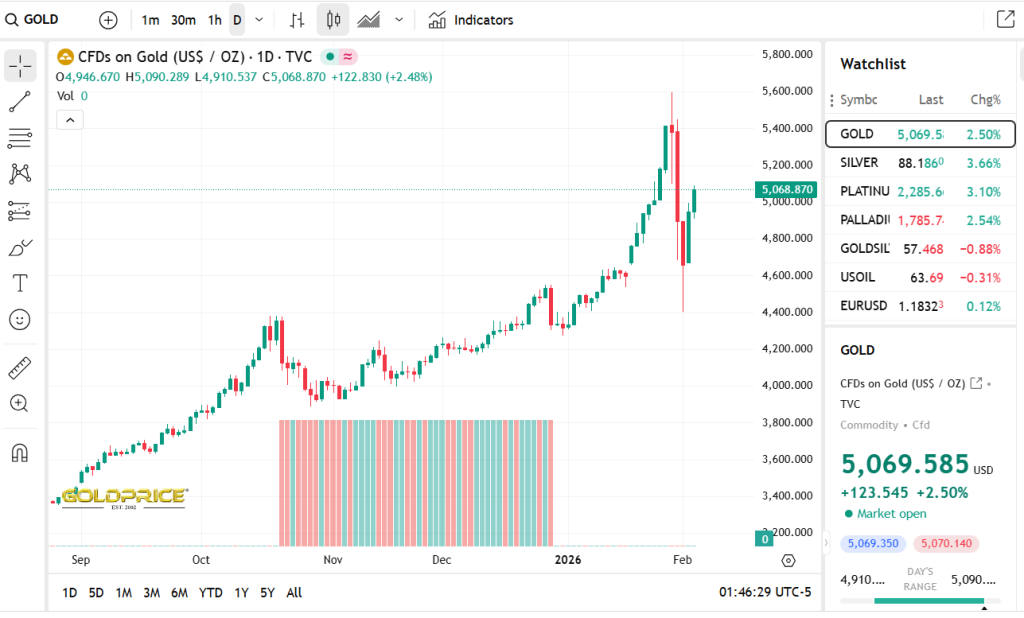
On Wednesday, spot gold was trading above $5,040 per ounce, recovering some ground after plunging sharply earlier in the week. Analysts point to bargain‑hunting by investors and a softer US dollar as key factors supporting the rebound.
Silver and other precious metals also showed strength alongside gold, reflecting broad buying interest in commodities following recent volatility. The quick turnaround highlights how steep declines can trigger dip buying, especially when prices retreat from record levels reached in late January. With market participants closely watching macroeconomic signals and geopolitical risks, the rebound is drawing renewed interest from traders and long‑term investors alike.
Why Is Gold Rising Again? Key Price Drivers
What are the Main Forces Behind the Rally?
Gold’s rebound is driven by a mix of market psychology, currency moves, and global uncertainty.
Bargain‑Hunting and Technical Support
After gold experienced one of its steepest declines in decades, falling over two sessions from above $5,590 to below $4,410, many traders saw the pullback as an opportunity to buy at lower levels. This “buy‑the‑dip” behavior helped fuel the sharp reversal.
Weaker US Dollar
A softer US dollar makes gold cheaper for holders of other currencies. This tends to boost demand and supports price gains when the dollar weakens against major currencies.
Geopolitical Tensions
Heightened geopolitical risks, including tensions in the Middle East, have pushed investors toward safe‑haven assets like gold. This flight to safety strengthens demand when uncertainty rises.
Interest Rate Expectations
Markets are pricing in the possibility of future Federal Reserve rate cuts in 2026, which reduces real yields and makes non‑yielding assets like gold more attractive. Lower interest rate expectations often correlate with stronger gold prices.
Together, these factors are shaping the rebound, blending technical buying with broader macroeconomic and geopolitical themes.
Commodity and Equity Market Context
How are Other Markets Performing and What Does That Mean for Gold?
Gold’s rebound isn’t happening in isolation. It comes amid a broader patchwork of moves across markets that reflect shifting risk sentiment.
Stock Market Signals
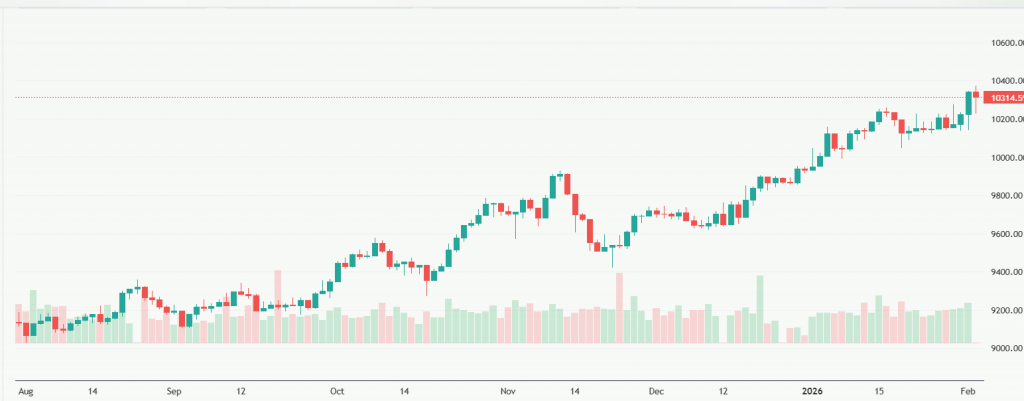
Major equity indexes, including European benchmarks like the FTSE 100, have hit fresh highs, suggesting a temporary return of risk appetite among investors. Strong stock market performance can sometimes reduce safe‑haven demand for gold, but in this case, both equities and gold are rising together, a sign of mixed but improving confidence.
Other Commodities
Silver and platinum have also rebounded alongside gold, showing that precious metals broadly are regaining ground after recent volatility. Silver, in particular, saw significant rebounds after sharp declines earlier in the week.
Inflation and Currency Background
Oil prices have stabilized and the dollar has softened, creating a backdrop that supports commodities. A weaker dollar often boosts dollar‑priced assets like gold by making them more affordable to global buyers.
In this nuanced market environment, gold’s rebound reflects both a technical bounce and fundamental forces related to currency, rates, and risk sentiment.
Impact on Others: Gold Prices in Pakistan and South Asia
How Is Pakistan’s Gold Market Responding?
Gold’s international price rebound has quickly translated into sharp increases in local markets. In Pakistan, gold prices surged by around Rs24,000 per tola on February 3, 2026, as the price reacted to global strength in bullion. The cost of 10 grams of 24‑karat gold jumped by over Rs20,000, reflecting the strong uptick. Silver prices also rose in tandem.
Local jewelers and traders noted that the rebound came after several sessions of losses, making the sharp recovery especially notable in physical markets. Increased buying interest among investors and consumers contributed to this bounce, mirroring global demand trends.
What About the Broader Region?
Across South Asia, gold and silver prices have shown similar strength. Markets in Dubai reported a rebound in 24‑carat gold prices, reclaiming ground after recent declines.
This regional pattern highlights how international bullion moves can quickly affect domestic prices, particularly in markets with strong physical demand.
Gold Price Today: What Analysts are Saying?
Market analysts are interpreting the rebound as both a technical correction and a continuation of a broader long‑term uptrend. After last week’s sell‑off, many argue the market overshot on the downside, prompting aggressive buying once prices stabilized. Analysts from brokerage firms like Capital.com suggest that the current rebound may be moving gold back toward fair value after irrational swings.
Others point to fundamental drivers like expected rate cuts and geopolitical risk as reasons why gold’s upward trend could persist. Some forecasts see gold potentially reaching new highs later in 2026 if macroeconomic conditions stay supportive. This perspective aligns with insights from tools like an AI analysis platform that integrates sentiment and fundamental data to project longer‑term asset trends.
Overall, while short‑term volatility remains, the medium‑term outlook among many experts is cautiously optimistic.
Conclusion: What the Rebound Means for Investors?
Gold’s rebound reflects technical buying, macro trends, and geopolitical risks. Investors should watch Fed moves, currency shifts, and global events. Despite volatility, gold remains a key investment and safe‑haven asset in 2026.
Frequently Asked Questions (FAQs)
Gold prices are rising due to a weaker US dollar, global uncertainty, and bargain buying. Investors are seeking safe assets amid market swings as of February 4, 2026.
It is uncertain if gold will keep rising. Some experts expect gains if risks continue, but prices may change with interest rates, inflation, or market sentiment by February 2026.
A weak US dollar makes gold cheaper for buyers using other currencies. This usually increases demand and pushes gold prices higher as of February 4, 2026.
Disclaimer:
The content shared by Meyka AI PTY LTD is solely for research and informational purposes. Meyka is not a financial advisory service, and the information provided should not be considered investment or trading advice.
What brings you to Meyka?
Pick what interests you most and we will get you started.
I'm here to read news
Find more articles like this one
I'm here to research stocks
Ask our AI about any stock
I'm here to track my Portfolio
Get daily updates and alerts (coming March 2026)