











FY26 Stock Market Review: NIFTY50 Falls 5%, SENSEX Drops Over 7% – Top Gainers and Losers Listed
India’s stock market ended FY26 on a weak note, breaking its recent growth streak. By March 31, 2026, the NIFTY50 had fallen around 5%, while the SENSEX dropped over 7%. This marks one of the sharpest yearly declines since 2020. The fall came despite strong rallies earlier in 2025, when markets hit record highs.
Rising global tensions, heavy foreign investor outflows, and weak IT stocks changed the trend quickly. Investors also faced pressure from high oil prices and currency swings. Still, not all stocks struggled. Some sectors showed strong gains and surprised the market. So, what really drove this shift, and which stocks stood out in FY26?
FY26 India Stock Market Performance Overview
What happened to NIFTY50 and SENSEX in FY26?
India’s benchmark indices closed FY26 in negative territory after a volatile year.
- NIFTY50 ended near 22,300, down about 5% for the fiscal year ending March 31, 2026.
- SENSEX closed around 71,900, falling over 7% during the same period.
- Nearly 45–50% of NIFTY50 stocks delivered negative returns, showing broad market weakness.
This marked the worst fiscal performance since FY20, when pandemic-driven panic hit global markets.
How did the market move during the year?
FY26 was not a straight decline. It had three clear phases:
- April-August 2025:
- Strong rally backed by rate cuts and earnings optimism
- NIFTY hit record highs in late 2025
- September-December 2025:
- Sideways movement
- Profit booking started
- January-March 2026:
- Sharp correction
- Triggered by global risks and heavy selling
This shift shows how quickly sentiment changed in late FY26.
Key Reasons Behind Market Decline
Why did the Indian stock market fall in FY26?
Several global and domestic factors drove the downturn.
Did global tensions impact the market?
Yes. Geopolitical risks played a major role.
- Rising conflict in West Asia pushed crude oil prices above $100 per barrel
- India, being a major oil importer, faced cost pressure
- Higher oil prices increased inflation fears
How did FII outflows affect markets?
Foreign investors pulled out heavily in FY26.
- Total outflows reached nearly $19.7 billion
- FIIs shifted funds to markets like South Korea and Taiwan
- High Indian valuations reduced attractiveness
This selling created sustained pressure on large-cap stocks.
Was the IT sector the biggest drag?
Yes. IT stocks saw sharp corrections.
- Major companies dropped between 20% and 35%
- Weak US demand slowed revenue growth
- AI disruption concerns added uncertainty
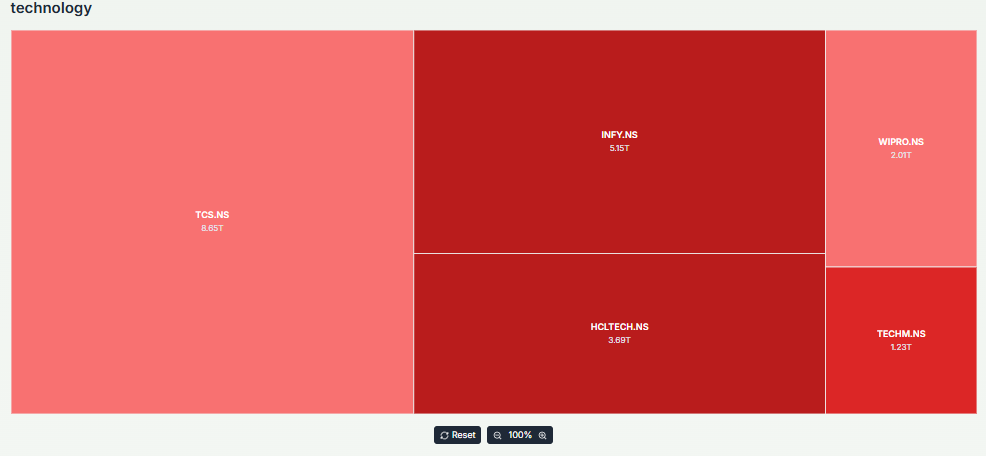
Stocks like TCS and Wipro led the decline.
What macro factors added pressure?
- Rupee depreciation increased import costs
- Bond yields rose close to 6.9-7%
- Inflation concerns reduced risk appetite
These factors made investors cautious.
Sensex & Nifty 50: Sector-Wise Performance Trends
Which sectors performed well in FY26?
Some sectors showed resilience despite the broader fall.
- PSU Banks:
- Strong credit growth
- Better asset quality
- Metals:
- Benefited from global commodity demand
These sectors delivered positive returns and attracted investor interest.
Which sectors underperformed the most?
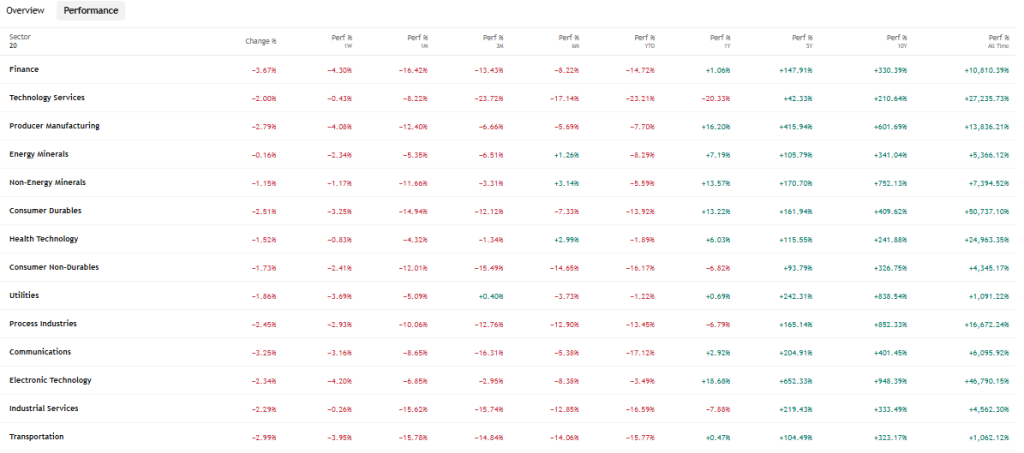
- IT Sector: Worst hit due to global slowdown
- Private Banks: Faced valuation pressure
- FMCG/Consumer: Demand slowdown impacted growth
Market breadth also weakened sharply.
- Over 1,500 stocks hit 52-week lows during the peak correction
Top Gainers in the Indian Stock Market FY26
Which stocks delivered strong returns?
Despite the decline, some stocks outperformed.
Top performers:
- Bharat Electronics (BEL): ~33% gain
- Driven by strong defense orders
- Shriram Finance: ~32% gain
- Strong NBFC growth
- Hindalco Industries: ~30% gain
- Supported by metal price trends
Other notable gainers:
- State Bank of India (SBI)
- Titan Company
- Eicher Motors
What do stock signals show? – Meyka Analysis
Short stock outlook – Hindalco:
- Trend: Bullish with cyclical support
- Momentum: Strong due to commodity demand
- Risk: Dependent on global metal prices
Technical summary:
- Price above key moving averages
- Strong support zones holding
- RSI indicates healthy momentum
What Meyka says:
According to analysis tools on Meyka.com, metal stocks like Hindalco show positive trend continuation signals with moderate volatility risk.
You can use an AI stock analysis tool like Meyka to track real-time signals, risk levels, and entry zones.
Top Losers in FY26
Which stocks saw the biggest declines?
Several large-cap stocks corrected sharply.
Major losers:
- Trent: ~36–38% fall
- TCS: ~34–35% decline
- Wipro: ~27% drop
Other weak performers:
- IndiGo
- Adani Enterprises
- ITC (mild decline)
Why did these stocks fall?
These stocks fell in FY26 mainly due to high valuations, which triggered profit booking. Weak global demand hurt IT earnings, and investors rotated funds into other sectors.
India vs Global Markets in FY26
Did India underperform global markets?
Yes. India lagged behind key global peers.
- South Korea (Kospi): ~100%+ gains
- Taiwan (Taiex): ~50%+ gains
- Japan (Nikkei): ~40%+ gains
Global investors preferred markets with:
- Lower valuations
- Stronger export growth
India’s premium valuation worked against it.
Technical Outlook & Market Sentiment
Is the market oversold now?
Yes. Technical indicators suggest oversold conditions.
- NIFTY RSI near 30-32 levels
- Key support zone: 22,000-22,200
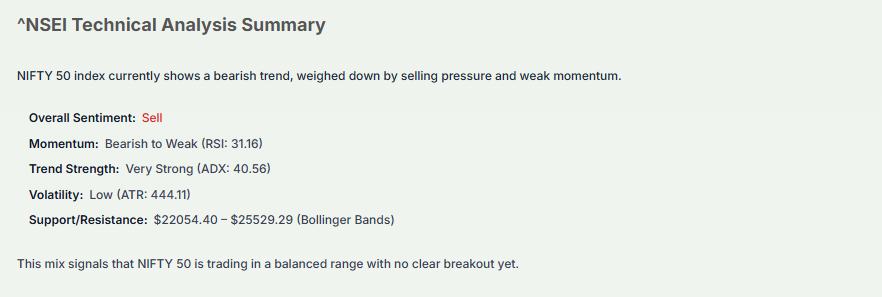
This indicates:
- Possible short-term bounce
- But volatility may remain high
What are analysts saying?
- Cautious optimism for near-term recovery
- Focus on sector rotation
- Avoid overvalued stocks
Analyst insight – Reuters:
Markets may stabilize only if global risks ease and FII flows return.
What to Expect in FY27 for Sensex & Nifty?
key triggers for recovery
- Stabilization in crude oil prices
- Return of foreign investor inflows
- Strong corporate earnings growth
- Policy support from the RBI and the government
What risks remain?
- Ongoing geopolitical tensions
- Inflation pressure
- Currency volatility
Markets may stay range-bound in early FY27 before a clear trend emerges.
Final Words
FY26 was a challenging year for Indian markets, with global risks and investor outflows driving declines. Still, selective sectors showed strength and created opportunities. As FY27 begins, recovery depends on stable global conditions, earnings growth, and renewed investor confidence. A cautious and data-driven approach will remain key for investors navigating this evolving market landscape.
Frequently Asked Questions (FAQs)
NIFTY50 and SENSEX fell in FY26 due to FII outflows, high oil prices, global tensions, and weak IT earnings by March 2026.
In FY26, stocks like Bharat Electronics and Hindalco gained, while TCS, Wipro, and Trent were among the biggest losers.
The Indian stock market may recover in FY27 if global risks ease, earnings improve, and foreign investors return after March 2026.
Disclaimer:
The content shared by Meyka AI PTY LTD is solely for research and informational purposes. Meyka is not a financial advisory service, and the information provided should not be considered investment or trading advice.
What brings you to Meyka?
Pick what interests you most and we will get you started.
I'm here to read news
Find more articles like this one
I'm here to research stocks
Ask our AI about any stock
I'm here to track my Portfolio
Get daily updates and alerts (coming March 2026)