











On 6 February 2026, the UK’s premier stock index, the FTSE 100, slid sharply at the open as global markets reacted to a fresh wave of investor fear. Major tech names, led by Amazon, saw shares tumble after the company shocked Wall Street with plans to boost AI‑related spending to roughly $200 billion in 2026, far above expectations, a move that spooked traders and deepened a broader sell‑off in technology stocks.
This shift hit London markets hard. Tech and software shares dragged the FTSE lower while risk appetite faded across Europe and the US. With volatility rising and key sectors under pressure, traders are left asking one big question: is this the start of a deeper market downturn?
FTSE 100 Today: Live Market Movements & Key Numbers
On 6 February 2026, the FTSE 100 faced renewed selling pressure as global markets reacted to a sharp decline in major technology stocks. The index slipped about 0.5% to 0.9%, extending recent losses amid fears of higher capital spending and profit pressures in tech firms. RELX, Sage Group, and other data‑related shares were among the biggest losers on the London exchange, reflecting heightened fears over AI‑related disruption to their business models.
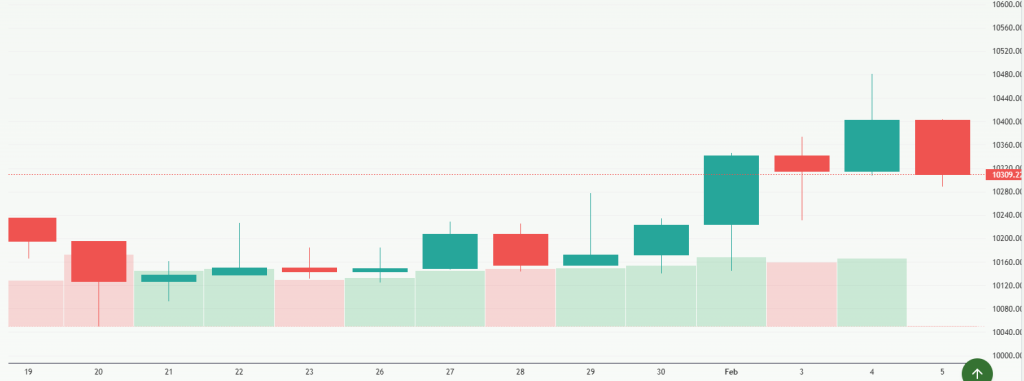
Tech weakness abroad also weighed on sentiment. U.S. futures for the S&P 500 and Nasdaq had pointed to further declines, and major tech names like Amazon saw dramatic after‑hours sell‑offs. Investors interpreted Amazon’s heavy capital expenditure plans as a risk to near‑term earnings, prompting broad risk‑off trading across both U.S. and European markets.
While the FTSE 100’s decline was not as steep as the tech rout itself, pressure on growth‑oriented segments remains apparent. Other parts of the market, like energy and financials, helped limit losses. Still, the broader narrative is clear: global risk appetite has softened on profit‑outlook concerns tied to heavy future spending.
Key Numbers to Know:
- FTSE 100 index down roughly 0.5- 0.9% on the session.
- Broader tech sells‑off driving global pressure.
Amazon Stock Today: Short Details & Forecast
Amazon (NASDAQ: AMZN) stunned markets in early February 2026 with a projected capital expenditure plan of about $200 billion for 2026, up significantly versus expectations. This figure far exceeded street forecasts near $146 billion, and the sharp rise was tied mainly to AI data‑centres, custom chips, robotics and cloud infrastructure. Amazon’s shares plunged over 10% after‑hours trading on these forecasts.
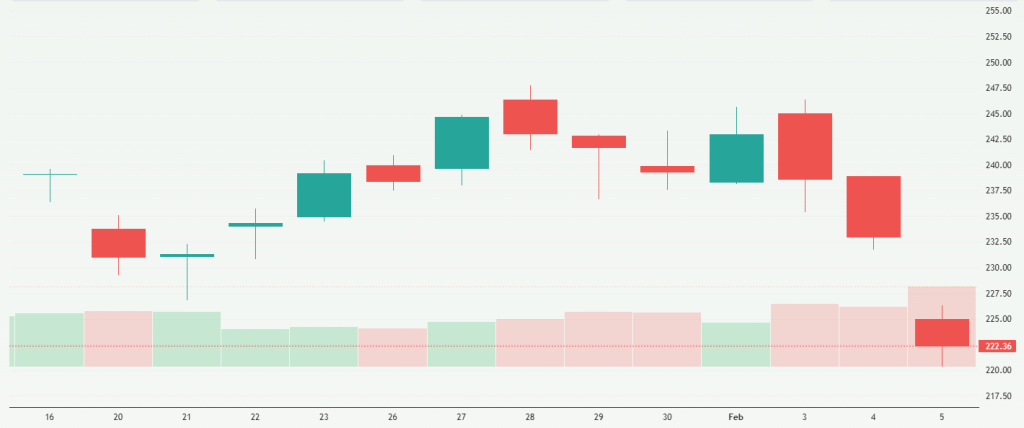
According to Meyka’s latest stock analysis, Amazon has a Buy consensus with a stock grade of B+, supported by strong long‑term growth prospects in AWS and cloud services. Meyka’s technical analysis shows moderate volatility with a Relative Strength Index (RSI) around 63 and no strong trend direction, while price bands suggest key support and resistance levels between roughly $220 and $238.
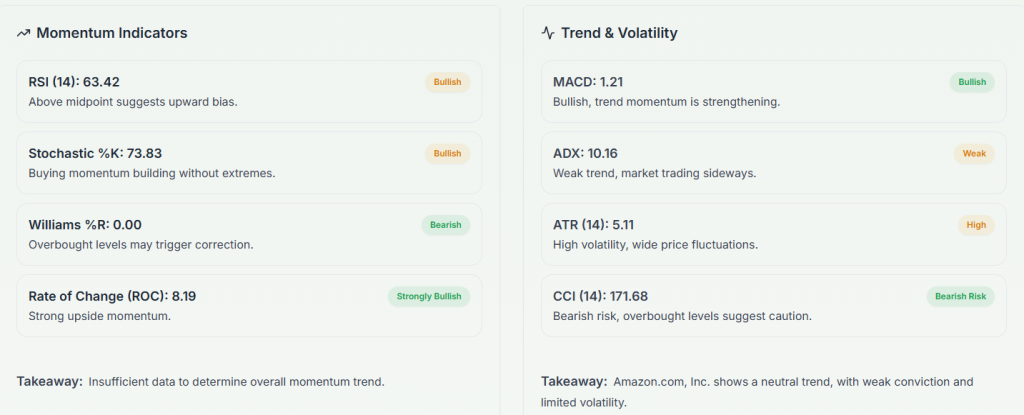
Forecast models for AMZN remain mixed:
- Short‑term pressure is expected due to heavy capex and margin concerns.
- Long‑term outlook still benefits from high AWS growth, expanding AI demand and cloud monetization opportunities.
Analysts outside Meyka also note that while the forward spending plan has spooked markets, Amazon’s 24% year‑over‑year AWS revenue growth signals continued enterprise cloud momentum.
Why are Amazon Shares Affecting Global Markets?
Amazon’s decisions matter far beyond Wall Street. The company is one of the largest contributors to many global equity benchmarks. When its stock plunges, investor risk appetite weakens broadly and tech‑heavy indices, including U.S. and European markets, also slide. On 6 February 2026, investor focus shifted sharply from just earnings to future investment strategy, especially massive AI‑related capex that could suppress free cash flow and profit margins in the near term.
Investor angst over heavy spending is not isolated to Amazon, rivals like Microsoft, Google and Meta have also disclosed higher AI budgets, adding to valuation concerns. This collective shift toward substantial long‑term tech investment has caused some traders to reduce exposure to growth stocks and rotate into defensive sectors like energy and financials.
Beyond equities, the risk‑off mood influenced commodities and crypto markets, with assets like Bitcoin and silver showing continued volatility amid flight‑to‑safety flows. This cross‑market impact shows how sentiment in one major stock can ripple across global asset classes when confidence is fragile.
Sector Winners & Losers: Market Breadth in Focus
While tech and data stocks are under pressure, not all sectors have fallen equally. Within the FTSE 100 on 6 February 2026, software and information services sectors were among the notable laggards. Companies like RELX and Sage Group saw share prices dip as investors reassessed valuations in light of broader AI spending fears.
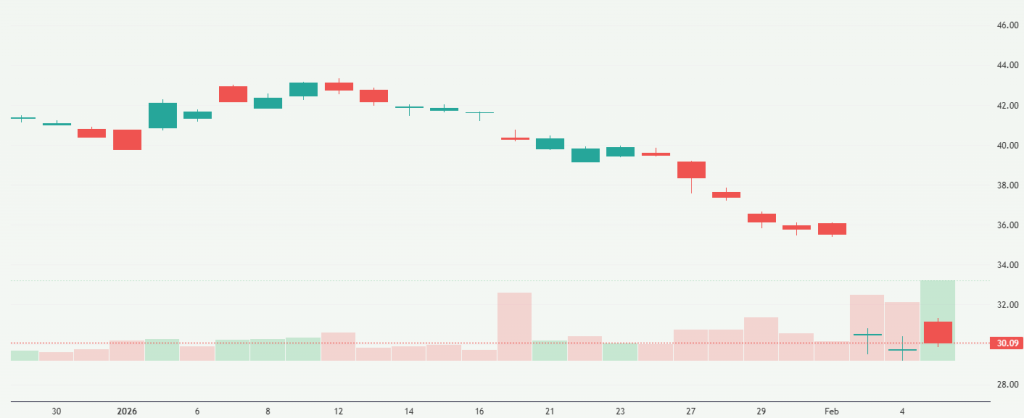
In contrast, more defensive or traditional sectors offered some stability. Financial stocks such as banks and insurers, as well as energy companies, have tended to limit wider index losses, absorbing some of the negative impact from tech weakness. Commodity‑related stocks have also drawn relative interest from value‑oriented investors.
Despite sector differences, the overall market breadth was negative, with more companies declining than advancing. This spread reflects a cautious sentiment among traders, who are balancing fears over high capex and slower profit growth against pockets of fundamental strength in select defensive names.
What Traders & Investors Are Watching Next?
Investors are closely watching several key events and data points that could influence markets in the near term. First, upcoming economic data releases, including UK inflation figures and debt auctions, may impact expectations for interest rate changes by the Bank of England and other central banks. These macro cues will help set risk sentiment.
Earnings updates from other large tech firms will also be crucial. If additional companies issue conservative guidance or signal heavy AI spending, the tech sell‑off could deepen. Conversely, stronger‑than‑expected results may boost confidence.
Finally, traders will monitor ratios and sentiment indicators like VIX volatility measures and capital flows between growth and value stocks. Some algorithmic and AI stock analysis tools are already signaling elevated volatility, which underscores the need for cautious position sizing and risk management as markets wrestle with competing narratives on growth versus profitability. This piece remains subject to evolving data and trading dynamics.
Conclusion
The FTSE 100 faces pressure from tech losses and Amazon’s AI spending plans. Investors are watching economic data, earnings, and market sentiment closely. Caution and smart risk management remain essential.
Disclaimer:
The content shared by Meyka AI PTY LTD is solely for research and informational purposes. Meyka is not a financial advisory service, and the information provided should not be considered investment or trading advice.
What brings you to Meyka?
Pick what interests you most and we will get you started.
I'm here to read news
Find more articles like this one
I'm here to research stocks
Ask our AI about any stock
I'm here to track my Portfolio
Get daily updates and alerts (coming March 2026)