Taiwan’s tech giant Foxconn says the ongoing Iran-related conflict has had only a limited impact on its global operations so far. The company, known as the world’s largest electronics manufacturer and a key supplier for Apple, continues to run production normally across Asia.
In early March 2026, Foxconn executives said the situation had not disrupted factories or shipments in a major way. Still, the company warned that a longer conflict could raise oil prices and shipping costs. Those factors could affect the global tech supply chain over time.
Advertisement
As geopolitical tensions grow, investors and industry analysts are closely watching how companies like Foxconn manage risk while keeping production steady.
Foxconn’s Official Response to the Iran Conflict
Limited Operational Impact So Far
Executives at Foxconn say the current Iran-related conflict has had only a limited effect on the company’s global operations. Speaking to reporters on March 6, 2026, Chairman Young Liu said production and logistics remain stable across the company’s major manufacturing hubs.
Foxconn operates large factories in:
- China
- India
- Vietnam
- Southeast Asia
These sites handle the assembly of smartphones, servers, and other electronics. The company continues to ship products to major technology clients without significant disruption.
Foxconn is also a key manufacturing partner for Apple and produces AI servers used by Nvidia. This makes the supply chain stability important for the entire technology industry.
Executives expect 2026 to remain a strong year for the company due to rising demand for AI infrastructure and consumer electronics.
Could the Conflict Affect Foxconn Later?
Although the current impact is small, Foxconn leadership warned that a longer conflict could create economic pressure.
Young Liu said that everyone will feel the impact if the conflict continues, especially through higher prices for oil and raw materials. Higher costs could affect industries worldwide, including electronics manufacturing.
Key risks include:
- Rising energy prices
- Higher transportation costs
- Supply chain delays
- Increased insurance costs for shipping
For now, Foxconn says it has not seen any direct disruptions to production or shipping routes.
Why the Iran Conflict Could Affect Global Supply Chains?
Could shipping routes be disrupted?
Yes. Global logistics networks rely heavily on stable routes through the Middle East. One of the most important routes is the Strait of Hormuz, which carries about one-fifth of the world’s oil shipments. If tensions escalate, shipping companies may reroute vessels or slow deliveries. This could impact global manufacturing supply chains.
Electronics manufacturers depend on:
- Semiconductor shipments
- lithium batteries
- precision components
- rare-earth materials
Even small delays can disrupt production schedules. Global markets have already shown concern as geopolitical tensions rise across the region.
How do air cargo disruptions affect tech companies?
High-value electronics often move through air freight because of speed and security. During conflicts, airlines may suspend flights or avoid certain airspaces. Recent disruptions in Middle Eastern airspace have already affected several international routes.
For technology companies, air cargo disruptions can cause:
- delays in smartphone deliveries
- slower movement of chip components
- higher shipping costs
However, companies with diversified manufacturing networks often absorb these shocks more easily.
Why do logistics costs rise during geopolitical crises?
Conflict usually increases uncertainty across energy and transportation markets. This can lead to:
- Higher oil prices
- increased fuel costs for shipping
- rising freight rates
- Higher risk insurance for cargo
Economists warn that prolonged conflict in the Middle East could raise inflation and slow economic growth globally. For electronics manufacturers, this means higher operating costs and potentially higher product prices.
Foxconn’s Global Manufacturing Strategy Reduces Risk
How does Foxconn reduce geopolitical risk?
Foxconn has spent years building a diversified global manufacturing network. Instead of relying on a single country, the company produces electronics across several regions. Major production locations include:
- Mainland China
- India
- Vietnam
- Mexico
- Southeast Asia
This global footprint allows Foxconn to shift production when geopolitical risks appear. For example, the company has expanded iPhone assembly in India as part of supply chain diversification.
Why diversification matters for electronics manufacturing?
The technology industry learned hard lessons from earlier supply chain shocks. Events that pushed companies to diversify include:
- U.S.-China trade tensions
- the COVID-19 pandemic
- semiconductor shortages
- geopolitical conflicts
Today, companies prefer multi-country manufacturing strategies. Foxconn’s global footprint allows it to maintain steady output even during regional disruptions. This approach helps protect production schedules for major clients like Apple and Nvidia.
AI Servers and Cloud Demand Continue to Drive Growth
Why is AI infrastructure boosting Foxconn’s revenue?
Artificial intelligence has become one of the fastest-growing segments in the technology industry. Foxconn is a major manufacturer of AI servers used by cloud providers and data-center operators. These systems power advanced AI tools and services used worldwide. Key drivers of demand include:
- generative AI models
- large cloud computing platforms
- enterprise AI adoption
- hyperscale data centers
Because of this demand, Foxconn has reported strong revenue growth. Executives expect AI-related hardware demand to remain strong through 2026.
What are Foxconn’s key business segments?
Foxconn operates across multiple technology sectors. Major revenue drivers include:
- Consumer electronics assembly
- AI and cloud servers
- Semiconductor components
- Data-center infrastructure
- Electric vehicle technologies
This diversified business model helps the company absorb risks from any single market segment.
Global Economic Risks if the Iran Conflict Escalates
Could oil prices affect technology manufacturing?
Yes. Energy prices play a major role in manufacturing costs. Electronics factories consume large amounts of electricity and rely on fuel for logistics. If oil prices rise significantly, companies may face:
- Higher manufacturing expenses
- increased shipping costs
- reduced profit margins
Even companies far from the conflict region could feel the financial impact.
How could global trade be affected?
A wider regional conflict could disrupt trade flows. Potential effects include:
- supply chain delays
- Higher freight insurance premiums
- slower cross-border logistics
- currency volatility
Global companies must constantly adjust to these risks. Technology firms are especially exposed because their supply chains involve dozens of countries.
What Investors and Tech Analysts are Watching?
Which indicators signal supply chain risk?
Investors tracking the tech sector are closely watching several indicators. These include:
- oil price volatility
- shipping traffic in key maritime routes
- semiconductor supply availability
- freight and insurance costs
Changes in these indicators often signal upcoming supply chain disruptions.
What does Meyka’s AI stock analysis suggest?
According to insights from the Meyka AI Stock Analysis Tool, companies with diversified manufacturing and strong exposure to AI infrastructure are positioned for long-term growth.
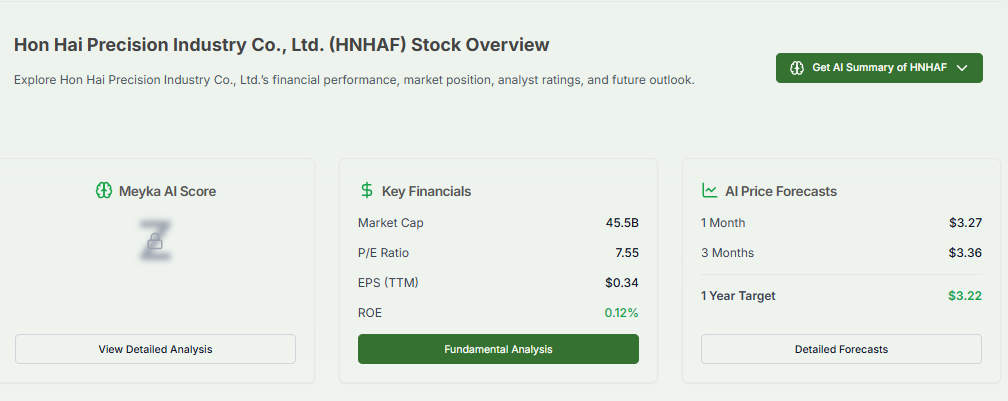
Foxconn stock snapshot
- Company: Hon Hai Precision Industry (Foxconn)
- Exchange: Taiwan Stock Exchange
- Ticker: HNHAF
Technical analysis summary
- Trend outlook: Neutral-to-bullish
- Key support zones: Long-term manufacturing demand and AI server growth
- Risk factors: geopolitical tensions, logistics costs, semiconductor cycles
Short forecast insight
Analysts expect Foxconn to benefit from continued demand for AI servers and cloud infrastructure hardware in 2026. Several market analysts also highlight that Foxconn’s diversified production network reduces the impact of regional disruptions.
Conclusion
Foxconn says the Iran conflict has not significantly disrupted its operations so far. The company’s global manufacturing network and strong demand for AI servers help maintain stability. However, prolonged geopolitical tensions could still raise energy costs and disrupt logistics. For the technology sector, the situation highlights how global supply chains remain sensitive to geopolitical shocks, even when companies appear resilient in the short term.
Advertisement
Frequently Asked Questions (FAQs)
As of March 2026, Foxconn says the Iran conflict has had a limited impact on its operations. Factories in China, India, and Vietnam continue normal production and shipments to global technology clients.
It could if tensions escalate. Analysts say higher oil prices, shipping risks, or airspace restrictions in the Middle East during 2026 may increase logistics costs for electronics manufacturers like Foxconn.
The global electronics industry could feel indirect effects. Rising energy prices and shipping delays linked to the conflict in 2026 may raise production costs and slow supply chains worldwide.
Disclaimer:
The content shared by Meyka AI PTY LTD is solely for research and informational purposes. Meyka is not a financial advisory service, and the information provided should not be considered investment or trading advice.
Advertisement
What brings you to Meyka?
Pick what interests you most and we will get you started.
I'm here to read news
Find more articles like this one
I'm here to research stocks
Ask Meyka Analyst about any stock
I'm here to track my Portfolio
Get daily updates and alerts (coming March 2026)