











Elon Musk Says SpaceX AI and Tesla Will Continue Ordering Nvidia Chips at Scale
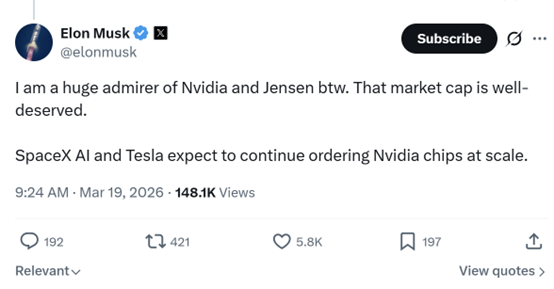
Elon Musk just confirmed a major tech move that matters to the entire AI industry. On March 18, 2026, Musk said his companies, SpaceX AI and Tesla, will keep ordering Nvidia AI chips in large volumes to power next‑gen systems. That’s a big deal in a world where high‑performance chips aren’t easy to get, and competition for them is fierce.
These chips help train massive AI models, support autonomous tech, and drive innovations in robotics and self‑driving cars. Even as Tesla builds its own custom silicon, Musk’s comment shows Nvidia’s hardware remains essential for his AI ambitions.
Why Musk’s Nvidia Commitment Still Matters?
On March 18, 2026, Elon Musk made it clear that SpaceX AI and Tesla will continue ordering Nvidia chips at a large scale. This news shows that both companies still rely on Nvidia’s high‑performance hardware to support their AI and autonomous computing needs.
NVIDIA is one of the most important providers of AI GPUs in the world. In 2025, Nvidia’s AI revenue and infrastructure partnerships helped the company project massive growth in AI chip demand through 2027, with global AI chip revenue expected to surpass $1 trillion.
Musk’s statement highlights the strength of the Tesla‑Nvidia relationship and points to a practical approach: while Tesla develops its own AI silicon like the AI5 chip, it still needs Nvidia chips now and for the near future.
How Nvidia GPUs Power Musk’s AI Ecosystem?
How are Nvidia Chips Used by Tesla and SpaceX?
NVIDIA’s GPUs play a key role in training and running large AI models. Tesla uses these chips for its autonomous driving systems and robotics programs. SpaceX, now owning xAI through a 2026 acquisition, deploys Nvidia hardware for large‑scale AI compute clusters designed to train advanced models and support space‑related AI ambitions.
Some key uses include:
- High‑performance model training – Nvidia GPUs are often deployed in data centers for deep learning workloads.
- Autonomous systems – Electric vehicles and robotics rely on GPU‑accelerated AI.
- AI research clusters – Recent reports suggest Musk’s xAI has installed hundreds of thousands of Nvidia GPUs.
This ongoing deployment shows why Musk’s companies still order large volumes of Nvidia chips even as they explore internal alternatives.
Tesla’s Own AI Chip Journey
What Is the Tesla AI5 Chip?
Tesla is developing its fifth‑generation AI chip (AI5) to power future autonomous systems such as self‑driving software and Optimus robots. Initial production of AI5 and small deployments may start in 2026, but full‑scale volume is expected closer to 2027. This timeline comes from multiple reports on production expectations and industry chatter.
The AI5 chip is intended to reduce reliance on external suppliers and give Tesla more control over performance and costs. Musk has said that if Tesla’s own hardware can outperform Nvidia, the company will shift more compute to its own silicon.
Why Tesla Still Orders Nvidia Chips?
Even as Tesla builds its own chips, Nvidia hardware remains essential for:
- Training large neural networks now, when Tesla’s in‑house solutions are not yet at scale.
- Supporting mixed hardware clusters where Tesla uses Nvidia GPUs alongside its own chips.
In short, Tesla’s AI5 strategy is long‑term, and Nvidia chips fill the immediate gap.
Market Reaction and Strategic Implications
How are Investors Responding?
Musk’s announcement has influenced market sentiment. Tesla’s continued reliance on Nvidia chips shows investors that AI compute needs remain a priority. Markets often look to Nvidia’s roadmap as a gauge of future AI growth, given its dominant role in the sector.
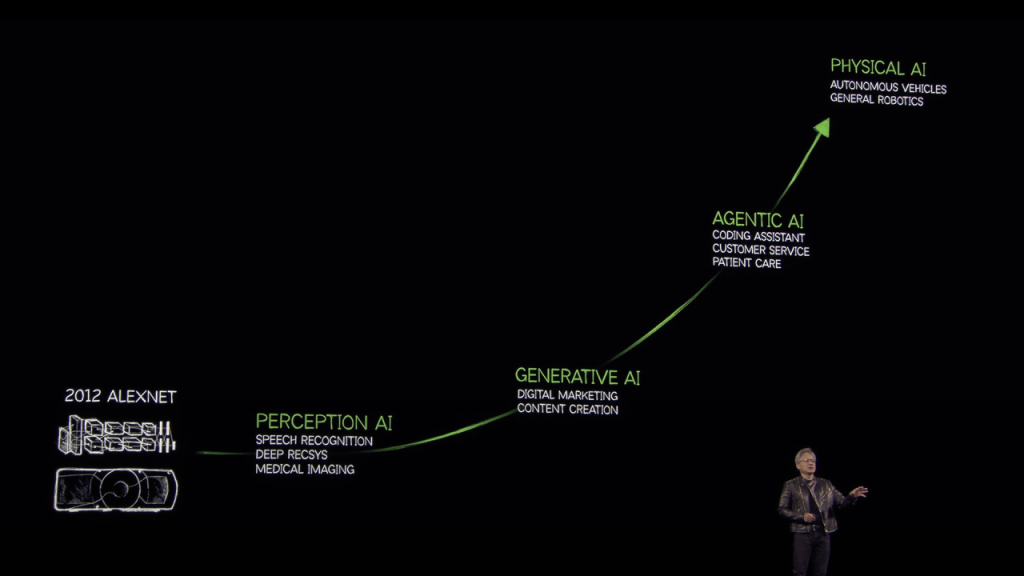
Broad industry analysis shows Nvidia expanding into AI inference and new architectures that aim to maintain its lead through 2027, as seen with its recent roadmap expansion into inference‑focused systems.
What Does This Mean for Competition?
NVIDIA’s strength has drawn both praise and concern. Analysts have noted that Nvidia’s advanced GPU platforms and software ecosystem make it difficult for rivals to gain ground quickly. This dominance means companies like Tesla may need external hardware until their own solutions mature.
Moreover, Nvidia’s ongoing innovations, both in training and inference, suggest its products will be central to AI compute for years.
Future Outlook: AI Chips and Musk’s Vision
Will Demand for Nvidia Chips Continue?
Yes. NVIDIA’s own forecasts and external market analysis show continued growth in AI chip demand through 2027 and beyond. This demand rise comes from increasing needs in AI model training, robotics, autonomous systems, and cloud computing services.
As Tesla and SpaceX build AI ecosystems that span vehicles, robots, and space computing, GPUs will remain a core part of that infrastructure. Even as Tesla’s AI5 and future AI6 chips begin production, Nvidia chips will likely be part of mixed hardware stacks for the foreseeable future.
Final Words
Elon Musk’s announcement that SpaceX AI and Tesla will keep ordering Nvidia chips at scale shows that Nvidia remains central to AI advancement. This choice reflects the reality of AI compute needs today and balances long‑term chip innovation with short‑term performance requirements.
Frequently Asked Questions (FAQs)
Elon Musk confirmed on March 18, 2026, that Tesla and SpaceX will keep ordering Nvidia chips to meet AI needs.
Tesla is building its AI5 chips, but Nvidia GPUs are still needed today for training and running large AI models.
NVIDIA GPUs support Tesla self-driving and SpaceX AI projects by running large models, robotics tasks, and high-speed data computations.
Disclaimer:
The content shared by Meyka AI PTY LTD is solely for research and informational purposes. Meyka is not a financial advisory service, and the information provided should not be considered investment or trading advice.
What brings you to Meyka?
Pick what interests you most and we will get you started.
I'm here to read news
Find more articles like this one
I'm here to research stocks
Ask our AI about any stock
I'm here to track my Portfolio
Get daily updates and alerts (coming March 2026)