











In 2025, manufacturers are under pressure to cut costs, reduce defects, and speed up production. The global injection molding market is expected to cross $450 billion by 2033, driven by demand in electric vehicles, healthcare, and electronics. Yet, many factories still rely on manual settings and trial-and-error methods. This is where Design of Experiments (DOE) and Artificial Intelligence (AI) are changing the game.
Instead of guessing, engineers now use data to predict results before production begins. AI models can detect defects early and optimize settings in real time. Together, DOE and AI are turning injection molding into a smarter, faster, and more reliable process, reshaping how modern manufacturing works.
Why Traditional Injection Molding Methods are Failing?
What are the limits of manual parameter adjustment?
Traditional injection molding depends heavily on operator experience. Engineers adjust parameters like temperature, pressure, and cooling time based on past trials. This method is slow and often inaccurate.
Small changes in one variable can affect multiple outcomes. For example, a slight increase in temperature may reduce viscosity but increase the risk of flash defects. These complex interactions make manual tuning unreliable.
According to industry reports from 2024, defect rates in traditional setups can reach 8–12% in high-precision manufacturing environments. This creates inconsistency and quality issues, especially in sectors like medical devices and automotive parts.
Why do traditional methods increase costs and delays?
Trial-and-error testing leads to wasted raw materials and machine downtime. Each failed cycle adds cost.
- Multiple test runs increase energy consumption
- Production delays impact delivery timelines
- Rework and scrap rates reduce profitability
A 2025 manufacturing study found that companies using manual optimization spend up to 25% more on operational costs compared to data-driven systems. This inefficiency is pushing industries toward smarter solutions.
About DOE in Injection Molding Optimization
What is Design of Experiments (DOE)?
DOE is a statistical method used to test multiple variables at once. Instead of changing one factor at a time, it studies how variables interact with each other. This approach helps engineers find the best combination of settings quickly. It reduces the number of experiments needed while improving accuracy.
How does the Taguchi method improve efficiency?
The Taguchi method uses structured experiment designs called orthogonal arrays. These allow engineers to test many variables with fewer runs. For example, instead of running 81 experiments, DOE may reduce it to just 9 or 16 tests. This saves time and cost while maintaining reliable results.
Industries widely adopted Taguchi methods by 2023 due to their effectiveness in reducing variability and improving product quality.
What are the key benefits of DOE in manufacturing?
DOE offers clear advantages in modern injection molding:
- Faster identification of optimal process parameters
- Reduced variation in product quality
- Lower material waste and energy usage
- Improved repeatability across production batches
Many manufacturers reported up to 30% improvement in process efficiency after implementing DOE-based optimization strategies.
How AI Enhances DOE in Injection Molding?
How do AI-powered simulations improve outcomes?
AI-driven simulations create digital models of the injection molding process. These models replicate real-world conditions before production begins. Known as digital twins, these systems allow engineers to test scenarios virtually. This reduces physical trials and speeds up decision-making.
By 2025, leading manufacturers reported a 50-70% reduction in product development cycles using AI simulations.
Can machine learning predict defects in advance?
Yes. Machine learning models analyze historical and real-time data. They identify patterns linked to defects such as warpage, sink marks, or short shots. These models continuously learn and improve over time. They help manufacturers detect issues early and prevent costly errors.
Some AI systems now achieve over 90% accuracy in defect prediction, according to recent industrial AI studies.
What is real-time adaptive control in molding?
AI systems use sensors to monitor live production data. These include temperature, pressure, and material flow. The system adjusts parameters automatically during the molding cycle. This reduces human intervention and ensures consistent quality.
Real-time control systems became more common after 2024 as part of Industry 4.0 adoption across manufacturing sectors.
Key Technologies Driving the DOE + AI Revolution
How are IoT-enabled machines transforming production?
Modern injection molding machines use IoT sensors to collect data continuously. This data helps monitor machine performance and detect issues early.
- Real-time tracking of cavity pressure and temperature
- Predictive maintenance to avoid breakdowns
- Improved process transparency
By 2025, over 60% of advanced manufacturing plants will have adopted IoT-enabled systems.
What role does advanced simulation software play?
CAE (Computer-Aided Engineering) tools now integrate AI algorithms. These tools simulate mold flow, cooling, and part deformation. Engineers can test designs before production. This reduces errors and speeds up product launches.
Simulation software usage increased significantly between 2023 and 2025 due to rising demand for precision manufacturing.
How do reinforcement learning algorithms optimize processes?
Reinforcement learning allows AI systems to learn through trial and error. The system tests different parameter settings and selects the best outcomes.
Recent research shows these algorithms can make decisions up to 100x faster than traditional optimization methods. This improves both speed and quality in production.
Industry Data, Market Trends & Growth Insights
What is the current market size and future outlook?
The global injection molding market is growing steadily.
- Market value projected to reach $459.53 billion by 2033
- Expected CAGR around 4.8% (2024-2033)
This growth is driven by demand from the automotive, packaging, and electronics industries.
How fast is AI adoption in manufacturing?
AI adoption is accelerating rapidly.
- Automated injection molding market expected to reach $22 billion by 2026
- Over 70% of manufacturers are investing in smart factory technologies
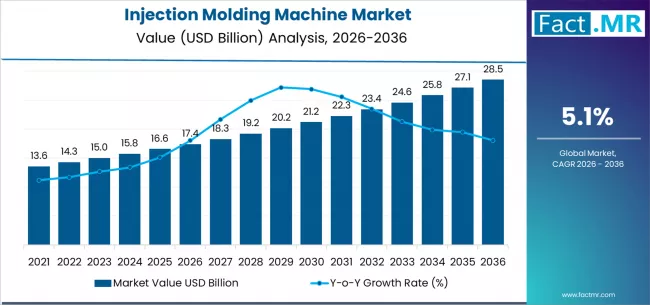
Industry 4.0 initiatives are pushing companies to adopt AI and data-driven systems.
Which regions are leading the growth?
Asia-Pacific dominates the market with over 45% share.
- Strong manufacturing base in China, India, and Southeast Asia
- Rising demand for EVs and consumer electronics
North America and Europe are also investing heavily in AI-driven manufacturing solutions.
Real-World Applications Across Industries
How is the automotive sector using DOE and AI?
Automotive companies use injection molding for lightweight components. This improves fuel efficiency and reduces emissions. DOE and AI ensure precision in complex parts like dashboards and battery housings for EVs.
Why is AI critical in healthcare manufacturing?
Medical devices require high accuracy and zero defects. AI helps maintain strict quality standards. Applications include:
- Syringes and surgical tools
- Diagnostic equipment components
- Implantable devices
AI-driven systems ensure compliance with global healthcare regulations.
What role does it play in electronics and packaging?
Consumer electronics demand compact and precise components. AI helps achieve high-quality finishes and faster production. Packaging industries also benefit from reduced material waste and improved design efficiency.
Sustainability and Future Innovations
How are eco-friendly materials shaping the industry?
Manufacturers are shifting toward recyclable and bio-based plastics. This reduces environmental impact. AI helps optimize material usage and minimize waste during production.
Can injection molding become more energy-efficient?
Yes. Smart machines use data to optimize energy consumption.
- Reduced cycle times
- Lower power usage
- Efficient cooling systems
DOE helps identify the most energy-efficient process settings.
What does the future of autonomous factories look like?
The future points toward fully automated production lines. AI systems will handle design, optimization, and quality control. Human involvement will focus more on supervision and strategy. Autonomous factories are expected to grow rapidly after 2026.
Challenges in Implementing DOE and AI
Is the initial investment too high?
Yes, the setup cost can be high. Companies need to invest in AI software, sensors, and training. However, long-term savings often justify the cost.
Why is data quality a major concern?
AI systems rely on accurate data. Poor data leads to incorrect predictions and poor outcomes. Companies must ensure proper data collection and management systems.
Is there a skills gap in the workforce?
Yes. Many workers lack expertise in AI and data analytics. Businesses need to invest in training and upskilling programs to fully benefit from these technologies.
Conclusion
DOE and AI are transforming injection molding into a precise and intelligent process. They reduce costs, improve quality, and speed up production. As adoption grows after 2025, manufacturers are moving toward automated and data-driven systems. Companies that invest early will gain a strong advantage in efficiency, innovation, and long-term competitiveness in the global manufacturing landscape.
Frequently Asked Questions (FAQs)
AI analyzes real-time data to detect defects early. In 2025, it adjusts process settings instantly, improving quality and reducing production errors.
DOE is a testing method that studies multiple variables together. In 2025, it will help manufacturers optimize processes faster and reduce material waste.
Yes, AI and DOE optimize machine settings and reduce trials. In 2025, they will lower costs, shorten cycle times, and improve overall efficiency.
Disclaimer:
The content shared by Meyka AI PTY LTD is solely for research and informational purposes. Meyka is not a financial advisory service, and the information provided should not be considered investment or trading advice.
What brings you to Meyka?
Pick what interests you most and we will get you started.
I'm here to read news
Find more articles like this one
I'm here to research stocks
Ask our AI about any stock
I'm here to track my Portfolio
Get daily updates and alerts (coming March 2026)