In early April 2026, global markets saw a sharp shock in energy and metals prices after President Donald Trump announced a two‑week ceasefire with Iran that could open the crucial Strait of Hormuz to oil shipping. On April 8, 2026, Brent and WTI crude oil plunged sharply, with prices dipping below $95 per barrel in a dramatic reversal from recent highs.
At the same time, gold hit a three‑week peak, rallying more than 3% as investors sought safe havens amid lingering uncertainty. This sudden shift shows how swiftly geopolitics can sway commodities. Traders and everyday consumers alike are asking: what really drove oil down and lifted gold up, and what might happen next?
Advertisement
Oil Market Reaction: Prices Collapse After Trump‑Iran Ceasefire
Overview of Ceasefire Announcement
Major global oil benchmarks plunged sharply on April 7-8, 2026, after U.S. President Donald Trump announced a two‑week ceasefire agreement with Iran, tied to the conditional reopening of the Strait of Hormuz.
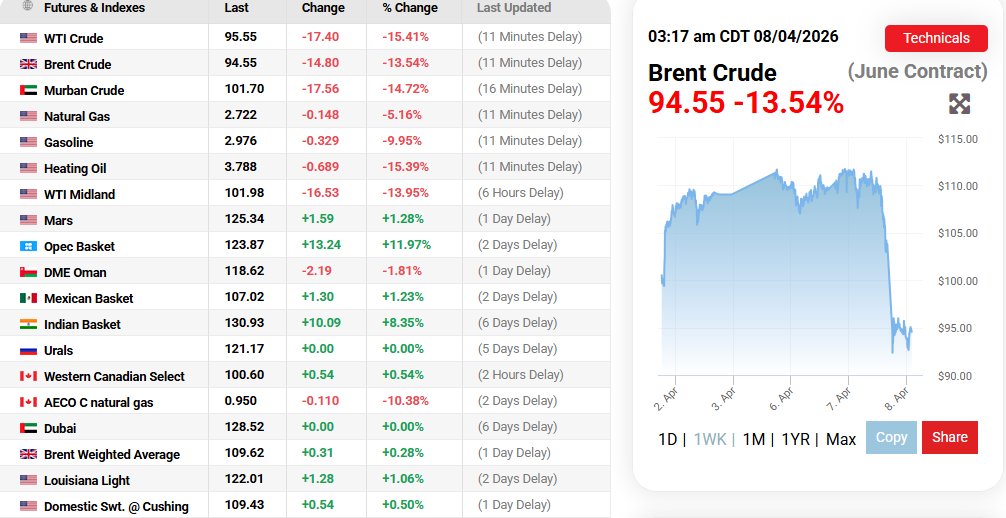
Brent crude futures slid approximately 13-15%, falling to about $94.4 per barrel, while U.S. West Texas Intermediate (WTI) crude dropped roughly 14-15% to around $96.8 per barrel in early Asian trading. These moves marked the steepest single‑day decline in crude prices in years, largely driven by relief in market sentiment once the risk of immediate supply disruption eased.
Geopolitical Backdrop
Traders had been pricing in severe supply fears due to intensified conflict and the near‑closure of the Strait of Hormuz, through which nearly 20% of the world’s oil trade transits, before the ceasefire was announced. The sudden drop reflects a significant unwinding of risk premiums as markets responded to the possibility that energy shipments could resume.
However, energy analysts warn that the sharp move may be more relief-driven than structural, with physical markets remaining stressed and the actual reopening of the strait still uncertain. This suggests prices could remain volatile in the coming weeks as traders reassess whether the ceasefire can translate into sustained improvements in supply flows.
Why Did Oil Fall So Hard?
What Was the Main Trigger?
At its core, the drop in oil prices happened because traders suddenly believed the short‑term threat to oil supply had eased. The ceasefire announcement made it seem less likely that Iran would block tanker traffic through the Strait of Hormuz, a key shipping lane. When markets expect fewer supply disruptions, prices tend to fall quickly.
Was It Just a “Relief Rally”?
Yes and no. The sharp fall was driven mainly by sentiment and positioning: traders who had bet on higher oil due to conflict rushed to close positions once the ceasefire was announced. But the underlying physical supply constraints, including damaged infrastructure and limited active shipping capacity, remain a concern. This means the slump may not reflect a long‑term change in fundamentals.
How Gold and Other Commodities Reacted?
Did Gold Prices Rise Too?
Yes. On the same trading session that oil fell sharply, gold prices climbed to a three‑week high. Spot gold reached about $4,821 per ounce, while U.S. Gold Futures also advanced. Silver and platinum also gained ground. This move was driven by a weaker U.S. dollar and renewed safe‑haven demand.
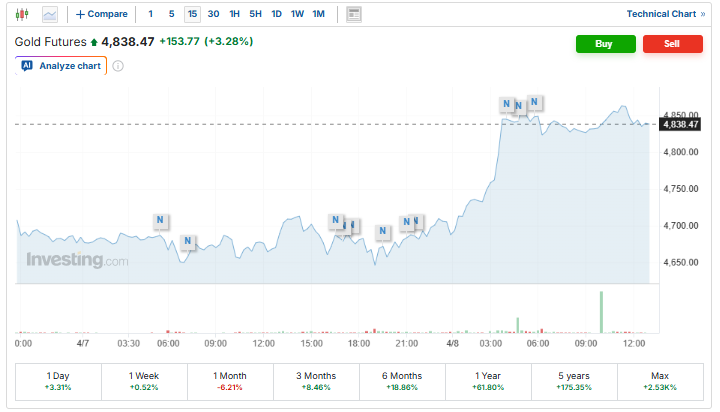
Gold often rises when investors seek stability amid uncertainty, even if one crisis appears to ease temporarily, because geopolitical risk and inflation fears remain. This pattern aligns with the historical behavior of precious metals during global shocks.
US-Iran Ceasefire: What the Market Is Watching Next?
Is the Strait of Hormuz Fully Open?
Not yet. The ceasefire hinges on the safe reopening of the Strait of Hormuz, but there’s no guarantee that shipping companies will resume normal operations immediately. Physical logistics, insurance costs, and tanker routings still reflect caution. Traders will watch actual tanker traffic data and shipping insurance rates for real signs of normalization.
Could Oil Go Back Up?
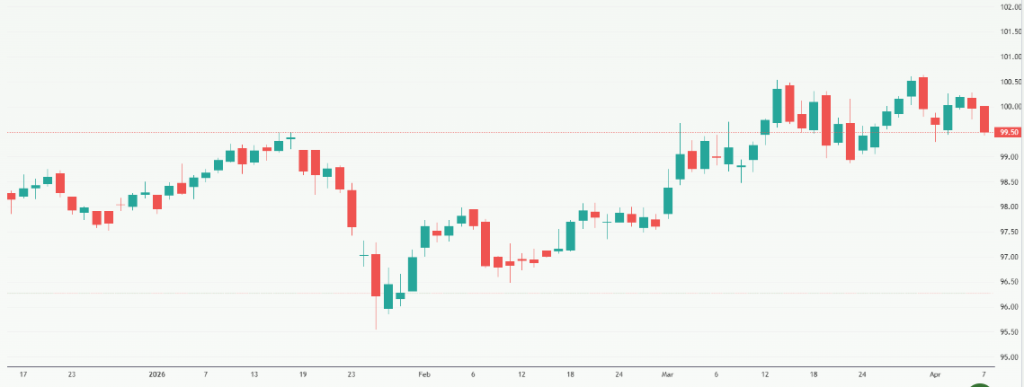
Yes. Many analysts say that this fall does not mean a long‑term trend reversal. If hostilities resume, or if Iran and the U.S. fail to extend the ceasefire or reach lasting terms, oil prices could rebound. Technical patterns and sentiment models from AI stock analysis tools and commodities forecasting platforms suggest continued volatility rather than a clear directional breakout.
Broader Market and Economic Impact
Stock Markets and Risk Assets
Global equities responded positively to the news. Major indices rallied in Asia, and U.S. futures posted strong gains. In India, benchmarks such as the Sensex jumped sharply as investors cheered easing geopolitical risk.
Currency and Inflation Signals
The U.S. dollar weakened as the ceasefire news reduced immediate risk aversion. This boosted commodity prices like gold but also complicates inflation expectations, as energy costs remain unstable.
What Analysts are Saying on Ceasefire?
Market strategists emphasize caution:
- Some see the price drop as a short‑term reaction rather than a structural trend change.
- Others point out that oil is still trading well above pre‑conflict levels, indicating ongoing supply stress.
- Futures traders note that temporary peace deals can cause rapid repricing, but the market may revisit previous risk premiums if conflict resumes.
In sum, while the ceasefire has prompted dramatic moves in commodities and markets, the real test will be whether diplomatic progress can extend beyond a short pause and address underlying supply challenges.
Bottom Line
The Trump‑Iran ceasefire triggered a sharp drop in oil below $95 and a gold rally of over 3%, showing how quickly geopolitics affects markets. While relief drove prices, underlying supply risks remain. Traders and investors now watch closely whether the temporary peace can stabilize energy flows and sustain market confidence in the weeks ahead.
Disclaimer:
The content shared by Meyka AI PTY LTD is solely for research and informational purposes. Meyka is not a financial advisory service, and the information provided should not be considered investment or trading advice.
Advertisement
What brings you to Meyka?
Pick what interests you most and we will get you started.
I'm here to read news
Find more articles like this one
I'm here to research stocks
Ask Meyka Analyst about any stock
I'm here to track my Portfolio
Get daily updates and alerts (coming March 2026)