











Crude oil Prices Near $100/Bbl as Trump Pauses Energy Strikes for 10 Days; COMEX Gold Up 1%, US Stocks Close Lower
Crude oil prices are back in the spotlight this week as global markets shake off volatility and edge toward the $100‑per‑barrel threshold again. On March 27, 2026, Brent crude was trading right around this key level after U.S. President Donald Trump announced a 10‑day pause on energy strikes linked to the ongoing Iran conflict. Traders are watching closely as this fragile truce adds fresh uncertainty to supply expectations.
At the same time, investors are balancing rising oil costs with movements in other markets, including gold and stocks, creating a tense but dynamic backdrop. This blend of geopolitical risk and commodity market action is pulling in attention from traders, analysts, and everyday consumers alike.
Current Oil Price Dynamics
Latest Crude Oil Benchmarks and Market Movements
Global crude oil prices remain highly volatile as markets weigh geopolitical risk with renewed diplomatic signals. On March 27, 2026, Brent crude was trading elevated, often above $105-$110 per barrel at points, even as prices eased from recent peaks.
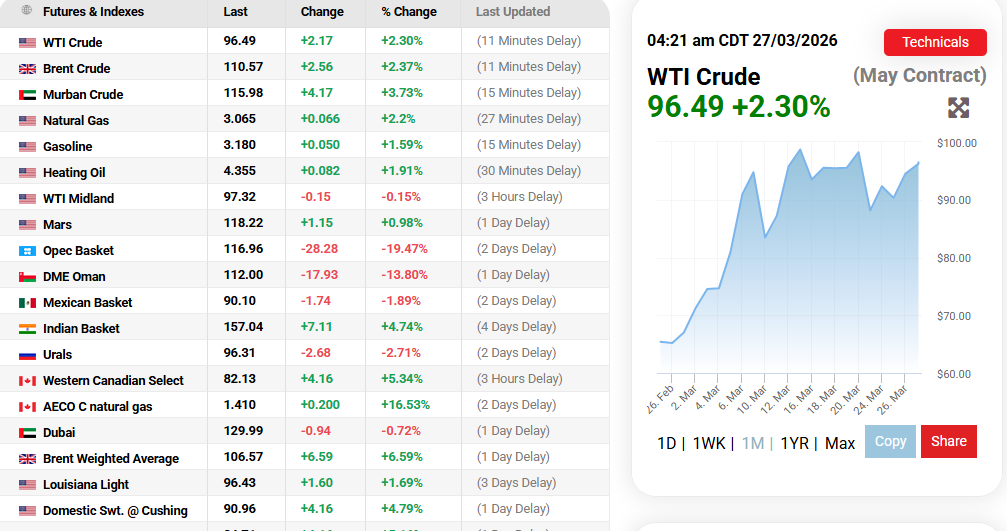
Meanwhile, U.S. West Texas Intermediate (WTI) hovered below Brent, around the low $90s. Reuters reported that both benchmarks climbed sharply earlier in the month due to Middle East tensions, though they eased slightly following the recent pause in strikes.
This volatility reflects ongoing risk premiums in energy markets. Conflict‑related disruptions, particularly around the Strait of Hormuz, a chokepoint for roughly 20% of global oil shipments, have kept crude prices elevated. Even when diplomatic signals suggest de‑escalation, traders remain cautious because physical supply risks persist.
What Is Driving Price Fluctuations Right Now?
Several factors are currently driving oil price swings:
- Geopolitical Risk Premium: The Iran‑related conflict and threats to energy infrastructure have pushed benchmarks higher than typical supply‑demand fundamentals alone would justify.
- Supply Uncertainty: Disruptions due to attacks on Iranian and regional energy facilities have trimmed global supply and forced markets to price in potential shortages.
- Diplomatic Signals: Recent U.S. decisions to pause strikes on Iranian energy sites temporarily eased conflict fears, leading to price pulls back amid market optimism. However, skepticism remains strong.
Brent’s price strength reflects both real supply concerns and headline‑driven trading, while WTI’s relative discount signals weaker direct exposure to Middle East risk compared with global benchmarks.
How are Geopolitics and the Iran Conflict Affecting Oil Markets?
Why Does the Iran-Hormuz Situation Matter for Oil Prices?
The 2026 Strait of Hormuz crisis has had a major impact on global crude markets. This narrow waterway channels nearly one‑fifth of all seaborne oil before the conflict began. When tensions escalated in early March, prices shot above $100 per barrel for the first time in years, even hitting record levels in some benchmarks like Dubai crude.
Physical disruptions, not just fear‑driven spikes, have driven markets higher. Attacks on key facilities such as the South Pars gas field and regional infrastructure have cut production and heightened fears of long‑lasting supply constraints.
What Does the Recent Pause in Strikes Mean for Prices?
In late March, U.S. leadership announced a 10‑day pause on planned strikes against Iranian energy facilities. This move has given traders a window of cautious optimism and led to price pullbacks on some sessions.
However, markets stayed elevated overall because investors view the pause as tactical rather than a durable peace. Conflict remains in its fourth week, and major supply risks, such as the closure of shipping routes or future attacks, have not been resolved. The net effect has been greater price swings rather than sustained declines.
Commodities Reaction: Gold and Safe‑Haven Flows
Is Gold Rising Because of Oil and Geopolitical Risk?
Commodity markets often move together when uncertainty rises. In the current environment, gold prices have strengthened at times as traders seek safe assets. Reports show gold gaining ground during sessions with rising geopolitical risk and “safe‑haven” flows.
The logic is simple: when oil moves sharply due to conflict fears, investors fear broader inflation and economic disruption. This fear drives demand for hard assets like gold. These patterns appear across data, even if daily movements sometimes diverge due to specific news, such as individual economic reports or trader repositioning.
An AI stock analysis tool at times flags correlations between commodities and equities in such environments, highlighting typical risk‑off behavior.
US Stock Markets and Macro Impact
How are Equity Markets Reacting to Oil Price Moves?
Stock markets are reacting to the crude volatility and risk sentiment tied to the Iran conflict. Some major U.S. indices saw sharp swings tied to oil price news:
- Dow Jones and broader equities rallied sharply after initial pause announcements, reflecting relief that markets may face less immediate supply shock.
- Other sessions saw stocks fall, especially when crude rallied or when diplomatic signals were mixed.
This mixed performance shows how equities are pricing both relief and risk in parallel, with traders balancing higher energy costs against lower conflict escalation risk.
What are the Broader Economic Impacts of Oil Prices?
Higher oil prices tend to feed into inflation. Costs for transport fuel, manufacturing inputs, and broader energy needs rise when crude trades at elevated levels. Economies dependent on energy imports, especially in Asia and Europe, face increased inflation pressures.
This can push consumers to spend more on essentials and less on discretionary goods, tightening macroeconomic conditions even without direct conflict spillovers.
What Traders and Investors are Watching Now?
What are Key Near‑Term Drivers?
Investors are focused on several key indicators:
- Diplomatic developments with Iran, including negotiation progress and any change in military engagement.
- Data on shipping through the Strait of Hormuz; restored flows can reduce the risk premium.
- Inventory and production numbers from major exporters like OPEC and the U.S. Energy Information Administration (EIA).
- Economic signals that may shift inflation and rate expectations.
Short‑term price ranges may remain wide as news flow dictates price moves, but fundamental supply risks keep benchmarks anchored above pre‑conflict norms.
Final Words
Oil markets remain on edge as geopolitical uncertainty, especially around Iran’s conflict and global supply routes, continues to drive prices above historical norms. Traders must balance news‑driven sentiment with real supply disruptions, while equities and commodities prices adjust to the risk environment. Close attention to diplomatic progress and key shipping data will shape energy market trends in the coming weeks.
Frequently Asked Questions (FAQs)
Crude oil prices reached near $100 per barrel on March 27, 2026, due to Middle East risks and supply concerns.
The 10-day pause on energy strikes by Trump on March 27, 2026, eased tensions, but prices remained high due to uncertainty.
Rising oil prices in March 2026 can increase fuel and transport costs, adding pressure to overall consumer prices worldwide.
Disclaimer:
The content shared by Meyka AI PTY LTD is solely for research and informational purposes. Meyka is not a financial advisory service, and the information provided should not be considered investment or trading advice.
What brings you to Meyka?
Pick what interests you most and we will get you started.
I'm here to read news
Find more articles like this one
I'm here to research stocks
Ask our AI about any stock
I'm here to track my Portfolio
Get daily updates and alerts (coming March 2026)