Crude oil Prices Holds Near $96/bbl on Israel-Lebanon Talks; COMEX Gold Slips 0.7%
Crude oil prices held firm near $96 per barrel in April 2026 as global markets reacted to shifting geopolitical signals in the Middle East. Investors closely watched ongoing Israel, Lebanon talks, which added uncertainty to energy supply routes and kept risk premiums elevated.
At the same time, COMEX gold slipped about 0.7%, showing weaker demand for safe-haven assets as fears of immediate escalation eased slightly. The mixed movement in oil and gold reflects changing investor sentiment across global commodities.
Advertisement
Traders are balancing hopes of diplomatic progress with concerns over regional stability and inflation pressures. As markets open this week, attention remains on whether peace negotiations will stabilize tensions or trigger fresh volatility in crude oil and precious metals.
Global Oil Market Overview: Why Crude Oil Is Holding Near $96 per Barrel
Crude oil prices remained strong around the $95-$97 per barrel range in April 2026. The market showed limited downside pressure despite global economic uncertainty. Brent crude stayed supported due to ongoing geopolitical risks and tight supply expectations. West Texas Intermediate also followed a similar pattern, trading near the upper mid-$90 range.
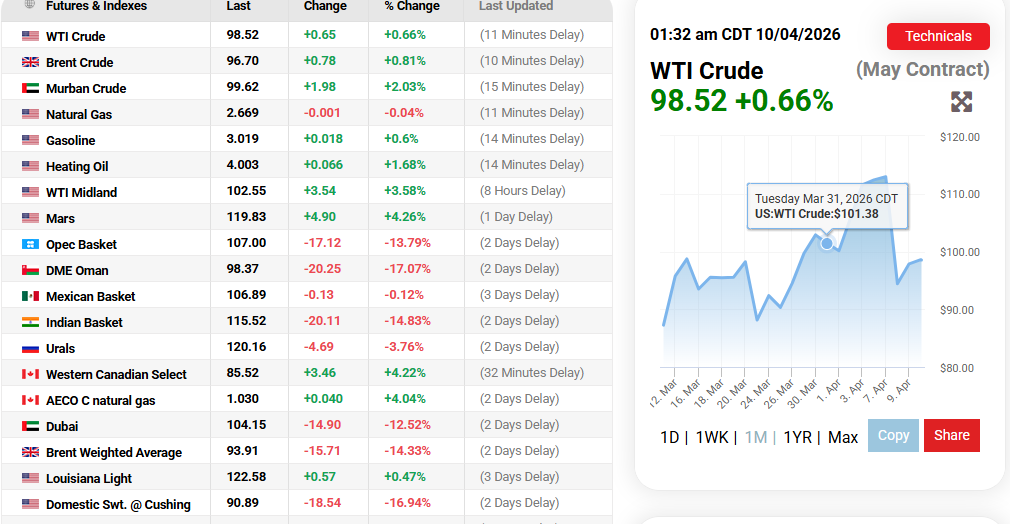
Trading activity remained volatile across sessions. Prices briefly tested the $99-$100 resistance zone before pulling back slightly. However, buyers continued to defend lower levels. The main reason is persistent risk premiums linked to Middle East tensions and supply chain concerns.
A key factor is reduced certainty in global shipping routes. Energy traders are closely watching disruptions in key transit chokepoints. This keeps crude oil elevated even when demand signals are mixed.
How are Israel-Lebanon talks impacting crude oil prices?
Israel-Lebanon discussions have become a major driver of oil market sentiment in April 2026. Even small geopolitical updates are triggering sharp intraday price movements.
Markets are pricing in two competing forces:
- Possibility of diplomatic easing
- Risk of renewed regional escalation
Recent developments include reports of indirect negotiations supported by international mediators. However, on-ground tensions remain active. This uncertainty is keeping a geopolitical risk premium in crude oil prices.
Oil traders are especially focused on:
- Security risks near the Eastern Mediterranean
- Potential spillover effects involving neighboring regions
- Shipping insurance cost increases
According to recent coverage from major financial outlets like Reuters and Bloomberg, energy markets typically react faster to escalation risks than to peace signals. This explains why crude oil remains elevated even when talks progress.
Strait of Hormuz and supply risk concerns
The Strait of Hormuz continues to be one of the most sensitive energy corridors in the world. Nearly one-fifth of global oil supply passes through this route.
Even minor disruptions can affect global pricing immediately. Key concerns include:
- Shipping delays due to security alerts
- Higher freight and insurance premiums
- Temporary rerouting of oil tankers
These risks are preventing a major correction in oil prices. Supply fears are acting as a strong floor for crude near the mid-$90 range.
COMEX Gold: Why is gold slipping 0.7%?
Gold prices on COMEX declined about 0.7% as safe-haven demand weakened. Investors reduced exposure after signs of easing geopolitical fear.
Gold is currently reacting to three main factors:
- Reduced immediate war-risk perception
- Profit booking after recent highs
- Shifts toward risk assets like equities
Spot gold remains elevated compared to historical averages, but short-term pressure is visible. Prices moved away from recent peaks as traders locked in gains.
Is gold losing its safe-haven appeal right now?
Gold is not losing its long-term appeal, but short-term demand has cooled. Markets are responding to:
- Temporary diplomatic optimism in the Middle East
- Stronger risk appetite in global equity markets
- Expectations of steady interest rates from the U.S. Federal Reserve
However, inflation concerns still support long-term gold strength. Higher energy prices usually support gold, but easing fear sentiment is currently stronger than inflation support.
Oil vs Gold: Why are both moving differently?
Oil and gold are showing diverging trends in April 2026.
- Oil remains supported by supply risk and geopolitical tension
- Gold is facing pressure from improving risk sentiment
This mismatch shows a shift in investor psychology. When markets fear war or supply shock, both assets usually rise together. But now, traders are selectively pricing risks. Energy risk is staying high, while safe-haven demand is slowly easing.
What does this mean for global commodity markets?
Commodity markets are currently in a sensitive phase. Small news events are causing large price swings. Key global drivers include:
- Middle East diplomatic updates
- U.S. inflation expectations
- Energy supply chain stability
- Dollar strength and interest rate outlook
An AI stock analysis tool used by institutional traders also highlights that commodities are entering a “high-volatility consolidation phase,” where sharp intraday movements dominate directionless trends.
Market sentiment outlook: What traders are watching next
Traders are now focused on whether geopolitical tensions will escalate again or move toward stabilization. Oil remains highly reactive to headlines, while gold is more sensitive to macroeconomic signals. Key triggers ahead:
- New updates from Israel–Lebanon negotiations
- U.S. economic data releases
- OPEC+ production stance
- Shipping security updates in the Middle East
Until clearer signals emerge, volatility is expected to remain high across both energy and precious metals.
Bottom Line
Crude oil holding near $96 reflects persistent geopolitical risk and supply concerns, while COMEX gold slipping shows easing safe-haven demand. Markets are balancing diplomacy hopes with real-world instability. This creates uneven price action across commodities. In the short term, traders should expect continued volatility driven by Middle East developments and global economic signals.
Disclaimer:
The content shared by Meyka AI PTY LTD is solely for research and informational purposes. Meyka is not a financial advisory service, and the information provided should not be considered investment or trading advice.
Advertisement
What brings you to Meyka?
Pick what interests you most and we will get you started.
I'm here to read news
Find more articles like this one
I'm here to research stocks
Ask Meyka Analyst about any stock
I'm here to track my Portfolio
Get daily updates and alerts (coming March 2026)