











In March 2026, global currency markets are shifting fast. The U.S. dollar has been strengthening against many world currencies. Recent reports show emerging market rates moving higher as demand for USD rises amid geopolitical tensions and oil price jumps. For example, the Egyptian pound fell past EGP 50 per dollar this week, and analysts point to broad dollar demand pressures from abroad and local banks lifting USD prices across the board. Central bank is reacting, some selling dollars to defend their currencies, others pausing interventions to avoid volatility.
These moves are shaping how exchange rates like USD/VND and USD/PKR behave today. If you’re tracking foreign exchange trends, this tightening landscape matters now more than ever.
A Global Snapshot: Exchange Rate Trends in Early 2026
Central bank exchange rates have shown notable movement as 2026 opened. According to the Federal Reserve’s H.10 FX data, the US dollar remained firm against several major currencies in the week ending March 2, 2026, with the Japanese yen trading above 156 per dollar and the Indian rupee above 91 per dollar. The broad U.S. dollar index stayed elevated, signaling continued demand for the greenback across global markets.
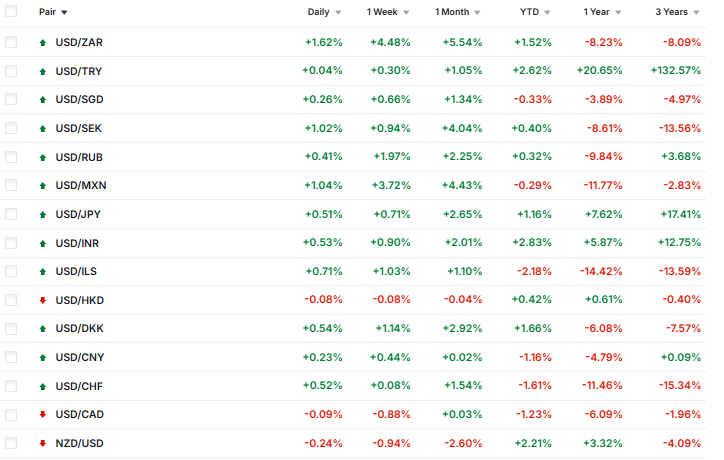
Emerging market central banks have also reported pressures on local currencies. For example, the State Bank of Vietnam noted that the USD/VND rate had trended up in early March due to rising geopolitical tensions and higher oil prices, which have put upward pressure on exchange rates.
In Pakistan, daily exchange rate listings from the National Bank of Pakistan show the USD trading near PKR 279.80 selling on March 9, 2026, reflecting local market conditions where banks have lifted dollar prices.
These patterns suggest that the U.S. dollar has firmed broadly against both developed and emerging market currencies in early 2026, driven by global risk sentiment and central bank actions.
Central Bank Policy Drivers: Why Exchange Rates are Moving?
How are Central Banks Responding to Market Pressures?
Central banks across the world are recalibrating their policy stances in response to inflation, geopolitical risk, and external pressures on exchange rates.
In many advanced economies, the global easing cycle has come to an end. A recent analysis shows that central banks are now more likely to maintain or raise policy rates rather than cut them, as inflation remains above targets in many regions. This has supported stronger currencies, especially the U.S. dollar, which benefits from higher real yields in the United States.
The People’s Bank of China (PBOC) has used guidance mechanisms to support the yuan. On March 5, 2026, China set a stronger daily midpoint rate against the dollar than expected, helping the yuan rebound from recent lows.
Other central banks, like the State Bank of Pakistan, are expected to hold rates steady, even amid rising global energy prices, to manage inflation and currency pressures. Recent forecasts show the bank’s policy rate at 10.5%, with inflation expected above its target band due to higher oil costs.
These policy stances affect exchange rates by changing expectations of future interest rate differentials. When a central bank signals tighter policy relative to others, its currency tends to strengthen. Conversely, accommodative plans can weaken a currency’s exchange rate.
FX Market Reactions: What the Data Says?
What Currencies are Moving Most?
Data from early March 2026 shows the U.S. dollar strengthening against several major currencies:
- USD/JPY remained high, reflecting the yen’s weakness amid broader risk aversion.
- USD/PKR rates in Pakistan’s market were around 279-280 on March 8, indicating persistent dollar demand.
- EUR/USD hovered around parity levels seen earlier in the year, with credit markets balanced between growth concerns and central bank policy guidance.
In emerging markets, central bank reports show upward trends in local currency exchange rates against the USD. The State Bank of Vietnam attributed these moves to external pressures, including elevated oil prices and geopolitical risk.
Financial markets reacted sharply to geopolitical tensions in March 2026. A surge in oil prices due to conflicts in the Middle East pushed the U.S. dollar up nearly 1% against major currencies and heightened safe‑haven demand in bonds, despite weak U.S. jobs data.
These moves underline how central bank policies, political risks, and commodity shocks can affect exchange rate dynamics in real time.
What Traders & Businesses Should Watch Next?
What Key Events Could Shift Exchange Rates?
Several upcoming central bank decisions and economic releases could further influence exchange rates in 2026:
- Federal Reserve meetings later in the year may adjust market expectations for interest rate changes. Traders should monitor official statements and macroeconomic data.
- European Central Bank policy announcements will affect the euro’s exchange rate versus the dollar.
- Emerging market monetary reviews, including those by the Reserve Bank of India and the State Bank of Pakistan, will be crucial for regional currency outlooks.
Inflation trajectories and geopolitical developments also remain important. Persistently high energy prices could force central banks to maintain tighter stances, reducing room for rate cuts and supporting stronger currencies like the USD.
For forex traders, using an AI stock and currency analysis tool can help contextualize economic data and central bank signals in real time, offering an edge in volatile markets.
Wrap Up
In early 2026, central banks are navigating a complex mix of inflation risk, geopolitical shocks, and currency pressures. These forces are pushing the U.S. dollar higher against many global currencies. As policy stances diverge and markets adjust, keeping a close eye on central bank announcements, exchange rate data, and macroeconomic trends will be key for traders, businesses, and policymakers alike.
Frequently Asked Questions (FAQs)
The US dollar is rising because many central banks are not cutting rates. High demand for safe money and strong US data have pushed the dollar up in early 2026.
Central bank decisions change interest rates and money supply. Higher rates often make a currency stronger. These moves can raise or lower exchange rates like USD/PKR in March 2026.
Yes. Central banks can sell foreign dollars to support their own currency. This can slow a fall, but results depend on market demand and global factors in 2026.
Disclaimer:
The content shared by Meyka AI PTY LTD is solely for research and informational purposes. Meyka is not a financial advisory service, and the information provided should not be considered investment or trading advice.
What brings you to Meyka?
Pick what interests you most and we will get you started.
I'm here to read news
Find more articles like this one
I'm here to research stocks
Ask our AI about any stock
I'm here to track my Portfolio
Get daily updates and alerts (coming March 2026)