Bitcoin has been trading near the $68,000 level in early March 2026 even as markets digest fresh shocks from the U.S.-Israel offensive on Iran and President Trump’s public signals about prolonged conflict. After a violent sell‑off pushed BTC briefly below $63,000 over the March 1 weekend, the world’s largest cryptocurrency rallied back toward ~$68K within 24 hours.
Traders are now watching price action closely as geopolitical tensions keep risk appetite fragile while political commentary fuels mixed sentiment. In this volatile environment, Bitcoin’s resilience and short‑term strength are putting a spotlight on its evolving role in global markets, not just as an investment, but as a barometer of risk on/off sentiment.
Advertisement
Bitcoin Price Action, Current State and Key Levels
Bitcoin has been trading near $68,000 in early March 2026, showing relative resilience despite sharp geopolitical shocks. As of March 4, 2026, BTC was steady around $68,147, after briefly touching highs near $69,000 earlier in the week. This came as markets reacted to continued conflict in the Middle East and supportive commentary from U.S. leadership.
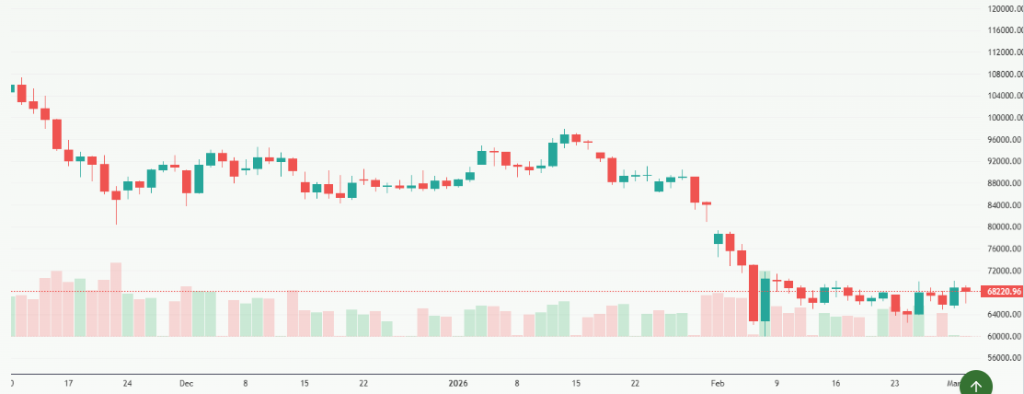
Over the past few days, Bitcoin has moved within a broad range between roughly $66,000 and $69,000, struggling to sustain a breakout above the psychologically important $70K level. The broader crypto market has shown high volatility, with altcoins such as Ethereum also fluctuating significantly on risk sentiment.
Key price points traders are watching include:
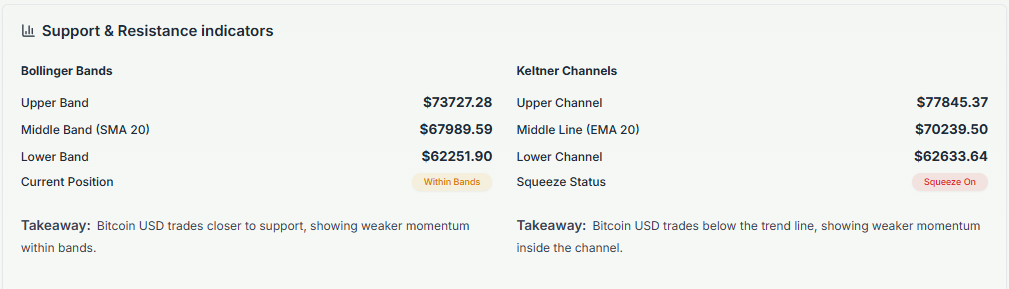
- Support near $66,000-$67,000.
- Resistance around $69,000-$70,000.
- Lower pivot zones down near $63,000 in more bearish scenarios.
Year‑to‑date, Bitcoin has been under pressure, trading roughly 20-25% below recent highs as risk‑off behavior and geopolitical headlines dominate sentiment.
Price action in the coming days will likely hinge on fresh geopolitical developments and broader global risk appetite.
Geopolitical Tensions and Crypto Market Sentiment
What Effect are Iran‑US Tensions Having on Bitcoin?
Geopolitical tensions between the United States, Israel, and Iran remain a major market driver in early March 2026. During the past week, military strikes and counterstrikes in the Middle East have fueled uncertainty. Global markets, including cryptocurrencies, have reacted to these developments as investors reassess risk exposure.
Heightened tensions sent funds flowing off Iranian crypto platforms, with roughly $10.3 million in outflows recorded by March 3, a sign of capital moving quickly amid instability. Meanwhile, markets for risk assets like Bitcoin have fluctuated, sometimes dipping sharply when global risk aversion spikes and rebounding when buyers step in.
Most recently, Bitcoin’s muted moves show that traders are cautious. Instead of sharp panicked selling, the market has shown “risk‑off consolidation”, where price consolidates as investors decide whether to sell or hold. This dynamic suggests the market is still trying to gauge whether crypto acts more like a risk asset or a safe haven during deep geopolitical stress.
Political Support for Bitcoin, Trump & Regulatory Signals
How Is U.S. Political News Influencing Bitcoin?
U.S. political signals are another key theme influencing Bitcoin sentiment. On March 4, 2026, Bitcoin price strength drew some support from public commentary by President Donald Trump, who encouraged clearer regulatory frameworks for the cryptocurrency industry.
Trump criticized financial institutions for slowing progress on crypto‑friendly legislation, especially around stablecoins and the broader regulatory landscape. This type of signal can ease investor anxiety by hinting at potential policy clarity, which historically boosts institutional participation and confidence in digital assets.
At the same time, Trump’s political focus is split between geopolitical conflict and domestic economic headlines. As geopolitical tensions rise, macro forces such as inflation, oil prices, and interest rate expectations are also impacting risk assets broadly, which indirectly affects Bitcoin. These complex macro‑political dynamics blur the direct impact of political support alone.
Amid this backdrop, institutional flows through Bitcoin ETFs remain a crucial indicator of confidence. Recent reports point to strong ETF inflows, signaling that professional investors are actively engaging despite uncertainty. These flows can help provide price support and liquidity depth to the market.
Broader Market Dynamics and Macro Forces
What Macro Drivers are Shaping Bitcoin Right Now?
Beyond geopolitical tension, Bitcoin’s moves are tied to global macro dynamics. Rising oil prices and stock market volatility reflect fears about energy disruptions and inflation. For example, global markets have seen larger sell‑offs in major indices as tensions escalate, while benchmark oil benchmarks have jumped sharply in response to risks near the Strait of Hormuz.
These macro shifts influence risk appetite. When inflation expectations rise and financial markets price in slower growth, investors often wind down exposure to speculative assets like crypto. This pattern has shown through Bitcoin’s recent declines and choppy trading ranges.
Another macro theme is currency strength. The U.S. dollar has been bid during risk events, acting as a safe‑haven asset and traditionally exerting pressure on risk markets including Bitcoin. In contrast, when the dollar weakens later in a cycle, assets like BTC may receive renewed buying interest.
Analysts also monitor broader tech and stock correlations, as Bitcoin often moves in sync with high‑beta equities during stress periods. This ties crypto behavior to wider financial conditions, meaning Bitcoin’s near‑term price may follow broader market shifts more so than unique crypto trends.
Analysts’ Forecasts & Market Risks for Bitcoin
What are Analysts Saying About Bitcoin’s Near‑Term Outlook?
Market analysts are divided on Bitcoin’s next directional move. Some point to continued support between the mid‑$60,000 range as critical. If this level holds, it could build a foundation for a potential breakout higher once uncertainty eases.
Technical studies highlight a consolidation pattern forming around the $63,000-$69,000 corridor, implying that Bitcoin may continue to trade sideways until clearer market drivers emerge. A decisive break above $70,000 could rekindle bullish momentum, but a drop below $62,000 might accelerate downward pressure.
AI stock analysis tools and other algorithmic models currently assign mixed probabilities to upward vs downward scenarios, reflecting broader market indecision. Institutional inflows and corporate stacking, such as ETF demand, work in favor of bulls, but heightened macro risk remains a significant counterbalance.
Market sentiment indicators are telling: many traders see Bitcoin behaving more like a risk asset, not yet a safe haven. If global risk aversion intensifies, further drawdowns cannot be ruled out.
Overall, analysts recommend closely watching geopolitical headlines, ETF flows, and macro inflation data as short‑term catalysts that could swing Bitcoin’s next move.
Wrap Up
Bitcoin’s resilience near $68,000 through early March 2026 highlights a complex tug‑of‑war between geopolitical risk and growing institutional support. As global tensions persist and macro forces weigh on markets, BTC’s price action will continue to reflect both risk appetite and regulatory signals.
For traders and investors, watching geopolitical headlines and ETF flows is essential to understanding Bitcoin’s next major price move amid this volatile backdrop.
Advertisement
Frequently Asked Questions (FAQs)
Bitcoin has stayed near $68,000 in early March 2026 because traders are watching global news. Headlines about the U.S.-Iran conflict and shifts in risk appetite have kept price in a range. Bitcoin has also seen strong ETF inflows and holder confidence, which support the price despite volatility.
Yes. On March 4, 2026, President Trump publicly called for clearer crypto rules. That helped ease some selling pressure and gave traders confidence. However, price still reacts mainly to broader market and geopolitical news.
Bitcoin does not always act like a safe haven in war periods. During the current U.S.-Iran tensions, it has behaved more like a risk asset, moving with stocks and risk sentiment. Gold and the dollar still draw more safe‑haven demand.
Disclaimer:
The content shared by Meyka AI PTY LTD is solely for research and informational purposes. Meyka is not a financial advisory service, and the information provided should not be considered investment or trading advice.
Advertisement
What brings you to Meyka?
Pick what interests you most and we will get you started.
I'm here to read news
Find more articles like this one
I'm here to research stocks
Ask our AI about any stock
I'm here to track my Portfolio
Get daily updates and alerts (coming March 2026)