











Bitcoin Falls to Around $68K as Iran Tensions Persist Ahead of $14B Options Expiry
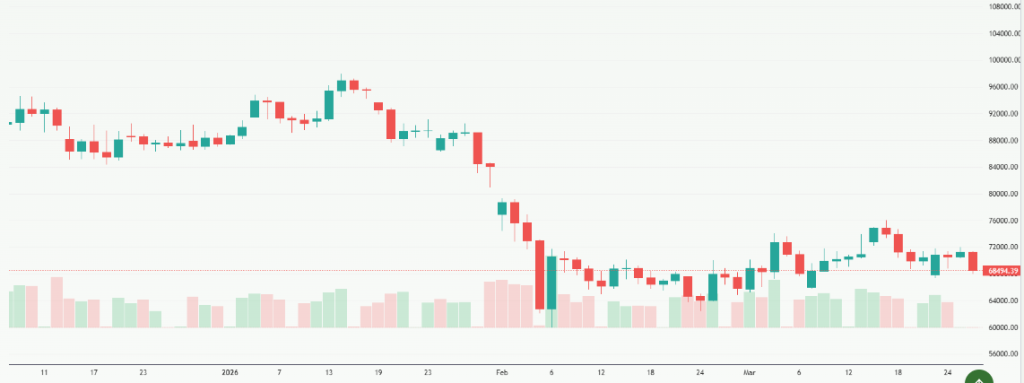
Bitcoin slipped to around $68,000 on March 26, 2026, marking a sharp drop from its recent push above $70K. The move comes as global markets react to rising tensions between Iran and the U.S., adding fresh uncertainty across risk assets.
At the same time, traders are closely watching a massive $14 billion Bitcoin options expiry scheduled for the end of the week, one of the largest this year. This rare combination of geopolitical stress and financial pressure has triggered sudden volatility and liquidations across the crypto market.
For investors, this isn’t just another price dip; it’s a signal that bigger forces are at play, shaping where Bitcoin could head next.
Bitcoin Drops to $68K, What Happened?
What is the latest Bitcoin price action and market reaction?
Bitcoin fell to around $68,000 on March 26, 2026. It lost nearly 3% within 24 hours. The price failed to hold above the key $70,000 level. This level often acts as a psychological barrier for traders.
Ethereum dropped by about 4-5% during the same period. XRP and other altcoins also moved lower. The broader crypto market followed Bitcoin’s direction. This shows how strongly Bitcoin still leads market sentiment.
The decline came after a short rally toward $71,000 earlier in the week. That rally lacked strong volume. As a result, sellers quickly took control when negative news hit the market.
How did liquidations impact the market?
Over $240 million in long positions were liquidated within a day. This data comes from major derivatives tracking platforms like Coinglass. Long liquidations happen when traders bet on rising prices but get forced out.
Leverage played a key role. Many traders used high leverage, expecting a breakout above $70K. When prices dropped, forced selling accelerated the fall. This created a cascade effect. One liquidation triggered another. This is why Bitcoin dropped faster than usual.
Iran Tensions: Why Geopolitics Is Moving Bitcoin
What triggered the latest market fear?
The latest drop links closely to rising tensions between Iran and the United States. On March 25-26, 2026, reports confirmed that Iran rejected a diplomatic proposal from the U.S. This increased fears of further conflict in the Middle East.
Global markets reacted quickly. Oil prices moved higher. Equity markets showed weakness. Investors shifted toward safer assets. Crypto markets also reacted. Despite being decentralized, Bitcoin still responds to global risk sentiment.
Is Bitcoin a haven or a risk asset?
This debate continues. In theory, Bitcoin acts as a hedge against global instability. Many investors compare it to digital gold. But in practice, Bitcoin often behaves like a risk asset in the short term. It moves with tech stocks and reacts to global uncertainty. During high tension periods:
- Investors reduce risk exposure
- Liquidity drops
- Bitcoin price falls
However, long-term holders still see Bitcoin as protection against currency devaluation and global instability.
$14 Billion Bitcoin Options Expiry, Why It Matters
What are Bitcoin options’ expiry and why is it important?
Options are contracts that allow traders to buy or sell Bitcoin at a set price. These contracts expire on a fixed date. When a large number of options expire, volatility increases. This is because traders adjust positions before settlement.
On March 29, 2026, nearly $14 billion worth of Bitcoin options are set to expire. This is one of the largest experiences this year.
What key levels are traders watching?
One important level is the “max pain” price. This is the price at which most options expire worthless. Current estimates place max pain near $75,000. Bitcoin trading at $68K means it is far below this level. This creates pressure in the derivatives market. Market makers may try to push prices closer to max pain. However, strong macro factors can override this effect.
Volatility Triggers: Why This Week Is Critical?
Why are multiple factors colliding at once?
This week is unique because several major events are happening together:
- Rising geopolitical tensions
- Massive options expiry
- Ongoing macro uncertainty
When these factors combine, volatility increases sharply. Markets become unpredictable.
How does liquidity affect Bitcoin moves?
Data shows BTC supply on exchanges is near a 7-year low. This suggests long-term holders are not selling. But in the short term, low liquidity can increase price swings. Even small sell orders can move the market significantly. This is why Bitcoin saw a sharp drop instead of a gradual decline.
Bitcoin Today: Technical Levels & Market Sentiment
What are the key support and resistance levels?
Traders are watching these levels closely:
- Support: $67,000-$68,000
- Resistance: $70,000-$71,000
- Max pain level: around $75,000
If BTC breaks below support, the next level could be near $65,000. If it reclaims $70K, momentum may shift back to buyers.
What does current sentiment indicate?
Market sentiment is cautious. Fear is driven by:
- War escalation risks
- Sudden liquidations
- Macro uncertainty
Many traders are reducing exposure. This leads to lower trading volume and slower recoveries.
What Happens Next? Short-Term vs Long-Term Outlook
What is the short-term outlook for Bitcoin?
In the next few days, volatility will likely remain high. The options’ expiry will play a major role. Possible scenarios:
- A relief bounce if tensions ease
- Further downside if the conflict escalates
Traders should watch the news closely. Headlines can move prices quickly.
What is the long-term outlook?
Long-term fundamentals remain strong. Key factors include:
- Low exchange supply
- Growing institutional interest
- Continued adoption of Bitcoin
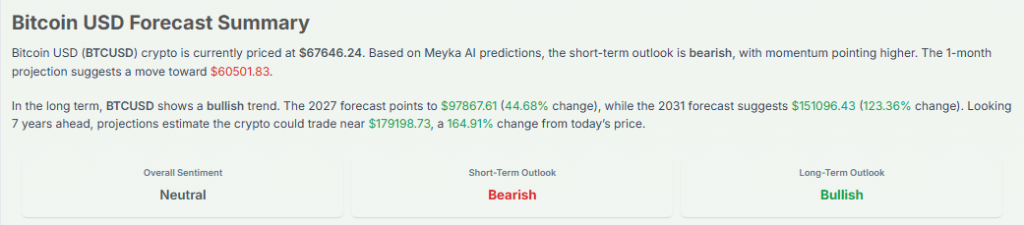
Platforms like Meyka.com highlight that Bitcoin’s long-term trend remains bullish despite short-term corrections. According to Meyka’s AI stock analysis tool, Bitcoin still shows strong accumulation patterns. The technical outlook suggests consolidation before the next major move.
Other analysts from firms like Glassnode and CryptoQuant also note that long-term holders are not selling aggressively. This supports the bullish case.
Key Takeaways for Traders & Investors
Bitcoin’s drop to $68K is not just a random move. It reflects a mix of global and market-specific factors. Key insights:
- Geopolitical events can impact crypto quickly
- Options expiry creates short-term volatility
- Liquidations amplify price moves
- Market sentiment is currently cautious
Traders should avoid high leverage in such conditions. Investors should focus on long-term fundamentals rather than short-term noise.
Bottom Line
Bitcoin’s drop to $68K shows how sensitive the market is to global tensions and large derivatives events. With the $14B options expiry and ongoing geopolitical risks, volatility may continue in the short term. However, strong long-term fundamentals and steady accumulation suggest that this phase could be temporary rather than a trend reversal.
Frequently Asked Questions (FAQs)
Bitcoin is falling due to rising Iran tensions, market fear, and over $240M liquidations, recorded on March 26, 2026.
Bitcoin options worth $14 billion expire on March 29, 2026, often causing volatility as traders adjust positions and market makers rebalance exposure.
Bitcoin may recover if sentiment improves and tensions ease, but short-term volatility may continue due to macro risks and options expiry pressure.
Disclaimer:
The content shared by Meyka AI PTY LTD is solely for research and informational purposes. Meyka is not a financial advisory service, and the information provided should not be considered investment or trading advice.
What brings you to Meyka?
Pick what interests you most and we will get you started.
I'm here to read news
Find more articles like this one
I'm here to research stocks
Ask our AI about any stock
I'm here to track my Portfolio
Get daily updates and alerts (coming March 2026)