











Bitcoin’s price has grabbed headlines again in early March 2026 as the world’s biggest cryptocurrency steadied above the $70,000 mark after weeks of sharp swings and heavy sell‑offs. After briefly falling below $63,000 in late February amid global market stress, BTC staged a notable rebound, reaching one‑month highs near $73,500 and signaling renewed buying interest among traders and institutions alike.
This stabilization isn’t just another price blip. It reflects shifting sentiment in crypto markets, a renewed appetite for risk assets, and strategic moves by big investors who are watching closely before committing more capital. Keep reading to unpack what’s driving Bitcoin’s resilience, and what could come next.
Bitcoin Price Action Snapshot: What’s Happening Now
Bitcoin has climbed back into bullish territory in early March 2026, reclaiming and stabilizing above the $70,000 key psychological level after a volatile period that saw prices dip below $63,000 amid global macro and geopolitical news. According to recent trading data, Bitcoin reached a one‑month high of around $73,500 on March 4, 2026, driven by renewed investor demand and market momentum.
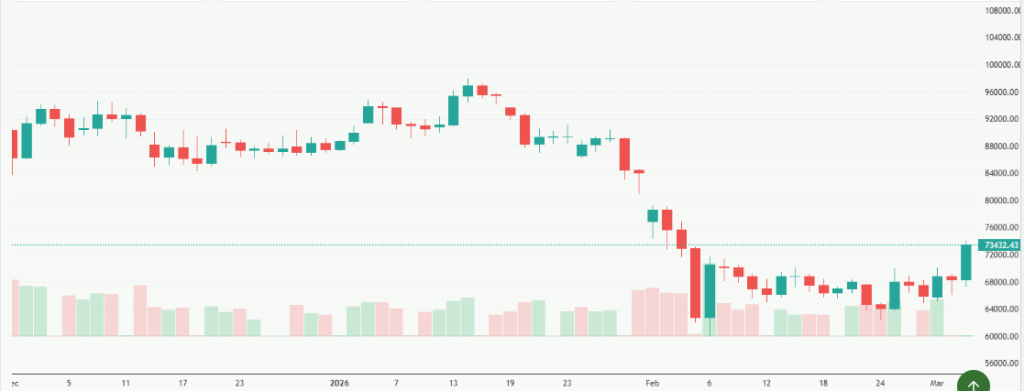
This current rebound reflects a 20% surge from February lows near $60,000, largely attributed to returning institutional interest and stronger market sentiment. Bitcoin’s total market capitalization has risen alongside price gains, with trading volumes increasing as confidence returns to digital assets.
Despite the rally, analysts note that BTC remains down significantly from its October 2025 peak above $126,000, indicating that upside is meaningful but not yet trend‑defining.
More broadly, Bitcoin’s bounce above $70,000 suggests that the crypto market is stabilizing after recent sell‑offs. However, short‑term price swings remain volatile, and BTC must maintain this level with sustained volume to confirm a structural recovery.
Macro & Geopolitical Tailwinds and Headwinds
The recent Bitcoin rebound has taken place amid persistent geopolitical tensions, especially related to the conflict involving the U.S., Israel, and Iran. These developments triggered sharp swings in global risk assets, including cryptocurrencies. Bitcoin initially dipped to near $63,000 as geopolitical risk skittled markets, but later recovered as broader asset classes stabilized.
One trend to note is that Bitcoin is increasingly behaving like a risk‑sensitive asset rather than a traditional safe haven, moving in tandem with equities and other risk instruments. Analysts have pointed out that BTC’s rebound came alongside renewed strength in crypto equities such as Coinbase and Strategy shares, which saw double‑digit gains when Bitcoin rallied.
Markets around March 4 saw wider risk appetite return, lifting Bitcoin out of a brief sell‑off phase. This suggests traders are shifting toward risk assets as uncertainty over geopolitical developments eased slightly during trading sessions.
Still, analysts warn that macro triggers like rising inflation, oil price volatility, and monetary policy shifts can quickly swing sentiment for risk assets. Bitcoin’s current stability above $70,000 depends heavily on these broader conditions remaining supportive.
Institutional Flows & ETF Influence
Spot Bitcoin ETF Inflows Supporting Price
A key factor behind Bitcoin’s recent rally has been the return of spot Bitcoin ETF inflows after several weeks of net outflows earlier in 2026. Asset managers like BlackRock and Fidelity have seen strong demand for their Bitcoin ETF products, injecting fresh capital into BTC markets.
In the first days of March alone, U.S. spot Bitcoin ETFs recorded hundreds of millions in net inflows, helping lift BTC prices above $70,000. BlackRock’s Bitcoin fund led with over $260 million in fresh flows, while weekly ETF totals crossed over $700 million, signaling renewed institutional interest.
Prediction Markets & Price Forecasts
These inflows matter because ETF issuers must physically hold Bitcoin to back shares, effectively reducing available supply and providing structural support for price. Market observers suggest this trend could be part of a larger accumulation phase as institutions see value at current levels.
However, inflows alone don’t guarantee a lasting uptrend. Some analysts caution that sustained institutional demand is needed to confirm the rally, especially as macro conditions change. Tracking ongoing ETF flows and trading volumes with an AI stock analysis tool or similar analytics can help gauge whether institutions continue to back Bitcoin’s recovery.
Technical Levels & Trader Watchlist of Bitcoin
Key Support and Resistance
From a technical perspective, Bitcoin’s ability to hold above $70,000 is critical for signaling further upside momentum. Recent trading has shown BTC reclaiming key moving averages and testing resistance near $72,000-$74,000.
Support levels to watch include the mid‑$60,000 zone (~$66,000-$68,000), which has acted as a floor during recent pullbacks. A daily close below this region could signal weakening short‑term trends. Conversely, a decisive break and sustained close above $72,000 might open the path toward $75,000 and beyond.
Indicators and Momentum
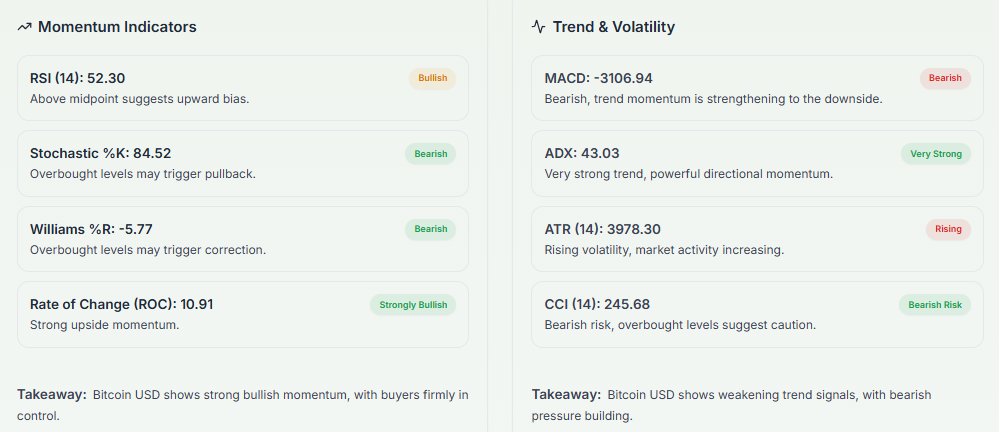
Technical indicators like the relative strength index (RSI) and moving average convergence divergence (MACD) suggest improving momentum, but bulls need higher volume to shift the short‑term structure. Longer‑term resistance levels still lie ahead, with multi‑month trendlines and historic zones near previous swing highs.
Traders should also monitor order book liquidity around key zones; thin sell walls above the current range could accelerate breakouts if demand surges. Likewise, macro triggers, such as inflation data or regulatory shifts, can quickly alter price trajectories.
Altcoin Performance and Bitcoin Market Impact
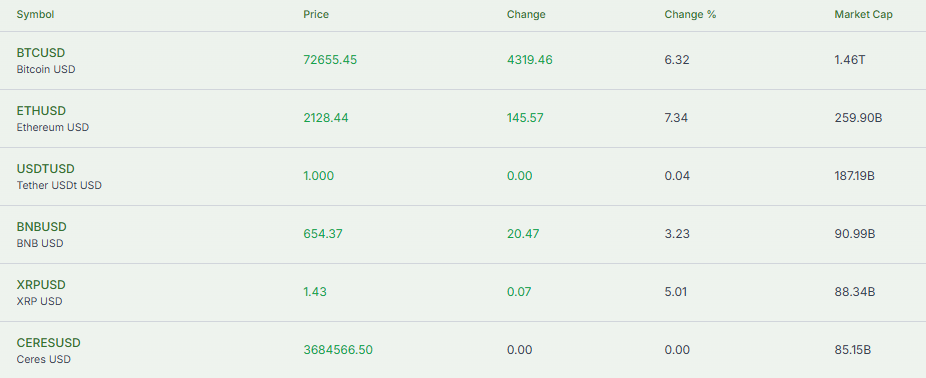
Bitcoin’s rebound has not been isolated. Major altcoins like Ethereum and Solana have also seen gains, reflecting broader market recovery. Ethereum‘s price has moved back toward $2,000, while other tokens like XRP and BNB have shown positive momentum in recent sessions.
These moves suggest a renewed risk appetite among crypto investors, with BTC’s strength lifting other digital assets. Altcoin performance often trails Bitcoin’s lead, but when BTC stabilizes around key levels, broader market participation usually increases.
Still, altcoins remain more volatile and sensitive to market sentiment shifts. Traders often use Bitcoin’s trend as a gauge for broader crypto cycles, so sustained strength in BTC could be a positive signal for the wider ecosystem.
Conclusion
Bitcoin’s stabilization above $70,000 shows growing market confidence. Institutional inflows, ETF demand, and renewed risk appetite are driving the rebound. Traders should watch key support and resistance levels and monitor macro shifts, as BTC’s path remains volatile but promising. Sustained momentum could set the stage for further gains in March 2026.
Frequently Asked Questions (FAQs)
Why is Bitcoin holding above $70,000 now?
Bitcoin is holding above $70,000 in March 2026 due to strong institutional demand, ETF inflows, and renewed investor confidence. Traders see this level as key support for the market trend.
Will Bitcoin break past resistance and move higher from here?
Bitcoin faces resistance near $72,000-$74,000 in March 2026. If buyers stay active, BTC may rise further. However, short-term swings and macro risks could limit immediate gains.
What macro or ETF factors are affecting Bitcoin’s rebound in 2026?
Macro factors like geopolitical events, inflation trends, and ETF inflows are affecting Bitcoin’s rebound in March 2026. These influence demand and short-term price movements in crypto markets.
Disclaimer: The content shared by Meyka AI PTY LTD is solely for research and informational purposes. Meyka is not a financial advisory service, and the information provided should not be considered investment or trading advice.
What brings you to Meyka?
Pick what interests you most and we will get you started.
I'm here to read news
Find more articles like this one
I'm here to research stocks
Ask our AI about any stock
I'm here to track my Portfolio
Get daily updates and alerts (coming March 2026)